Iran Attacked a U.S. Base in Jordan. Here's What's Going On.
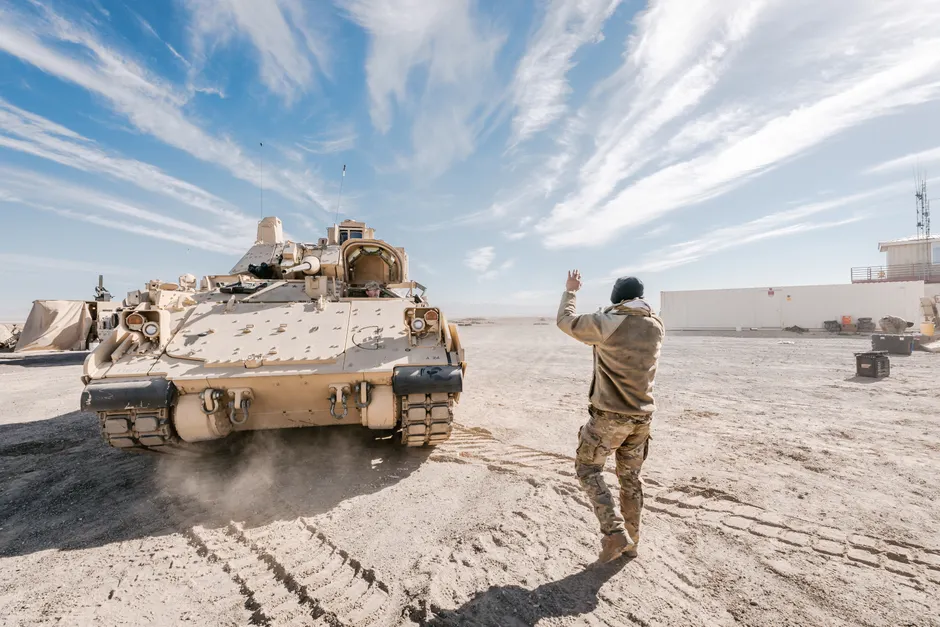
Iran struck a U.S. military base in Jordan on Friday, killing two American service members and bringing the United States and Iran closer to a wider war in the region (The New York Times). The attack was carried out by Iran's Islamic Revolutionary Guard Corps, or IRGC, a powerful military force separate from Iran's regular army. President Trump immediately promised to strike back and ordered punishment of the IRGC forces behind the Jordan attack (The New York Times). The IRGC separately claimed it had struck a U.S. military target (Reuters).
This escalation did not come out of nowhere. For months, the U.S. and Iran had been trading blows around the Strait of Hormuz, a narrow strip of water between Iran and Oman that is one of the world's most important shipping routes for oil. Earlier U.S. military actions targeted Iran's ability to threaten ships passing through the strait (The New York Times). American airstrikes hit Bandar Khamir, a coastal city on the strait, where U.S. Central Command said it struck dozens of targets (AP News). The U.S. had set up a naval blockade, stopping and redirecting 100 ships by May 23, 2026 (CENTCOM). Trump later announced on social media that the blockade was being lifted immediately (Britannica).
Trump then went further, threatening to destroy civilian infrastructure, things like roads, power plants, and bridges, inside Iran (The New York Times). The threat raises questions about what limits exist on what the U.S. is allowed to target. It is especially sensitive because Iranian forces have launched attack drones from crowded civilian areas in the cities of Dezful, Esfahan, and Shiraz. U.S. forces had previously issued a safety warning to Iranian civilians about those launch sites (CENTCOM).
The conflict has pulled in other countries in the region. Iranian strikes were reported in Bahrain on or around July 18, 2026 (Reuters). U.S. and Qatari forces worked together to defend against an Iranian ballistic missile attack, and CENTCOM forces stopped a separate wave of missiles and drones launched by Iran on June 5, 2026 (CENTCOM). An earlier ceasefire, a temporary agreement to stop fighting, had already fallen apart. CENTCOM called an Iranian violation "egregious" after Iranian forces launched five attack drones (CENTCOM).
Iran has also used unusual methods to gather intelligence. Iranian forces could use American service members' cellphone data to figure out where they are and target them, a capability that likely helped plan the strike on the Jordan base (The New York Times). That vulnerability points to the danger faced by U.S. troops stationed in the region.
CENTCOM has pushed back on at least one media report. In late March, the command denied claims that the U.S. conducted strikes in Lamerd, Iran, and said that video footage shared by media outlets did not show a Precision Strike Missile, a long-range missile used by the U.S. military (CENTCOM).
The broader context here is a conflict that has grown on several fronts at the same time: a naval blockade and strikes around the Strait of Hormuz, IRGC attacks on U.S. bases in Jordan and Gulf states, drones launched from civilian neighborhoods, and a ceasefire that fell apart. The death of two U.S. service members is the first confirmed American deaths from an Iranian strike in this conflict. Trump's threat to target civilian infrastructure signals a possible shift in the rules of engagement, the unwritten limits on what each side will attack.
The lifting of the Hormuz blockade, announced the same week as the Jordan strike, further complicates the picture. Whether the blockade's removal is a gesture to calm things down or a shift in U.S. strategy toward direct retaliation instead of stopping ships is not yet clear. What is clear is that both sides have moved past the phase of trading limited strikes into a space where a trigger for a full-scale regional war is no longer hypothetical.