Two Tech Companies Built a Self-Flying Military Aircraft Called Thunder
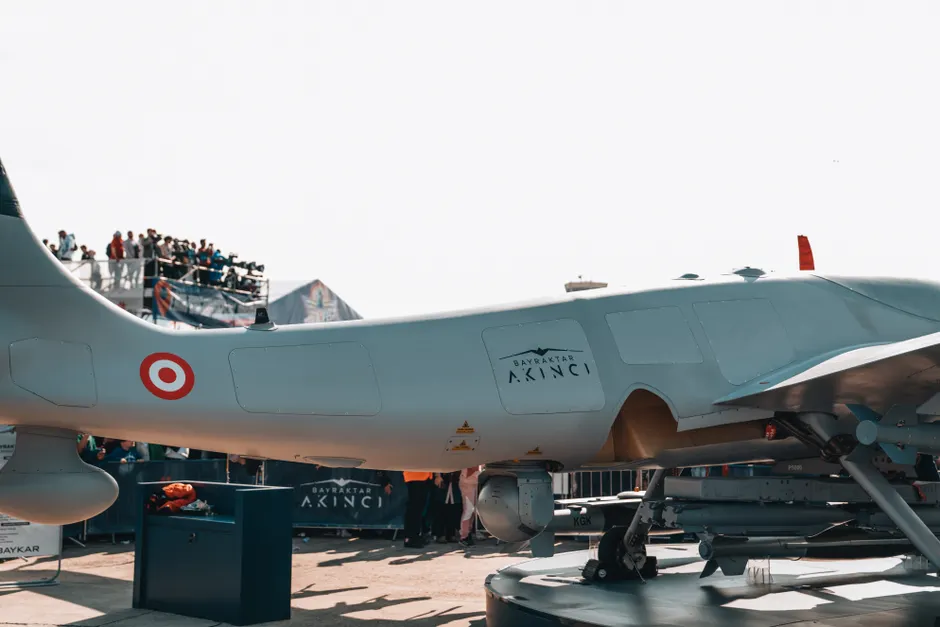
Archer Aviation and Anduril unveiled Thunder, a hybrid-electric autonomous aircraft designed for military missions, on July 20, 2026, at the Farnborough Airshow in Hampshire, England (The Verge).
Thunder is a fully autonomous attack aircraft intended to fly alongside crewed military planes. Its missions include strike operations, cargo shipment, remote logistics, and reaching hard-to-access locations. Archer plans to unveil a commercial variant of Thunder later in the same week as the airshow.
The aircraft uses a series hybrid powertrain, which is different from the fully electric design Archer uses in its Midnight air taxi. In a series hybrid, a gas-powered engine runs a generator, and that generator sends electricity to motors that spin the rotors. The engine never directly powers the propellers. This setup keeps the precise control and backup safety of electric motors while letting the aircraft fly farther than batteries alone would allow. Archer is headquartered in San Jose, California. Anduril was founded by Palmer Luckey.
The two companies have been building toward this aircraft for over 18 months. Archer first announced its partnership with Anduril to develop a hybrid military aircraft in December 2024, raising an additional $430 million as part of that announcement (Archer Investor Relations). In November 2025, Archer said it would supply its electric powertrain for the Omen autonomous air vehicle, a drone program co-developed with Anduril. This built on an earlier deal in which Archer licensed its electric powertrain technology to Anduril for Omen (Reuters; The Verge).
Archer's military work extends beyond the Anduril partnership. The company delivered one Midnight aircraft to the US Air Force as part of an evaluation program, giving the service hands-on experience with Archer's electric platform (The Verge).
The Thunder announcement comes against a difficult financial backdrop for Archer. The company lost $217.7 million in the first quarter of 2026 on just $1.6 million in revenue. Archer intends to launch its commercial air taxi service as soon as 2026, with Abu Dhabi as the likely first market (The Verge).
The financial picture here is worth pausing on. A company spending over $200 million per quarter while bringing in almost no revenue faces a narrow path to survival, and that path gets tighter if the certification timeline for the Midnight air taxi slips. Archer is simultaneously pursuing a commercial air taxi launch, a US Air Force evaluation program, and now a hybrid military aircraft built with a defense-tech partner. Each of those efforts requires engineers, money, and management focus that a company with almost no revenue has to allocate carefully.
The hybrid design in Thunder is a practical choice for the military use case. A fully electric aircraft like Midnight gives up range and cargo capacity in exchange for simplicity and a lower heat signature, which matters because less heat makes an aircraft harder to detect. A hybrid setup extends how long and how far the aircraft can fly beyond what batteries alone can store. For missions involving remote logistics and strikes in difficult environments, that trade-off favors endurance.
The broader question is whether Archer can successfully pursue both the commercial air taxi business and the defense platform at the same time. The technology flows in both directions; the powertrain licensing and Omen supply deal show that Archer's electric propulsion technology has value in the defense market beyond Thunder itself. But defense procurement cycles are long, and the military's adoption of autonomous attack aircraft flying alongside crewed planes will involve doctrine and policy questions that go well beyond certifying the aircraft as safe to fly.
For now, Thunder is a newly revealed aircraft with a commercial variant promised within days. The next concrete milestones to watch will be the commercial Thunder reveal, any announced military contract, and Archer's progress toward FAA type certification for Midnight. The Abu Dhabi service launch timeline, if met, would provide the first real revenue for Archer's core consumer business.
In my view, the pivot toward defense is a sensible hedge for a company whose commercial certification and service launch timelines remain uncertain. Whether it becomes a meaningful second revenue stream or a costly distraction will depend on whether the Pentagon funds autonomous attack aircraft as an official program, not on the engineering, which looks sound on paper.