HoverAir's New Gadget Is a Camera You Can Hold — Then Fly
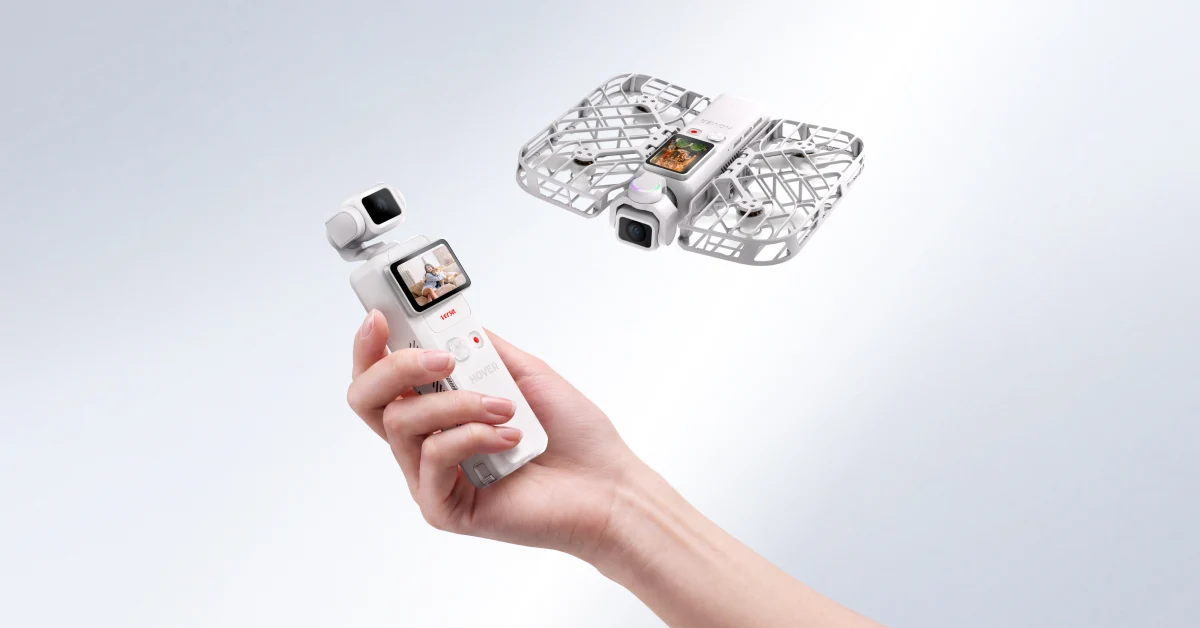
HoverAir has unveiled Versa, a camera that works as a handheld device and then detaches into a small drone you launch from your palm. The company described it on its official Instagram account as "the first 3-axis gimbal camera that can go from hand to hover in a matter of seconds" (Engadget). Petapixel, covering the announcement on July 30, 2026, called the product "the world's first flying pocket camera" (Petapixel).
A gimbal is a motorized mount that keeps a camera steady, smoothing out the shakes from your hand. In its handheld form, Versa includes that stabilizing gimbal, a built-in screen, a record button, and a small joystick for steering the camera. To switch to flight mode, you slide a back plate down, snap the camera into a drone carrier, unfold the wings, and toss it off your palm (Engadget). No separate remote controller is needed. That snap-on wing system is what makes Versa different from other gimbal cameras like DJI's Pocket series, which stay on the ground, and from small drones that require their own controller.
HoverAir, known for making self-flying drones per Petapixel's reporting, is aiming Versa at vloggers, travel creators, and filmmakers who want smooth handheld video and aerial shots from one device. The appeal is simple: one pocket-sized product instead of two.
Versa includes an AI-powered "follow-me" mode that tracks the user during flight. It also has a "3D Worlds" photo mode, which flies the drone in a circle and stitches the images into a three-dimensional model. HoverAir said the device will ship with more than 10 intelligent flight modes built for social media content creation (Engadget). On the image quality side, the company promises "superior dynamic range" — meaning better detail in both bright and dark areas of a shot — and "incredible low-light footage," crediting a new image processor (Engadget).
What HoverAir has not shared is significant. As of the Engadget report on July 31, 2026, the company had not released the camera's sensor size, video resolution, lens details, or price. More information is "coming soon," and interested users can subscribe for updates at hoverair.com/pages/versa (Engadget).
Those missing details matter. Sensor size, resolution, and lens quality determine whether Versa's handheld footage can compete with a DJI Pocket 3 or a GoPro, and whether its drone footage can match a dedicated compact drone like a DJI Mini. Without those numbers, the product is a concept, not a camera anyone can evaluate. The "new image processor" claim means little until it is backed by specifics.
The broader context here is that creator hardware has been blending categories for years. Action cameras added stabilization. Gimbal cameras got bigger sensors. Drones shrank to pocket size. Versa tries the next step: combining a gimbal camera and a drone in one device. Whether that mechanical complexity makes the handheld version awkward to hold or the drone version harder to fly is a question only hands-on testing can answer.
The flight features also tell you who this is for. A 360-degree 3D photo mode and ten-plus social-media flight patterns are not tools for professional filmmakers with high-end aerial equipment. They are for solo creators who want the drone to handle things on its own. That fits HoverAir's background in self-flying devices. The bet is that this audience cares more about convenience and automation than about top-tier image quality.
For now, Versa is an announcement, not a product you can buy. The gaps in what we know are large enough that the device's place in the market could shift once HoverAir fills them in. What is clear is the idea: one device that fits in a pocket, shoots steady handheld video, and flies without swapping to a separate controller. Whether the finished product lives up to that idea is a question for later.


