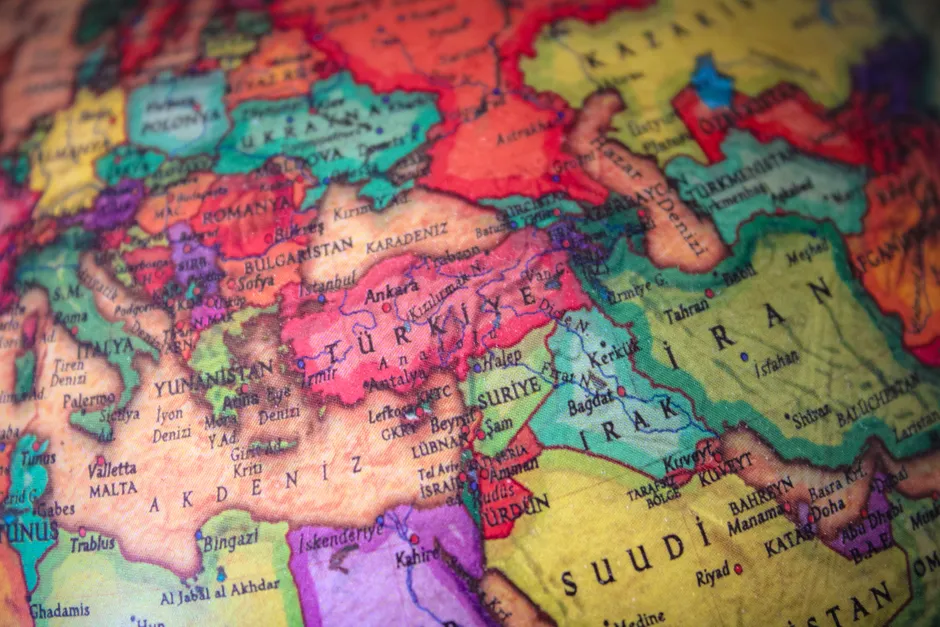
Iran and the US: What's Happening and Who's Trying to Stop the Fighting?
Iran said on July 20, 2026, that it has received offers through go-betweens to try to end the renewed fighting between Iran and the United States.
Iran's Foreign Ministry spokesman Esmaeil Baghaei spoke at a press conference in Tehran. He did not share the details of the offers or confirm whether they included a 10-day pause in fighting, as US media had reported. He said diplomacy is moving alongside military action. Baghaei also urged nearby countries not to let the US military use their land to launch or help attacks on Iran.
The announcement came as the US launched strikes on Iran for the ninth night in a row. The attacks spread beyond the Strait of Hormuz — a narrow channel of water near Iran where much of the world's oil passes through — to places like Tabriz in northwest Iran. On July 19, the US military hit a nuclear power plant being built in Darkhovin. Iran said the plant was for civilian use and had no military purpose.
Pakistan has stepped up its efforts in recent days to help the two sides reach a deal. US Secretary of State Marco Rubio said Washington "always remains open to diplomatic solutions" but added that Iran's missile and drone strikes have killed three American service members in the past week. The US also reported the death of another American service member in the growing conflict.
Rubio said there is a "split" among Iranian leaders, with some wanting to keep fighting the US and others wanting to talk. Iran's Parliament Speaker and top negotiator Mohammad Bagher Ghalibaf replied on X, the social media platform: "We have reached the level of a full professor on recognising these American games." The US-Israel war on Iran began on February 28, according to Al Jazeera.
Iran's Revolutionary Guard — a powerful part of Iran's military — released a video showing several types of ballistic missiles being used in the latest strikes. Ballistic missiles are large rockets that travel great distances toward a target. A message written on one missile in Arabic and English said: "Anyone who destabilises the security of the Iranian people will not themselves be safe either!" Army spokesman Mohammad Akraminia warned that Iran would "open new fronts against" the US if attacks on Iran resumed.
The broader context here is one of repeated attempts at peace followed by more fighting. On May 2, Iran told foreign diplomats in Tehran about a new plan to end the war. By mid-May, Baghaei said the US had sent back revised comments on Iran's plan, even though it had publicly rejected it. Iran's ambassador to Pakistan said Pakistan's help had created a "positive stride" toward a possible deal. In June, world leaders praised an agreement reached between Iran and the US to permanently end the war. Those gains now appear to have fallen apart in the current round of fighting.
The fact that both sides are fighting harder while also talking behind the scenes suggests they may be adjusting their positions before sitting down at the negotiating table. Pakistan's stronger mediation role, along with the new proposals Baghaei mentioned, could open a path toward calming the conflict. The strike on the Darkhovin plant and Iran's use of advanced missiles, though, show that the situation is still highly dangerous and could worsen at any time.