The US and Iran Are Fighting — Here's What's Going On

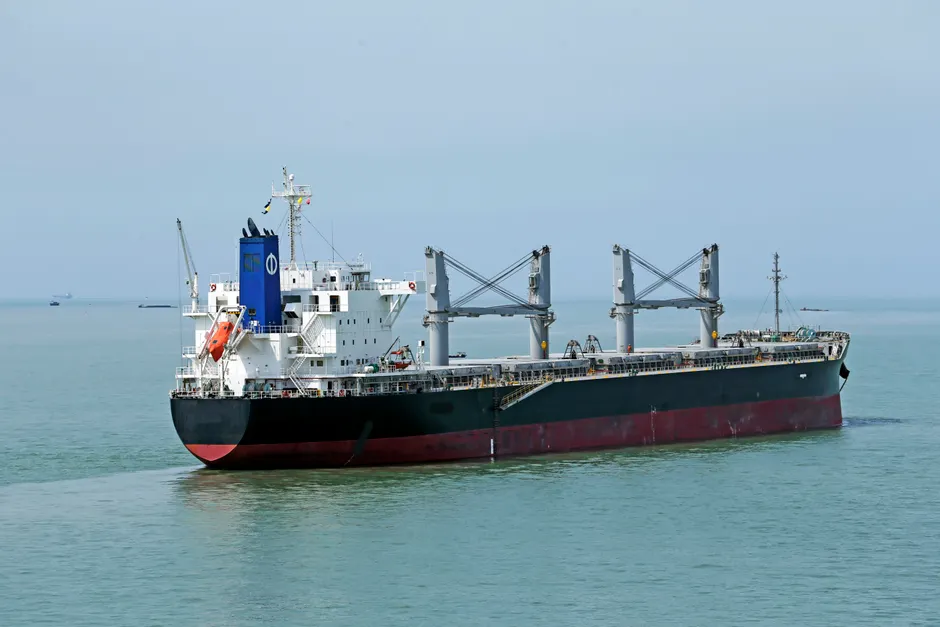
Iran's Revolutionary Guards said they attacked a cargo ship in the Strait of Hormuz early on July 21, 2026, forcing the crew to leave the vessel, according to The Guardian. The British military separately reported the same incident off the coast of Oman. The Guards also said they carried out two more attacks on ships in the strait on July 20.
The Strait of Hormuz is a narrow strip of water between Iran and Oman. About one-fifth of all the oil used worldwide passes through it. If ships cannot safely travel through it, the global oil supply can be disrupted.
The Revolutionary Guards, or IRGC, are a powerful part of Iran's military that reports directly to the country's top leader. They operate somewhat separately from Iran's regular army.
These ship attacks are happening as the fighting between the US and Iran has gotten much worse. US Central Command said its latest airstrikes were meant to damage Iran's ability to attack commercial shipping, hitting military command centres and sites that launch missiles and drones. Iranian media reported US strikes in the cities of Bandar Abbas, Tabriz, and Bushehr. Bushehr is home to Iran's only working civilian nuclear power plant. Iran's president said the country was now in "full-scale war."
The reason for this sharp increase in fighting appears to be the deaths of three US soldiers killed in Iranian strikes over the weekend before July 21. President Donald Trump said Iran would pay "many times over" for killing US soldiers. Congressional Democrats urged Trump to reverse his decision to resume the war with Iran after the troop deaths.
Iran fired back at the US strikes by launching attacks on Bahrain, Kuwait, and Jordan. The Revolutionary Guard said it hit a US military site in Jordan. Jordanian state TV said three missiles from Iran were intercepted overnight, citing the Jordanian armed forces, and that warning sirens sounded in the capital, Amman, on the evening of July 20.
Iran's government has been sending a clear message about the Strait of Hormuz. IRNA, Iran's official news agency, published a report on July 21 with the headline "Iran to steadfastly maintain control over Strait of Hormuz: IRGC." Fars News Agency said the IRGC Navy described two tankers that exploded on the night of July 19 as "deviant ships, instigated and forced by the United States," claiming they were trying to use an "unsafe route." Fars also said that after the US attacks on Iran, ships in the strait were using only the Iranian shipping lane.
On another front, Yemen's Houthis announced a blockade of Saudi Arabia in the Red Sea on July 21. The Houthis are an armed group backed by Iran that controls much of northern Yemen and has been fighting a Saudi-led coalition since 2015. A blockade means they are trying to stop ships from a certain country from passing through. Houthi military spokesperson Yahya Saree said in a televised video statement that the Bab al-Mandeb strait would be closed to Saudi vessels. The announcement was reported by Reuters on July 20 and confirmed by the Associated Press on July 21. Saree said the blockade was a response to Saudi Arabia's "unjust blockade on Yemenis for over 10 years" and what he called a "continued Saudi siege" on Yemen. Saudi Arabia said it would take "all necessary measures to protect its vessels in accordance with international law."
The Bab al-Mandeb strait is another important waterway. It connects the Red Sea to the Gulf of Aden and is a key route for global shipping. The New York Times reported on July 20 that a Houthi blockade on Saudi ships in the Red Sea could affect more than 3 percent of the global oil market. Al Jazeera noted the same day that it was not clear how the Houthis would actually carry out the blockade or whether it could mean a return to attacks.
Oil markets reacted calmly. By 0052 GMT on July 21, Brent crude futures eased 0.4% to $88.87 a barrel, while US West Texas Intermediate crude for September delivery held steady at $82.47.
On the diplomatic front, Iran's interior minister travelled to Pakistan for talks. Pakistan has been described as a key mediator in the conflict, meaning it is trying to help both sides find a way to stop the fighting.
The broader context here is that two of the world's most important shipping routes are under threat at the same time. The Strait of Hormuz is facing repeated attacks by Iran's Revolutionary Guards. The Bab al-Mandeb strait is facing a blockade declaration by the Houthis targeting Saudi ships. The fact that these actions are happening across two waterways at once, combined with Iran directly striking three countries that host US forces, suggests a deliberate strategy of layered escalation rather than isolated retaliation.
The US strikes on Bushehr add a nuclear concern. Strikes near a working nuclear power plant carry risks that go beyond the immediate fighting, and regional and international actors will be watching closely.
In a separate development, the Lebanese army began taking charge of security in three southern villages under a deal for Israeli withdrawal from southern Lebanon and Hezbollah disarmament. Hezbollah is another Iran-aligned group in Lebanon. This process is separate from the US-Iran escalation but is happening in the same broader context of Iran-aligned groups under pressure across the region.
Several questions remain unanswered. The Houthis have not explained how they will enforce their blockade on Saudi ships. Iran has said it is in "full-scale war" but has not given specific ceasefire conditions or a way out. And the US strikes, which Central Command says are aimed at damaging Iran's ability to threaten shipping, have not come with a stated end goal. With Pakistan trying to mediate and oil markets staying below panic levels, the big question is whether this escalation has reached its peak or is still climbing.