Google's Parent Company Is Pouring Billions Into AI — Here's What's Going On
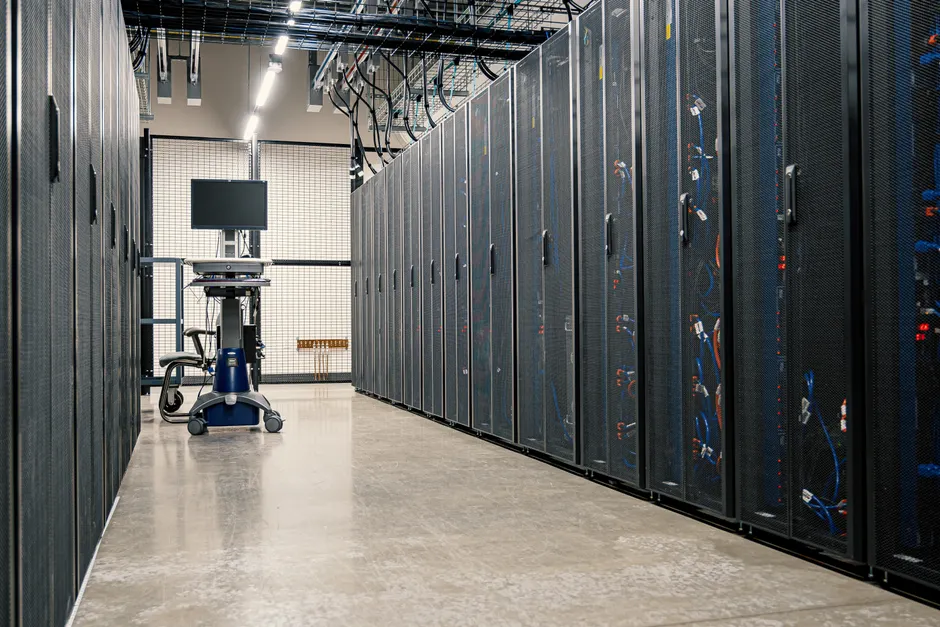
Alphabet, the company that owns Google, spent $35.7 billion in just three months ending March 31, 2026, on building infrastructure for its business. That's more than double the $17.2 billion it spent in the same period a year earlier (SEC filing). This kind of spending is called capital expenditures, or capex for short. It's the money a company puts into big physical assets, like land, buildings, and equipment, rather than everyday costs like salaries or office supplies. In Alphabet's case, almost all of it is going toward what the company calls technical infrastructure: data centers (large facilities packed with computers), servers, and network equipment (Alphabet IR FAQ).
The trend has been building for a while. Alphabet spent $63.6 billion on capex over the nine months ending September 30, 2025, up from $38.3 billion in the same stretch of 2024 (SEC filing). A single quarter, Q3 2025, accounted for $24 billion of that total, according to the company's October 2025 earnings call (Q3 2025 earnings call). The Q1 2026 figure alone, $35.7 billion, already exceeds 56% of what Alphabet spent across all nine months of 2025 through September.
Alphabet's chief financial officer, Anat Ashkenazi, broke down the spending at a conference on March 3, 2026. She said about 60% of the infrastructure budget goes to constructing data centers (Morgan Stanley TMT Conference). That works out to roughly $21.4 billion in a single quarter. The remaining 40% covers the servers and network equipment that actually do the computing work.
Alphabet is also spending beyond its own construction. In December, the company announced plans to buy Intersect, a firm that helps build and power data centers, a deal confirmed on its Q4 2025 earnings call on February 4, 2026 (Q4 2025 earnings call). Alphabet also raised $84.75 billion by selling new shares to investors to fund its AI infrastructure push (Alphabet IR). Selling new shares brings in cash, but it also means each existing share represents a slightly smaller slice of the company, what investors call dilution.
In its annual report for 2025, Alphabet told regulators it expects to "significantly increase" infrastructure spending in 2026 compared to 2025 (SEC filing). Management updated its full-year 2026 spending forecast during its Q1 2026 earnings call on April 29, 2026 (Q1 2026 earnings call). If the $35.7 billion quarterly pace held for a full year, it would add up to nearly $143 billion before any increases later in the year.
Alphabet has set a date for its Q2 2026 results announcement (Alphabet IR). Analysts who study the company expect it to report earnings of about $2.87 per share on revenue near $116.9 billion, which would be growth of about 24% and 15% respectively compared to the same quarter a year ago (Tastylive). Here's the catch: capex grew about 108% year over year in Q1, while analysts expect revenue to grow only about 15% in Q2.
That gap between spending growth and revenue growth is where the tension lies. Alphabet is pouring money into buildings and equipment on the belief that AI services will eventually generate enough revenue to justify the cost. The $84.75 billion share sale dilutes existing shareholders now; the payoff depends on future revenue that hasn't appeared at the pace the spending would suggest.
There's also a timing issue worth understanding. Data center construction takes years to pay off. You have to buy land, get permits, and put up the building before you can even install the computers inside. It's like building a factory before you have the machines ready to go. The 40% of spending on servers and equipment, by contrast, produces computing power on a shorter timeline. If the 60/40 split holds through 2026, Alphabet is building well ahead of actual demand, with most of its current spending turning into revenue-generating capacity only after a delay.
The Intersect acquisition fits this pattern. A company that builds and powers data centers supports the construction phase, not the computing phase. Alphabet is essentially trying to control more of its own building pipeline at a time when the biggest obstacles to expanding AI infrastructure are supply chain bottlenecks, getting enough electricity, and securing permits.
For anyone watching Alphabet's Q2 results, three questions matter. First, did the company's 2026 spending forecast hold, or did management change it again? Second, did the 60/40 split between construction and equipment stay the same, or shift? Third, do the expected earnings and revenue figures leave room for the hit to profits that will come as these massive investments start showing up as costs on the books? In accounting, the cost of a long-lived asset is spread out over its useful life, a process called depreciation. As Alphabet's huge spending begins depreciating, it will weigh on reported profits. Alphabet's Q2 results will be the first full quarter to reflect both the updated spending guidance and the deployment of that $84.75 billion raise.


