Why Alphabet Is Pouring Billions Into AI

Alphabet, the company that owns Google, spent $44.9 billion in the second quarter of 2026 — April through June — mostly on building the computer systems behind artificial intelligence. The company shared this figure on its Q2 2026 earnings call held July 22, 2026 (Alphabet Investor Relations). For the full year, Alphabet told investors it expects to spend between $175 billion and $185 billion. That number, announced in early February, was far higher than what financial analysts had predicted — about $119.5 billion (Bloomberg; Reuters; CNBC).
Capital expenditures, or CapEx for short, are the big one-time costs a company takes on to buy or build things it will use for years — think of it like a family deciding to build an extension on their house rather than paying monthly rent.
To help pay for all this, Alphabet announced on June 1, 2026 that it would raise $80 billion by selling new shares of the company to investors. Two days later, on June 3, the company increased the amount to $84.75 billion because demand was higher than expected. Berkshire Hathaway, the company led by well-known investor Warren Buffett, put in $10 billion (Alphabet Investor Relations; Alphabet Investor Relations; Google/Alphabet Blog).
The $4.75 billion increase from the original $80 billion plan signals that more investors wanted in than Alphabet first expected. And Berkshire Hathaway's $10 billion contribution gave the whole raise a major vote of confidence.
The broader picture here is that Alphabet is not alone. Four major US tech companies together plan to spend roughly $650 billion in 2026 on AI-related infrastructure, according to Bloomberg's tally on February 6 (Bloomberg). Alphabet's share of that total is about 27 to 28%.
The fact that analysts had expected Alphabet to spend around $119.5 billion, only for the company to guide to $175-185 billion, shows how quickly the AI spending race has accelerated. Wall Street was caught off guard by the pace.
Alphabet's decision to sell new shares rather than pay for everything out of its own profits or by borrowing money tells us something. It suggests the cost of this AI buildout is larger than what the company can fund on its own, or that management wanted to keep financial flexibility for a spending push that could last several years. Selling new shares dilutes the value of existing shares, but the alternative — taking on heavy debt or slowing down — has its own costs.
The world around this spending has been far from calm. Oil prices have swung sharply due to conflict between the United States and Iran throughout 2026. On March 20, 2026, a barrel of Brent crude oil cost $112.19, and US crude cost $98.84 (Reuters). A ceasefire around April 7 briefly pushed oil below $100 a barrel (Reuters). Then on July 8, the US launched new strikes against Iran, and by July 13 oil prices had jumped 9% (Reuters; Reuters). Stock prices fell and bond yields rose the same day.
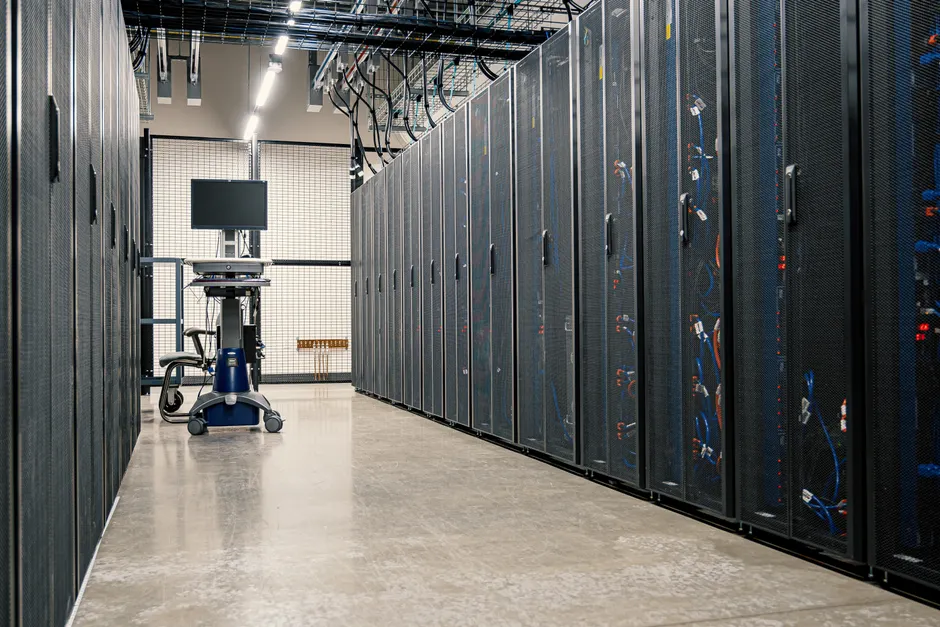
Why does oil matter to a tech company? Because data centers — the giant warehouse-sized buildings full of computers that power AI — use enormous amounts of electricity, and in many places that electricity is generated using natural gas, whose price is tied to oil. When energy costs go up, the math on whether all this AI spending will pay off gets harder. Alphabet set its $175-185 billion spending plan when oil was above $112 a barrel. The later drop and then spike in prices creates a wide range of possible energy costs that could affect how profitable these investments turn out to be.
Here is what we know versus what we don't. Alphabet's spending guidance, the size of the equity raise, Berkshire Hathaway's participation, and the $44.9 billion Q2 figure are all confirmed facts. What we don't know is whether $175-185 billion will be enough, whether AI will generate enough revenue to justify the spending, or whether energy costs will eat into the returns. Neither Alphabet's own disclosures nor current market prices can answer those questions yet. But the $55-65 billion gap between what analysts expected and what Alphabet actually planned to spend is a clear reminder: the AI infrastructure buildout keeps moving faster than almost anyone predicted.