Soon You Can Plug Solar Panels Into Your Wall Socket

Starting August 27, 2026, people in the UK will be allowed to buy a plug-in solar panel kit and connect it to a regular wall socket in their home, without hiring an electrician or asking permission from their electricity provider (Engadget; legislation.gov.uk).
The government published the rules as a formal legal document called SI 2026/848. Alongside it, officials released a product specification — essentially a checklist of safety and performance standards that approved kits must meet before they can be sold (gov.uk interim specification).
Solar panels produce direct current (DC) electricity, but homes run on alternating current (AC). Each approved kit includes a small device called a micro-inverter that converts the panel's DC power into the AC power your home uses. The rules cap the panels at 2000W of DC output and limit the micro-inverter's AC output to 800 volt-amperes (a measure of electrical capacity similar to watts). According to Engadget, that means compliant kits will deliver about 960W of usable power in real conditions, once conversion losses are accounted for.
The government has been moving toward this for months. In March 2026, officials announced they would make plug-in solar available "within months" (gov.uk, March 2026). A June follow-up said "more families" would benefit from lower bills through the panels (gov.uk, June 2026). The August 27 date now gives those plans a concrete start.
The UK's energy regulator, Ofgem, backed the same direction in its 2026 "Networks reimagined" report, saying no one should need permission before plugging in devices like solar panels (Ofgem, 2026). This matters because the companies that run local electricity grids — called Distribution Network Operators — often require notification when someone adds a power source to their home. Ofgem's position removes that potential obstacle.
The Engadget report does not name a specific government department or official behind the change, referring only to "the UK government" broadly. The March and June announcements from gov.uk take the same approach.
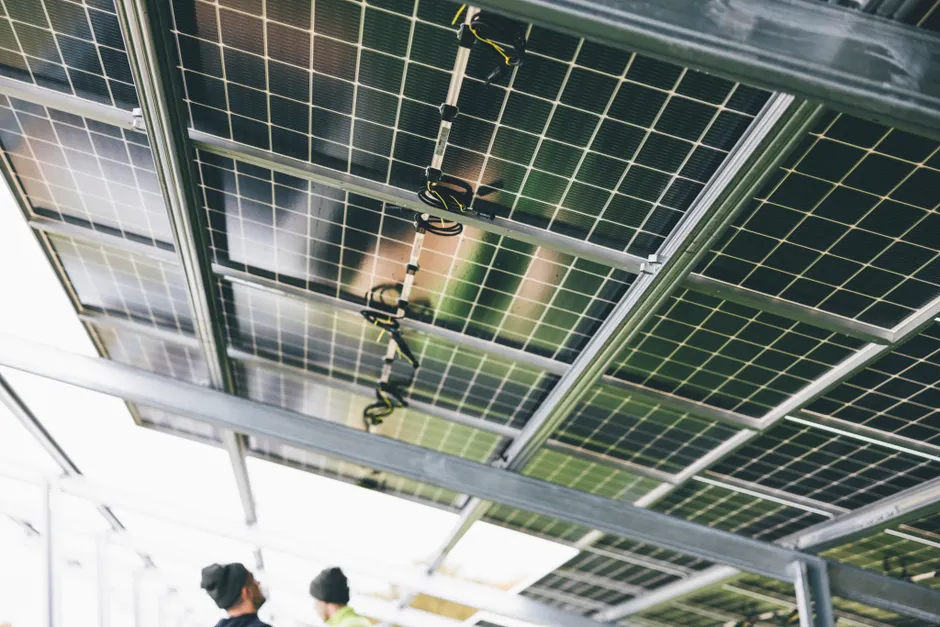
In practice, a homeowner or renter will be able to buy a compliant kit, place the panels on a balcony, flat roof, or garden structure, and plug the micro-inverter's lead into a standard 13-amp wall socket. The electricity flows directly into the home's wiring, reducing how much power the household pulls from the grid. No special certification, no notification to the grid operator, and no electrician are needed, as long as the kit meets the approved specification.
For comparison, a typical home rooftop solar system generates 3,000 to 4,000 watts. The plug-in kits, at roughly 960W, produce far less. They are not meant to replace full solar installations. They are aimed at people who rent, lack suitable roof space, or cannot afford the upfront cost of a full system. That 960W is small against a typical UK household's daily electricity use of 8 to 12 kilowatt-hours, but it can meaningfully offset specific things like running a refrigerator, powering home-office equipment, or keeping appliances on standby.
It is worth noting that the government has labeled the current rules an "interim" standard. That means the power limits — the 800 VA inverter cap and the 2000W panel ceiling — could be raised later once the market grows and more safety data is collected. Germany went through a similar process: regulators there gradually loosened restrictions on balcony solar after the initial rules proved safe and practical, and prices fell as more people bought in.
The 800 VA cap is the key limit to understand. A panel array rated at the full 2000W will never deliver more power than the inverter allows, because the inverter acts as a bottleneck. Anyone considering a kit should choose panels sized to match the inverter's output, not the panel's maximum rating, unless they expect the government to raise the inverter limit in the future.