Who Owns Penske Automotive, and What's Going On With That $4 Billion Buyout Talk?
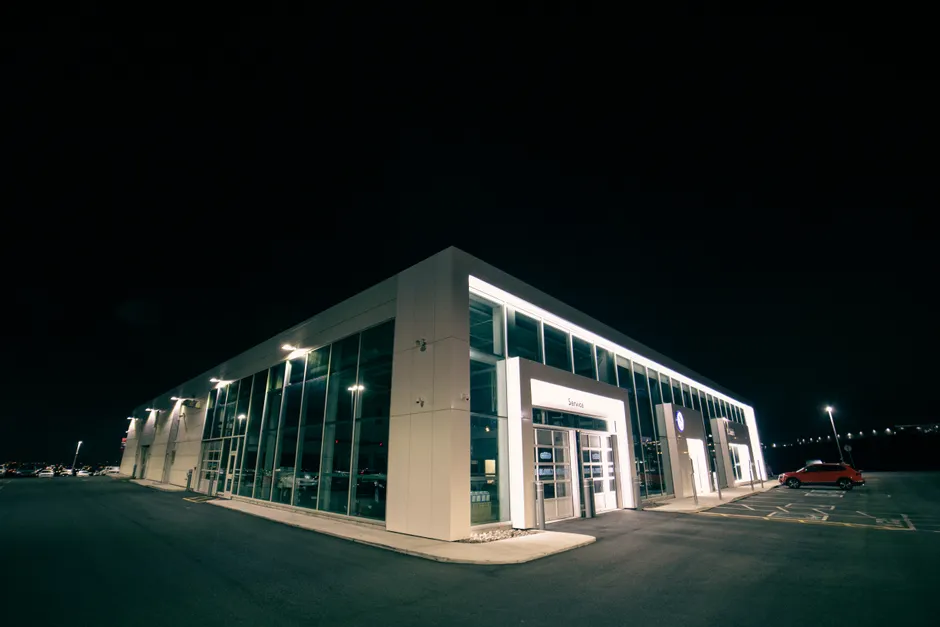
Penske Automotive Group, Inc. trades on the New York Stock Exchange under the ticker symbol PAG and is headquartered in Bloomfield Hills, Michigan. The company appears on Penske Corp.'s website as one of its operating businesses (Penske Corp.). Japan's Mitsui & Co., a large trading company, also lists Penske Automotive within the Automotives segment of its annual reports for 2024 and 2025 (Mitsui AR2024).
Think of PAG as a company sitting at the intersection of two powerful parents. Penske Corp. is the main holding company — it owns car dealerships, truck leasing, logistics, and even racing teams. Mitsui, a Japanese conglomerate, holds a meaningful ownership stake in PAG and treats it as part of its automotive business. This relationship has shown up in Mitsui's financial reports for years.
The verified facts available are about structure, not about any specific deal. They confirm who owns what, where the company is listed, and how Mitsui categorizes its stake. The Wall Street Journal reported a near-$4 billion bid to take Penske Automotive private, involving both Penske Corp. and Mitsui. But the exact price, financing, and timeline of that offer are not part of the verified facts here.
Here is what the facts do tell us. PAG is a publicly traded company — meaning anyone can buy its shares on the stock market. Penske Corp. controls the company at the top level. Mitsui owns enough of PAG to list it as a distinct part of its own business. For a buyout to work, both Penske Corp. and Mitsui would need to cooperate, since one controls the company and the other has a significant financial interest.
For anyone watching this stock, the key question is how a buyout would handle three different groups: Penske Corp.'s control, Mitsui's ownership stake, and the everyday investors who own PAG shares on the open market. A deal to take a public company private involves buying out those everyday shareholders, which requires legal protections and filings with the SEC, the U.S. government agency that oversees stock markets. Whether this bid has reached that stage is unknown.
The broader context here is that Mitsui's stake in PAG looks strategic, not just a passive investment. Japanese trading companies like Mitsui typically hold overseas auto stakes because of long-term business relationships, like parts supply and distribution deals. So a buyout involving both Penske Corp. and Mitsui would look more like tightening their grip on the company, not selling it off.
Auto dealerships have been attractive targets for buyouts before. The sector has seen profits grow thanks to cost control, revenue from repair services, and a steadier supply of new cars since the pandemic. When a dealership company's stock price looks cheap compared to what it actually earns, private buyers tend to get interested. The verified facts don't include PAG's financial numbers, so it's impossible to say whether a $4 billion offer is a good price or not.
The big picture is that PAG fits neatly inside Penske Corp.'s larger transportation empire, and Mitsui's strategic stake makes a buyout a natural move. It wouldn't require a fight with an outside buyer — the two key players are already at the table.
What we don't know is whether a formal offer has been made, whether the company has set up a special committee of independent directors to protect regular shareholders, what price per share is on the table, or how the deal would be funded. Anyone following PAG should watch for SEC filings, particularly something called an 8-K (a company's formal announcement of a major event) and a 13E-3 (the specific filing a company makes when going private). Those documents would signal that talk has turned into action. Until then, the corporate relationships are confirmed. The deal itself is not.