Should Australia Tax Gas Exports? The Fight Inside Labor Explained
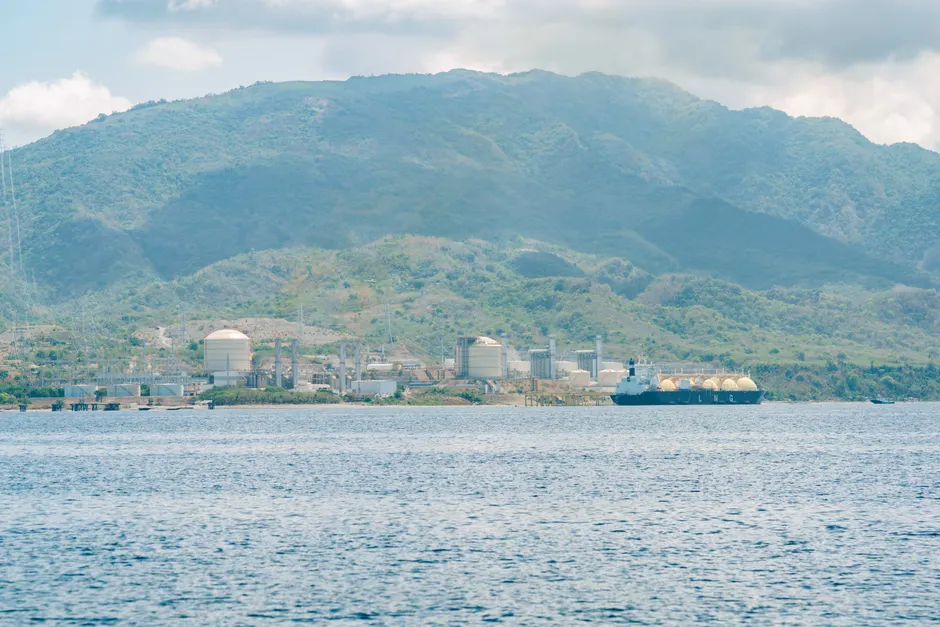
In July 2026, Labor's national conference will vote on a party platform promise to get "a fairer return on Australia's natural resources, including through appropriate taxation arrangements." That wording links directly to a push by the ACTU — the peak body for Australian unions — for a flat 25% tax on gas exports (Guardian Australia).
The ACTU wants to scrap the current tax on gas — called the Petroleum Resource Rent Tax, or PRRT — and replace it with a simple 25% levy on gas that leaves the country. Think of it like a toll on the way out: for every dollar of gas exported, the government takes 25 cents. The current system taxes the gas at the point where it's pulled out of the ground, not when it's sold overseas as LNG. That matters because companies can use accounting tricks to make the profit from selling gas overseas never show up where the tax applies. Greg Jericho, an economics columnist at Guardian Australia, helped the ACTU with the research behind the plan.
The ACTU estimates the 25% tax would have raised $17.1 billion in 2023-24 (ACTU). The Australia Institute, a think tank, gave a Senate inquiry almost the same number: $17 billion a year (Macquarie University Lighthouse).
Those numbers grab attention because the current system is losing money. In 2025-26, Australia exported $52.6 billion more gas than 25 years earlier — a 1,968% increase — yet tax revenue from the PRRT fell by $979 million, a 41% drop. Australia is now the world's second-largest gas exporter, behind only the US and ahead of Qatar. Fifty-six per cent of those exports come from offshore gas fields that pay no royalties at all (Guardian Australia).
The case of Inpex, a Japanese company, shows the problem clearly. Inpex has exported $195 billion worth of gas from projects off the WA and NT coasts. It has paid no royalties, no PRRT, and barely any company tax (Guardian Australia; Inpex). The ACTU separately published a submission claiming Exxon had nearly A$6.7 billion in total income in Australia but zero taxable income and paid zero tax (ACTU).
Reviews of the gas tax have a history of going nowhere. Scott Morrison, when he was treasurer, commissioned a review nearly a decade ago. It recommended minor changes that were never put in place. In 2023, Treasurer Jim Chalmers commissioned another review, which recommended three changes. The government picked the option Treasury liked least — a 90% cap on how much of a company's PRRT-assessable income can be written off — and the one the gas industry liked most. Ministers said it would deliver "more tax sooner" rather than admitting it would raise more tax overall (Guardian Australia). Estimated PRRT revenue keeps being revised downward, though the May 2026 federal budget bucked that trend with an upward revision (ABC News).
A 2026 Senate review into gas taxation, run by the Greens with support from independent senator David Pocock, added to the pressure. Jericho co-wrote a submission to that inquiry. Pocock had already pushed back on the issue: his report to the Senate Economics Committee inquiry into the Treasury Laws Amendment (Tax Accountability and Fairness) Bill criticised the PRRT reform in Schedule 5 as inadequate (Parliament of Australia). Labor senators' additional comments to the gas taxation committee report backed a 25% export tax and tightening of the PRRT (Parliament of Australia).
That puts Labor's own MPs and the conference on a collision course with the Prime Minister. In April 2026, Anthony Albanese ruled out a 25% tax on existing gas export projects (Guardian Australia). Yet the Australia Institute said in March 2026 that Albanese had requested modelling on a potential new gas tax (The Australia Institute). So the PM has both ruled out the tax and ordered modelling on one. That gap is where the conference vote lands.
The Business Council of Australia, which represents big companies, opposes the plan. It argues the tax could cut investment and supply, push up energy costs, and undermine energy security (Accounting Times). ABC's 7.30 program reported that most Australians support a flat 25% tax on gas exports (ABC 7.30). Jericho has also reported that revenue from a gas export tax would fully cover the cost of adding dental care to Medicare (Guardian Australia) — a comparison that, whatever its merits, is designed to hit hard with conference delegates.
The broader context here is a pattern anyone who followed the Rudd-era mining tax will recognise: a tax on resources that looks good on paper but gets steadily hollowed out by concessions and accounting tricks until the government collects a fraction of what was promised. The current gas tax applies to gas at the well, not the exported product. Companies can arrange their finances so the profit shows up only after the gas has left the tax's reach. That is not a loophole you can close by adjusting the rate; it is a design flaw built into the system. The ACTU's export levy gets around this by taxing the volume of gas leaving the country, not the profit a company says it made.
Whether a party platform promise turns into actual government action is another question. Platform commitments are not binding on cabinet. Albanese's April ruling-out was specific about existing projects, and the gas industry's lobbyists will treat the conference vote as the start of a longer negotiation, not the end. But the internal dynamics are worth noting: the ACTU is pushing hard, Labor's own senators have backed the substance, and the crossbench is circling. The PM's modelling request suggests the door isn't as firmly shut as his public ruling implied. For a government that has managed its left flank through three years of careful centrism, a conference vote in favour of a 25% gas export tax is a genuine internal test — not of whether the policy happens this term, but of whether the platform words are broad enough to keep the unions happy without binding the cabinet to anything it doesn't want to do.


