Why Are Investors Suddenly Talking About "Quality Stocks" Again?
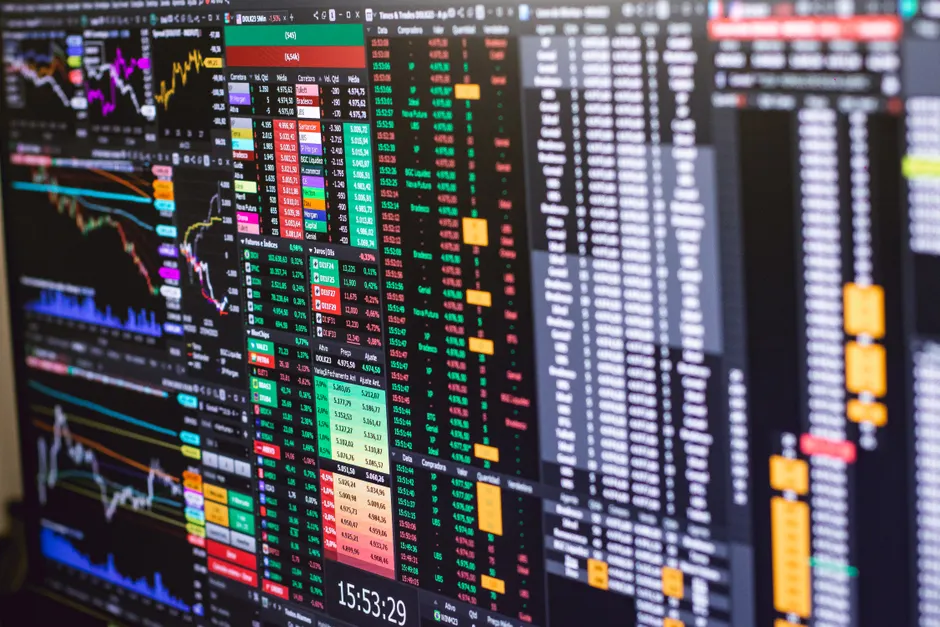
Several big investment firms are making the case that "quality stocks" are set for a comeback in the second half of 2026. The Wall Street Journal reported in July that quality investing is showing signs of a return, and now multiple asset managers and data providers are echoing that view with varying levels of confidence.
"Quality stocks" are shares of companies that are financially healthy. They tend to have strong profits, manageable debt, and steady earnings. Think of them as the companies that keep their house in order, the ones that might not grab headlines but tend to weather downturns better than most.
AllianceBernstein published a research note on July 17, 2026, called "The Evolving Nature of Equity Quality in the Age of AI," using data as of July 1 from Delta One and FTSE Russell. AB's argument is that the definition of "quality" itself is shifting because companies are pouring money into artificial intelligence, which can make their balance sheets look different from how they normally would. The article came out just days after the International Energy Agency's July Oil Market Report documented a $31-per-barrel plunge in North Sea Dated crude during the month, bringing it to $68 by early July 2026.
That oil drop matters to the quality-stock argument. The U.S. Energy Information Administration cut its Q3 2026 Brent crude forecast by $27 per barrel compared to its previous month's outlook, now projecting a $74 average for the quarter. J.P. Morgan Global Research is less bearish, forecasting Brent at $86 for Q3 2026, $80 for Q4, and $78 at year-end. The gap between the EIA and J.P. Morgan forecasts, about $12 per barrel for Q3, comes down to different assumptions about how supply and demand will adjust. Those assumptions feed directly into what analysts expect companies to earn.
Marcellus Investment Managers tackled the topic directly in a July 20, 2026, Quarterly Investor Meetup on YouTube titled "Why Quality Investing is Back in 2026." The timing stands out: Marcellus went public three days after AB's note and ten days after the IEA's report, placing all three within a tight window during which oil's decline was changing how investors think about inflation and business costs across the stock market.
Financial Newswire reported on July 10, 2026, that asset manager Ninety One described a "Goldilocks environment" for investors in 2026, arguing that the AI frenzy opens a window for quality investing. The logic is that AI excitement has pushed valuations of the biggest tech stocks so high that quality stocks, with their strong profits, low debt, and stable earnings, start looking like better value by comparison. Trustnet separately reported that quality stocks could rebound as early as the end of 2026, citing a global fund manager, though without a dated source it carries less weight than the AB, Ninety One, and Marcellus calls.
The broader context is that quality stocks have lagged behind growth stocks and momentum stocks in recent years for three main reasons. First, interest rates were near zero, which made investors less picky about financial quality. Second, money piled into a small group of giant AI-related companies. Third, high energy costs squeezed profit margins at the very industrials and consumer companies that quality screens tend to pick. The oil selloff directly addresses that third problem. The EIA's $27-per-barrel downward revision is not a minor tweak; it is a significant repricing of the cost backdrop that affects profit margins for exactly the cash-flow-stable, low-debt companies that quality investors favor.
The catch is that the oil decline might be telling two very different stories. If oil is falling because there is too much supply, that is good for quality stocks, since their costs go down. But if oil is falling because the global economy is slowing, that is a problem, because the same companies could see their revenues fall too. AB's talk about the "evolving nature" of equity quality in the AI age hints at this tension without resolving it: companies spending heavily on AI infrastructure might look less "quality" on paper because that spending eats into their free cash flow, even if they are otherwise strong businesses.
In my view, the $12-per-barrel gap between the EIA and J.P. Morgan Q3 forecasts is the number to watch. If oil tracks toward the EIA's $74, the cost-side advantage for quality stocks gets stronger. If J.P. Morgan's $86 turns out to be closer to the mark, the inflationary pressure that has benefited growth stocks persists, and the case for a quality rotation gets weaker.
The tight timeline of these calls, Ninety One on July 10, the IEA's oil report on July 10, AB on July 17, and Marcellus on July 20, suggests the trade is being identified and communicated in near-real-time as the data confirms it. Whether quality's comeback happens by year-end, as the Trustnet-cited manager suggests, or takes longer will depend on whether the oil selloff is a supply-driven correction that stabilizes growth, or a demand-driven signal that these companies' revenues are more vulnerable than their cost savings suggest.


