Astronomers May Have Found the First Moon Outside Our Solar System

Astronomers using a powerful telescope in Chile have found evidence for what could be the first known moon outside our Solar System (ESO). The object orbits a brown dwarf — a kind of failed star that is too big to be a planet but not big enough to burn like the Sun — in a star system called CD-35 2722. The study, led by ESO student Kevin Hoy, was published in Nature on 22 July 2026 (Nature).
The brown dwarf at the center of this discovery is more than 30 times the mass of Jupiter, the largest planet in our Solar System. The newly detected object circling it is at least as massive as Jupiter itself. That unusual size led the research team to call it an "exosatellite" rather than simply a moon, since it is closer in mass to a planet than to any moon we know (ESO).
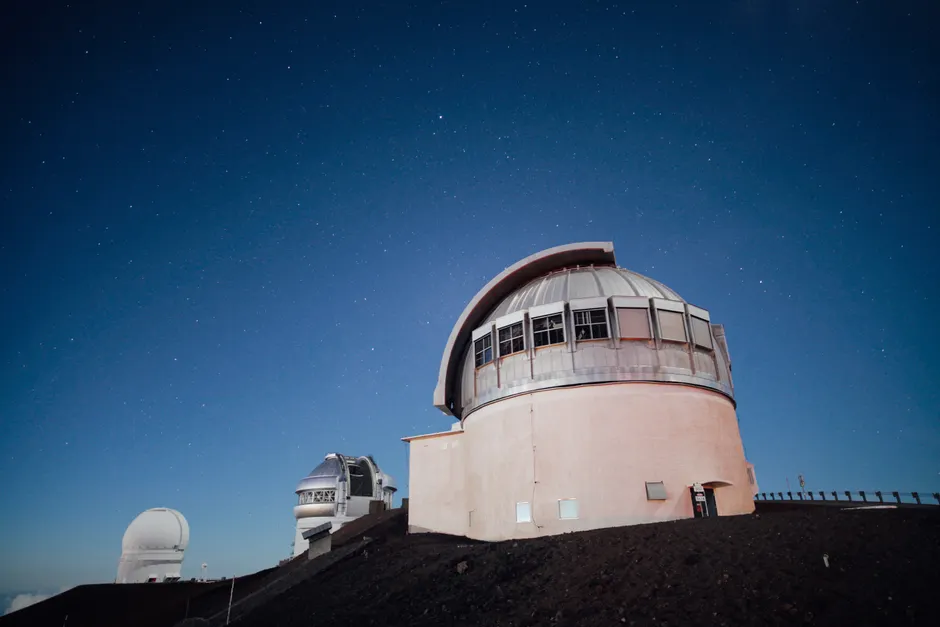
The team found the object using a technique called radial velocity. The idea is that when something orbits another body in space, its gravity pulls on its host, making the host wobble slightly. By measuring that wobble, astronomers can figure out that something is orbiting it, even if they cannot see the orbiting object directly. This is the same method that was used to discover the first planet outside our Solar System, back in the 1990s. Doing it at the precision needed here — on a brown dwarf rather than a full star — is what makes this technically new. The instrument used, called CRIRES+, is a specialized camera attached to the Very Large Telescope that can detect tiny shifts in light in the near-infrared range, beyond what human eyes can see.
Hoy is also affiliated with Universidad Diego Portales and the Millennium Nucleus of Young Exoplanets and their Moons (YEMS) in Chile. Alice Zurlo, YEMS Director and an astrophysicist at Universidad Diego Portales, is a collaborator on the study (ESO).
The context for this discovery is striking. Astronomers have catalogued over 6,000 planets outside our Solar System, but confirmed moons around those planets still stand at zero. A few candidates have been reported over the years, all with limited evidence. In 2014, two research collaborations reported a possible exomoon detected using a method called microlensing, which relies on the way gravity bends light, but the finding has been disputed (arXiv). More recently, David Kipping's lab at Columbia University reported evidence for a second exomoon candidate in older telescope data (Columbia News). A few months before this study, a team led by Quentin Kral used another instrument on the Very Large Telescope to observe the HD 206893 system and found hints of a satellite, but could not confirm it (ESO).
The CD-35 2722 finding stands apart from those earlier efforts because it comes with a peer-reviewed paper in Nature and a direct measurement rather than an indirect hint. Even so, astronomers are already debating what to call the object. Space.com noted the possibility that it could be "something weirder" than a straightforward moon (Space.com). The Chosun Ilbo's science desk also reported on the classification debate (Chosun Ilbo). Time magazine covered the finding on 22 July 2026 (Time).
The debate comes down to this. The object is at least as massive as Jupiter, and it orbits something that is itself more than 30 times Jupiter's mass. The ratio between the two is about 1 to 30, which is not far from the ratio between Earth and our Moon (about 1 to 81). In that sense, the pair resembles a planet with a moon. But the actual sizes involved are so large that calling the smaller object a "moon" feels like a stretch to some astronomers. The brown dwarf does not burn fuel the way a star does, yet it is far heavier than any planet. Its companion, at Jupiter's mass or greater, would be considered a gas giant planet if it orbited a star on its own.
Put simply: the detection is real, and the orbital relationship is clear. But whether the word "exomoon" fits depends on what you think matters most — how the object formed, the size ratio between the two bodies, or where it sits in the system's hierarchy. The research team's choice of "exosatellite" is a reasonable compromise, though it may not satisfy everyone.
The broader pattern here is one we have seen before. In the 1990s and early 2000s, the study of planets outside our Solar System went through a similar phase: a few early discoveries, heated arguments about what counted as a planet, and instruments that worked but were not yet built for the job. Over time, better tools arrived, the discoveries multiplied, and the classification disputes got resolved.
If exomoons follow the same path, this detection could be the first of many. Future space missions and a new generation of giant telescopes currently under construction may eventually find large numbers of these objects. Confirming this particular one will likely require additional measurements — either more wobble data, direct imaging at different wavelengths, or tracking the object's position over time. The Nature paper, titled "Planetary-mass exosatellite detected around the substellar companion of CD-35 2722," is an initial detection, not a final answer (Nature).
For now, the field has its strongest exomoon candidate to date, found using a method with a 30-year track record in exoplanet science. Whether it becomes the first confirmed exomoon, the first confirmed exosatellite, or something that needs a new name altogether will depend on follow-up observations that have not yet been done.