A Startup Making Specialized AI Chips Just Hit a $10 Billion Valuation

A startup called Etched, which builds computer chips specifically designed to run AI models, has raised $300 million in new funding at a $10.3 billion valuation. Sequoia, one of the most well-known venture capital firms, led the investment. Andreessen Horowitz, SK Hynix, Jane Street, and Diffusion Capital also joined the round. Etched says this is the highest valuation ever for a company at this funding stage backed by Sequoia (TechCrunch).
The $10.3 billion figure doubles the company's $5 billion valuation from December 2025, when it raised $500 million. Before that, Etched raised $120 million in June 2024 and $5.4 million in its initial seed round in March 2023 (Reuters, TechCrunch). In about seven months, the company's paper value has doubled.
Etched was founded in 2022 by three Harvard dropouts: CEO Gavin Uberti, COO Robert Wachen, and CTO Chris Zhu. At least one co-founder is a Harvard Thiel Fellow, and at least one co-founded Prod, described as having a $100B+ cohort valuation. Another co-founded a venture called Mentor Labs, which was acquired by Crimson Education (etched.com). Individual backers include Peter Thiel, Andrej Karpathy, Dylan Field, and Amjad Masad (TechCrunch).
A venture capital firm linked to TSMC, the world's largest contract chip manufacturer, has also invested in Etched. That detail was first reported in late June (Bloomberg).
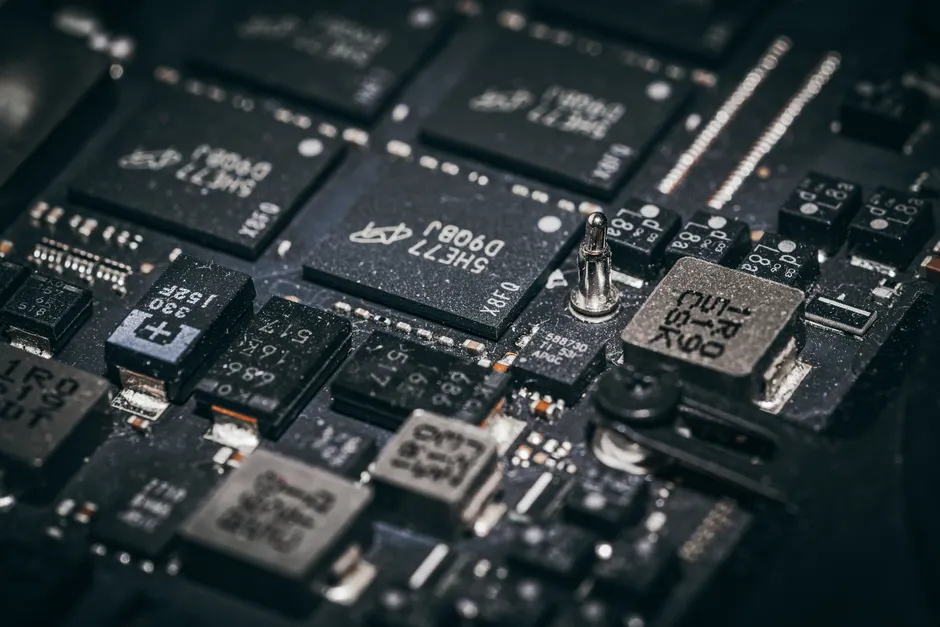
Most AI chips today, like those made by Nvidia, are general-purpose: they can handle many different computing tasks. Etched is taking a different approach. When an AI model processes a request, it does so in two steps. First, it reads and processes the input. Then it generates the response, producing words one at a time. Etched has built separate chips for each of these two steps, optimizing each one individually rather than using a single general-purpose chip for both. The company says this approach, which it calls low-voltage inference for the first step, uses less power and produces results faster for the kinds of AI models that power services like ChatGPT.
Etched says it has successfully manufactured its own chips and that the first complete systems were being tested by clients as of June 2026. The company had booked $1 billion worth of orders as of that month (TechCrunch). The TechCrunch report is based on a direct interview with co-founder and COO Robert Wachen, not a company blog post or press release.
The broader context here is a market where Nvidia dominates AI chip sales and credible alternatives are still scarce. Etched is one of several startups betting that chips designed specifically for running AI models, rather than flexible general-purpose chips, can be cheap enough and fast enough to win customers. SK Hynix's participation in the funding round is notable because the Korean company is a major producer of high-bandwidth memory, the kind of fast memory that Etched's chip design relies on.
The TSMC-linked investment signals that Etched has a working relationship with a major chip factory, which matters because going from a chip design to actual manufactured chips in roughly three years is fast. Whether Etched's $1 billion in orders turns into real revenue at scale is the question that will determine whether the $10.3 billion valuation holds. For now, the company has gone from design files to manufactured chips to client testing in a timeframe that is fast even by the accelerated standards of today's AI hardware industry.
The participation of Jane Street, a quantitative trading firm, alongside strategic investors like SK Hynix is also worth noting. Trading firms have been among the most aggressive buyers of custom chips that need to process information with minimal delay, and Jane Street's interest in Etched may reflect that demand as much as conventional investment returns.
In my view, going from $5.4 million in initial funding to a $10.3 billion valuation in about three years puts Etched in rare company, but the hard part of any chip startup is not raising money or even producing a working chip. It is shipping large quantities, hitting manufacturing quality targets, and keeping a performance edge against a competitor like Nvidia, which reinvests billions every year into improving its own products. The next twelve months, with client testing already underway and orders on the books, will be the period that matters.