Britain's New Northern Power Base: What No 10 North Means for You

On July 24, 2026, Prime Minister Andy Burnham held the first meeting of a government group called the national economic council at a new office in Manchester known as No 10 North. His government calls it "the biggest rebalancing of power our country has ever" attempted (The Guardian; BBC News).
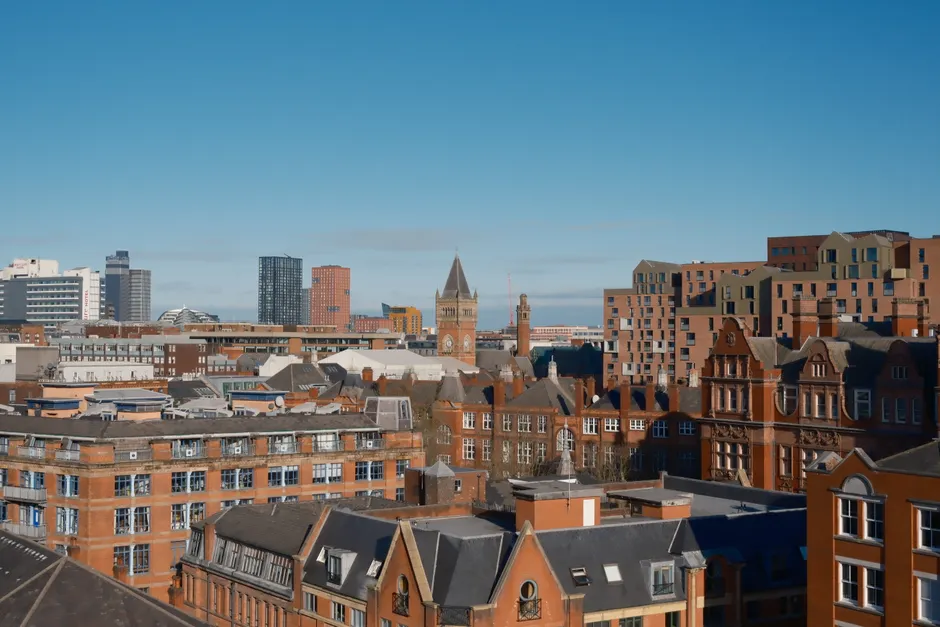
No 10 North is based in Heron House in central Manchester. The same building also houses part of GCHQ, Britain's intelligence agency for electronic surveillance and information security. Burnham is expected to work from this office once a week. Deputy Prime Minister Angela Rayner and Education Secretary Lucy Powell will also use it regularly (The Guardian; BBC News). Louise Haigh, who holds the title Chancellor of the Duchy of Lancaster, oversees the No 10 North operation (BBC News). Government staff based in London, in the area called Whitehall, were offered the chance to move to Manchester before the launch (BBC News).
The national economic council, or NEC, was first set up in 2008 by then-Prime Minister Gordon Brown during the financial crisis. It brings together senior government ministers and regional mayors with the goal of moving economic decision-making away from London. Burnham's version gives it a permanent home outside the capital for the first time. Writing in the Guardian on July 23, Burnham said No 10 North's long-term ambition is "to achieve equivalent living standards across all the regions and nations of the UK" (The Guardian).
The government's early policy announcements include a cap on bus fares, a cut to VAT (a tax added to most goods and services) on electricity bills, and support for pubs and clubs. These measures echo what Burnham did as Mayor of Greater Manchester, where capping fares on the Bee Network, the region's public transport system, was a major achievement. The Conservative leader, Kemi Badenoch, said Burnham is governing "like he's still the mayor of Manchester" (The Guardian).
Rayner, speaking on BBC Radio 4's Today programme, said the Burnham government is on "borrowed time" to turn the country around. She also called the target of building 1.5 million homes during this parliament "a really difficult stretched target" (The Guardian).
The broader context here is a tension built into the No 10 North idea. Burnham's government wants to show authority from outside London, but it still governs through the same government machinery based in London that it says it wants to rebalance. Moving civil servants to Manchester is a test of whether the British state can shift some of its weight northward without losing efficiency. Sharing a building with GCHQ gives No 10 North a level of security infrastructure that Downing Street itself cannot match, but it also shows how much of the state's power still sits in London.
The NEC itself carries both history and risk. Brown's 2008 version was created as an emergency response to a financial crisis. Burnham's version is meant to be permanent. That difference matters. An emergency group can be disbanded once the crisis is over, but a permanent council where ministers and mayors regularly debate how money is distributed creates an ongoing channel for regions to demand more from the government's budget. If mayors use the NEC to push for financial concessions, the council could become a source of conflict between different levels of government rather than a place for agreement.
Rayner's "borrowed time" comment is striking for how honest it is. It suggests the government knows the window for delivering real improvements in living standards outside London may be shorter than its large majority in Parliament implies. That is especially true if the 1.5 million homes target falls behind and the bus fare cap and VAT cut come to be seen as ordinary expectations rather than notable achievements.
Downing Street said No 10 North was "already up and running" as of July 2026 (BBC News). The first NEC meeting on July 24 puts that claim to its first real test.