Europe's Wildfires Are Getting Worse — Here's What's Happening

Wildfires burning across Spain, France, and Italy have killed three firefighters and forced thousands of people to leave their homes as of July 23, 2026 (France 24). Fires are actively burning in southwestern France, central Spain, and the island of Sicily. So far in 2026, wildfires have burned more land across Europe than the yearly average over the past twenty years (Deutsche Welle).
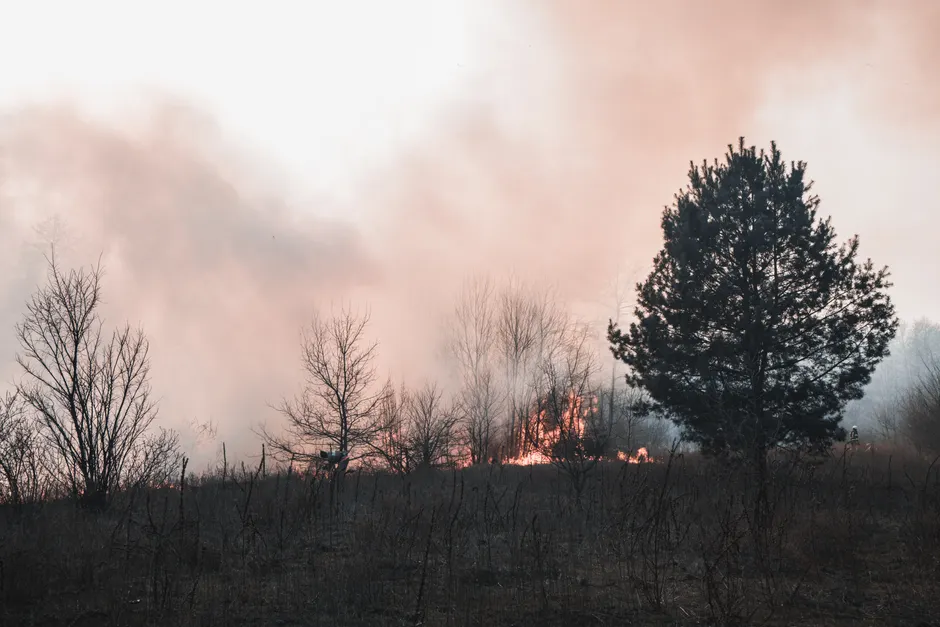
Satellites operated by the European Union's Copernicus program captured images of smoke rising from a wildfire in Castilla-La Mancha, Spain, on July 21, 2026 (Reuters Connect). Reuters satellite imagery also showed smoke and flames from wildfires rising above areas in France, Portugal, and Spain, along with burned areas of land (Reuters). The previous week, over 1,000 people were evacuated due to a wildfire in Spain as of July 17, 2026 (Reuters.
Spain's weather agency, AEMET, expected a new heat wave to hit Spain around July 22, 2026 (El Observador). On that date, people in Madrid noticed an unusual colour in the sky. This was caused by a combination of the heatwave, calima (fine dust blown north from the Sahara Desert), and wildfire smoke. Together, they made the air quality dangerously poor (El Observador). AEMET also kept active marine weather warnings for the Costa de Valencia y Murcia region, valid until Saturday, July 25, 2026 (AEMET).
The European Commission's Joint Research Centre reported that southwestern France faced very extreme fire danger conditions, which extended into northern Spain (European Commission Joint Research Centre). Similar danger levels were also found in pockets across Portugal, the British Isles, and Ireland (European Commission Joint Research Centre). Météo-France, France's weather service, stated on July 23, 2026, that 9 out of 10 wildfires are started by people (Météo-France).
A monitoring service called CAMS (Copernicus Atmosphere Monitoring Service) forecast increased levels of fine particulate matter, known as PM2.5, across Spain and Portugal, leading to severely degraded air quality (Copernicus Atmosphere Monitoring Service). PM2.5 particles are tiny bits of smoke and dust so small they can travel deep into your lungs when you breathe. Spain went from having below-average wildfire emissions to record-breaking emissions in just one week (Copernicus Atmosphere Monitoring Service). Smoke from the wildfires in Spain and Portugal traveled as far as France, the United Kingdom, and Scandinavia (Copernicus Atmosphere Monitoring Service). CAMS had also been tracking wildfire smoke moving across the Atlantic Ocean from both North America and Europe in June and July (Copernicus Atmosphere Monitoring Service).
Earlier in the season, several fires were already burning in southern France (Copernicus Atmosphere Monitoring Service). CAMS predicted high fire risk for Spain, France, and the Benelux region (Belgium, the Netherlands, and Luxembourg) in the first week of July (Copernicus Atmosphere Monitoring Service). AEMET has started using a new fire danger index called IPIF (Índice de Peligro de Incendios) to better assess how likely fires are to start and spread (AEMET).
The broader context here is that several weather hazards are piling up at once, and each one makes the others worse. Spain's jump from below-average to record wildfire emissions in a single week shows how fast dry brush and trees can catch fire when heat and drought persist. Imagine a pile of dry firewood left in the sun: it takes only one spark to turn it into a blaze.
Because smoke does not stop at borders, the PM2.5 particles from fires in Spain and Portugal have reached France, the United Kingdom, and even Scandinavia. When Saharan dust, wildfire smoke, and a heatwave all hit the same place at once, the air becomes dangerous in layered ways that each problem alone would not cause.
The fact that 2026 has already burned more land than Europe's twenty-year average suggests that what counts as a normal fire season is shifting. With extreme fire danger stretching from southwestern France through Portugal and into the British Isles, the areas at risk are getting wider. Météo-France's finding that 9 out of 10 wildfires are started by humans means that prevention and how land is managed matter enormously. As agencies adopt new tools like Spain's IPIF to predict danger, and monitoring services track smoke moving across continents, the data points to one conclusion: managing wildfires is now a challenge that crosses borders.