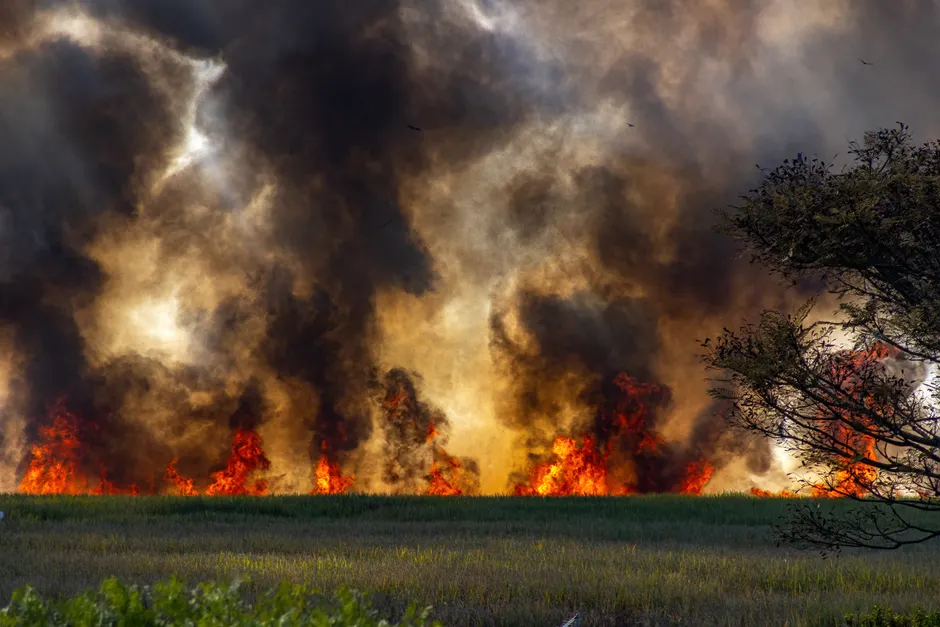
Wildfires in France and Spain Are Forcing 200,000 People From Their Homes

Over 200,000 people have been forced to flee wildfires burning across France and Spain as of July 25, 2026. High winds have made it harder for firefighters to do their work on both sides of the Pyrenees, the mountain range that divides the two countries. Nampa The Independent
In France, 32 wildfires were burning as of Friday, July 24. More than 50,000 hectares (about 124,000 acres) have burned since the start of the year. French Interior Ministry One of the fires has been burning in the Fontainebleau forest, southeast of Paris, since July 12. This is unusual because the area is far north of the Mediterranean and Atlantic coasts where summer fires normally happen. French Gendarmerie
In Spain, the town of El Escorial, northwest of Madrid, is among the populated areas affected by the fires. Nampa As of July 5, Spanish Civil Protection had recorded four large wildfires (over 500 hectares, or about 1,200 acres), which is below the average of seven for that point in the season. Protección Civil Those four fires happened in Luena, Cantabria (February 27), Totana in Murcia (March 29), Ponteareas in Galicia (April 6), and another in Murcia. But the low number early in the season offers little comfort: Spain's worst fires usually come in July and August, and the current evacuation orders suggest the situation has gotten much worse.
The weather behind all of this is extreme. June 2026 was the hottest June ever recorded in France. Météo-France A heatwave from June 17 to June 30 was described by France's weather service, Météo-France, as unusually early, long-lasting, and very intense. In the city of Nantes, the temperature did not drop below 27.2°C (81°F) one night, the highest nighttime low ever recorded there in any month. Météo-France Education The severe heat began to ease around mid-July, with nighttime temperatures still high: 27°C in Nîmes on July 9, 26.6°C in Avignon on July 6, and 25.9°C in Le Mans on July 13. Météo-France Education Météo-France's forecast for July through September pointed to more frequent "anticyclonic blocking" conditions, which means a high-pressure weather system stays parked over an area for a long time, keeping the air dry and still and raising the risk of fires. Météo-France
In Spain, the national weather agency AEMET predicted a very high chance that temperatures from July through September 2026 would be above normal across the entire country, with southwestern Spain facing especially high odds. AEMET AEMET's observed data for July recorded a high of 35.7°C (96°F) and a low of 25.8°C (78°F) in the Comunidad Valenciana. AEMET
France officially launched its summer wildfire response campaign on June 4, 2026. French Interior Ministry The country's fleet includes four additional Canadair water-dropping planes, bought in 2022, to boost its aerial firefighting capacity. French Interior Ministry Spain's wildfire tracking involves multiple agencies: MITECO published a wildfire report covering January 1 through July 12, while Protección Civil issued monitoring reports on July 5 and July 12 and released its annual 2025 wildfire report on March 17, 2026. MITECO Protección Civil
The broader context here is one of extreme weather piling pressure on firefighting systems across two of the largest countries in the European Union. The high-pressure weather pattern that Météo-France expects to dominate through September is the same type that has, in past years, allowed fires to keep burning through the night and flare up again on multiple fronts, making containment harder. You can think of it like a lid on a pot: the high-pressure system traps hot, dry air underneath and blocks the rain and wind shifts that would normally help firefighters get ahead. The Fontainebleau fire's location is worth noting: when wildfires reach forests near Paris in mid-July, the zone of serious fire risk has expanded well beyond the southern coasts that French planners have traditionally focused on. The fact that both countries ordered large evacuations at the same time, while high winds kept firefighting planes grounded at key moments, suggests that the 50,000-hectare figure for France is still rising rather than final.
What is still unclear is how Spain's fire count, which was below average in early July, has changed in the second half of the month. The evacuation numbers from both countries point to a rapid worsening that the July 12 reports from Protección Civil probably do not fully reflect. With AEMET forecasting above-normal temperatures across all of Spain through September, and Météo-France expecting the same high-pressure pattern through the same period, the weather conditions that fuel fires are likely to continue.