A Wildfire the Size of Four Parises Is Heading Toward a French City
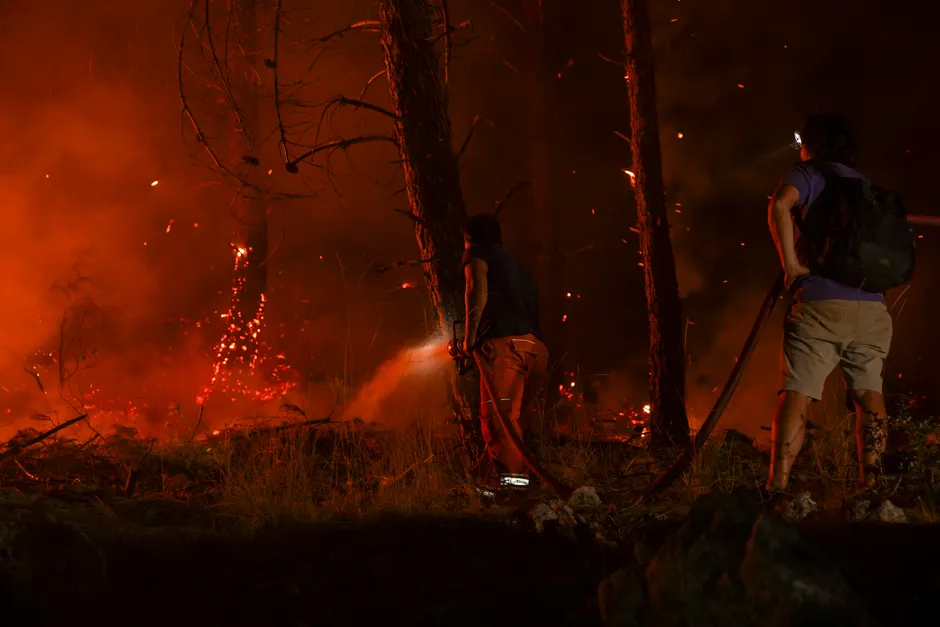
A huge wildfire in southwestern France has burned an area four times the size of Paris, forcing nearly 220,000 people to leave their homes. About 2,500 firefighters are working to stop the fire from reaching the city of Bordeaux, which has 268,000 residents. As of July 26, 2026, the fire was burning 15 to 20 miles (25–30 km) from the city, according to Bordeaux mayor Thomas Cazenave, who said there were no plans to evacuate Bordeaux itself. The Guardian
The fire's behavior has alarmed officials and firefighters. Interior Minister Laurent Nuñez said on July 26 that the blaze had become "extremely virulent and unpredictable again" early on Saturday night, generating its own wind. A firefighter told AFP the fire formed a pyrocumulonimbus. That is a thunderstorm created by the fire itself: the intense heat pushes air upward, moisture and ash condense into a cloud, and that cloud produces wind and whirlwinds. It is as if the fire has built its own weather system. Windy conditions on the night of July 25 hampered firefighting efforts, and five more areas in Gironde were evacuated overnight. The blaze had also reached the Cap Ferret peninsula by July 26, according to Reuters. The Guardian; Reuters
The response is massive. About 2,500 firefighters, including a Swiss team, were deployed, supported by 1,500 military personnel, about 1,200 police, and 450 volunteers. The Gendarmerie Nationale separately reported more than 1,200 gendarmes (a branch of French police) mobilised across Gironde and the neighbouring Landes department. Two firefighters died in the line of duty. The Préfecture de la Gironde's July 24 update reported 42 firefighters injured, with 9 evacuated for urgent care. The Guardian; Gendarmerie Nationale; Préfecture de la Gironde
The number of people forced to leave has climbed steadily since the fire started. A violent wildfire broke out near Bordeaux-Mérignac airport on July 21 around 2pm, and a second blaze was declared near the Bassin d'Arcachon on July 22. Officials named it the "Incendie de Saumos." By July 23, Reuters reported more than 10,000 people evacuated overnight and at least 2,400 hectares (about 6,000 acres) burned west of Bordeaux. The BBC reported around 200,000 evacuated across Gironde and Landes combined by July 25. France24 reported that officials ordered another 55,000 people on the outskirts of Bordeaux to leave on July 25. By July 26, the Guardian figure reached nearly 220,000 in Gironde alone, with nearly 260,000 evacuated across France as a whole. Earlier in the week, 36,000 people were ordered to leave a wildfire zone in Landes. Reuters; BBC; France24; The Guardian
The Gironde blaze is part of a much larger crisis. Prime Minister Sébastien Lecornu warned late on July 25 that the coming hours would be difficult. He said on X that nearly 100,000 hectares (about 247,000 acres) had already burned in France, calling it an unprecedented level, and that about thirty fires were burning at the same time across the country. The Interior Ministry described the Gironde fire as "the biggest fire of the season." The Gendarmerie Nationale reported more than 32,000 hectares burned in Gironde alone. The Guardian; Interior Ministry; Gendarmerie Nationale
Spain is fighting its own fires at the same time. At least 15,000 people were evacuated due to a new wildfire near Valencia on the Mediterranean coast, and fires were also burning west of Madrid. Spanish Prime Minister Pedro Sánchez said Spain was suffering the effects of the climate emergency. In total, wildfires forced more than 375,000 people to flee their homes in France and Spain combined. The Guardian
Three men were arrested in Gironde on July 25 on suspicion of endangering lives; two were accused of setting off fireworks. Officials activated the FR-Alert emergency alert system — France's mobile phone warning system — to order evacuations of additional areas, and had earlier used the same system to order the immediate evacuation of the first villages on the Cap-Ferret peninsula. The 21:30 update from the Préfecture stated that preventive evacuations in the areas of Le Porge, Saumos, Le Temple, and Lège-Cap-Ferret concerned nearly 20,000 people. The Guardian; Préfecture de la Gironde
The pyrocumulonimbus phenomenon deserves special attention because it changes how firefighters can fight the fire. Normally, firefighters plan around the wind: which direction it blows and how fast. But when a fire creates its own thunderstorm, it generates its own wind from multiple directions at once. Containment lines — cleared strips of land meant to stop the fire's advance — become vulnerable because burning embers can fly over them from unexpected angles. Forecasting where the fire will go next becomes far less reliable. Nuñez's description of the fire generating its own wind matches this behavior.
The broader context here is that the rising evacuation numbers tell a story about how fast this crisis is growing. The Interior Ministry counted 167,000 evacuees in Gironde on July 24. By July 26, that number had climbed to nearly 220,000, with more areas added overnight. The fire is threatening Bordeaux from the southwest, has reached Cap Ferret to the west, and has forced evacuations across the Bassin d'Arcachon, meaning there are multiple active fire fronts at once. Lecornu's figure of nearly 100,000 hectares burned nationally, with about thirty fires burning at the same time, places the Gironde blaze within a countrywide emergency rather than a single isolated event. The deployment of Swiss firefighters and 1,500 military personnel signals that France's emergency response capacity is being stretched to the point where outside help and military backup have become necessities, not just backup plans.