A Cricketer Clicked His Fingers to Fool the Umpire — and the Video Went Viral
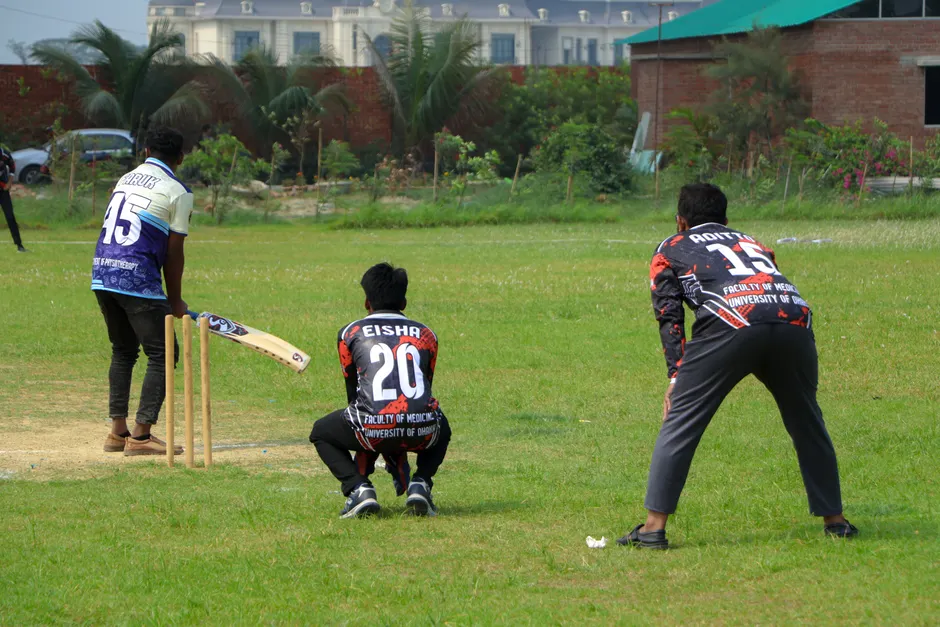
A video showing a cricket fielder apparently clicking his fingers to trick an umpire into declaring a batter out has gone viral, drawing more than 3 million shares on social media and triggering a formal investigation by a local cricket league in England (The Guardian).
The alleged incident happened during a match between Saltburn 2nd XI and Norton 2nd XI on Saturday 25 July 2026. In the footage, posted on social media by Ben Mummery, a local cricketer from Durham, a fielder can be seen clicking his fingers at the moment the batter swings. In cricket, when the ball barely touches the bat and is then caught by a fielder, the batter is out — this is called "caught behind." The fielder appears to have been imitating that faint sound of leather meeting bat, so the umpire would think the ball had touched the bat and send the batter packing (7News Australia; The Guardian).
The controversy was quickly nicknamed "clickgate," and the unnamed player at its centre was dubbed "Clicky Ponting," a joke referencing former Australian cricket captain Ricky Ponting (The Guardian). ESPNcricinfo reported that videos emerged online showing a pattern of similar dismissals involving the same player (ESPNcricinfo). The Times headlined its coverage "Clicky Ponting fools umpires with fake edges" (The Times).
The North Yorkshire and South Durham Cricket League confirmed it had received a formal complaint and launched a full investigation. Saltburn won the match against Norton by 159 runs and, at the time of the story's publication, sat top of their division by 17 points (The Guardian).
The story extends beyond a single match. Rory Cotterill, who captained another local team, Middlesbrough CC's 2nd XI, alleged a similar finger-clicking incident involving the same Saltburn player during a June 2026 fixture. That claim, if proven, would suggest the player used this trick more than once (The Guardian).
The story's reach has been striking for a match played several levels below professional cricket. BBC Sport ran the story under the headline "Local match goes viral over cheating claim" (BBC Sport). The Independent, talkSPORT, The Cricketer Magazine, and Telegraph Cricket all reported on the league investigation, with Telegraph Cricket posting on X that a fielder was "accused of tricking umpires by clicking fingers to signify an edge off the bat" (The Independent; talkSPORT; Telegraph Cricket). The Cricketer Magazine referred to the controversy as the "clickgate" scandal (The Cricketer Magazine, X).
Coverage crossed continents. News Corp Australia's news.com.au, the Brisbane Times, 7News Australia, and Fox Cricket all picked up the story, with Fox Cricket posting video on its Facebook page under the label "grubby act" (news.com.au; Brisbane Times; Fox Cricket).
The broader context here is that amateur cricket is especially vulnerable to this kind of trick. In professional matches, umpires have access to video replays and technology that can review decisions. But at the local level, teams often share a single umpire — sometimes a volunteer from one of the clubs — and there are no cameras. The umpire hears what sounds like the ball flicking the bat, sees a fielder appealing confidently, and has no replay to check. The trick works because, at this level, the umpire's ears are the only tool available.
That Cotterill's separate allegation points to the same player and the same method raises the stakes. If the finger-clicking happened once, it can be treated as a single disciplinary breach. If it was a pattern, the league will face harder questions: how many batters were wrongly given out, whether any match results should be overturned, and what can be done to stop it happening again without installing expensive technology.
The investigation's outcome also matters for the reputation of the league itself. A thorough, transparent process could show that grassroots cricket can handle its own problems. A slow or secretive one would give critics evidence that local cricket cannot regulate itself — and that outside oversight, whether through technology or new rules, is the only fix.
For now, the league has confirmed only that a formal complaint has been received and an investigation is under way. No findings have been published, and no punishments have been announced. The video, meanwhile, continues to circulate.


