Why Korean Chip Stocks Crashed — and What It Means for the Global Tech Race
South Korea's stock market had a terrible day on July 28, 2026. The country's main stock index, the Kospi, fell 10.84% to close at 6,023.66. Two of its biggest companies, SK Hynix and Samsung Electronics, saw their share prices drop by 14.7% and 13.4%. The falls were so steep that trading was temporarily stopped twice to let markets calm down. The damage spread to the United States, where major chip companies like Intel, AMD, and others all fell more than 4%, per The Guardian.
Two things set off the panic. First, news broke that China had started making its own equipment for manufacturing computer chips. Second, investors grew worried that Nvidia, the giant AI chip company, might be taking on too much financial risk by committing $250 billion to a datacentre project.
SK Hynix closed at 1,550,000 Korean won per share in Seoul, down 266,000 won on the day. Reuters reported the 14.7% drop. Earlier figures from Yahoo Finance showed losses of nearly 13% for SK Hynix and over 12% for Samsung before things got worse. SK Hynix's US-listed shares also fell below $149, the price at which the company had recently sold shares to American investors. The company had raised over $26 billion by listing on US markets in July 2026. The Kospi's finish at 6,023.66 was its lowest since mid-April and its worst single-day drop since early March, according to Reuters and Korea Economic Daily data.
The Korea Exchange temporarily stopped Kospi trading twice. These automatic pauses, called circuit breakers, kick in when prices fall too quickly, per the Wall Street Journal and Seeking Alpha.
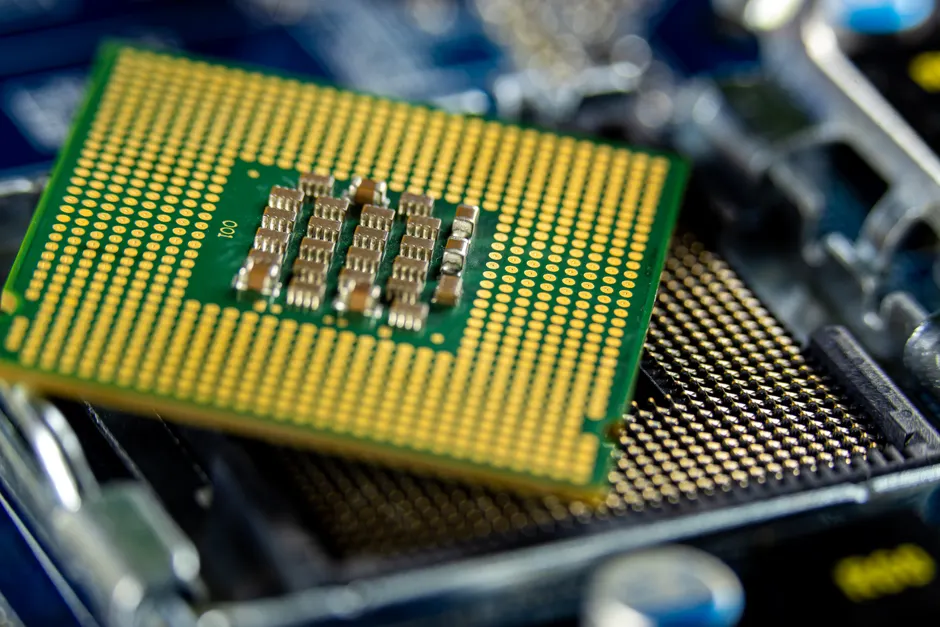
The first trigger came from a publication called The Information, which reported that China had begun mass production of its own chip-making tools. These tools use a technology called DUV lithography. To understand what that means, think of chip-making as printing tiny, incredibly detailed patterns onto silicon wafers. DUV lithography is the standard printing technology used for most of the world's memory and logic chips. Until now, countries like the United States and its allies have tried to restrict China's access to advanced chip-making equipment. If China can make its own, that strategy weakens, and the competitive edge held by Korean and American chip companies shrinks. Reuters tied the Samsung and SK Hynix drops to both "Nvidia financing worries" and "China competition."
The second concern centers on Nvidia. On July 27, The Wall Street Journal reported that Nvidia was in talks to provide $250 billion for an OpenAI datacentre project in Ohio. That same day, Nvidia's own shares fell 5% and dropped below $200. A financial instrument called a credit default swap, which works like an insurance policy against a company failing to repay its debts, also jumped in price, according to Swissquote senior analyst Ipek Ozkardeskaya. When the cost of that insurance rises, it means investors think there is a greater chance the company could run into financial trouble.
Adding to the picture, a Chinese memory chip company called CXMT saw its shares soar 466% on their first day of trading on the Shanghai stock exchange on July 27, 2026. That explosive debut stood in sharp contrast to the losses hitting Korean and American chip companies, reinforcing the sense that China's domestic chip industry is gaining ground.
Not everyone agreed the panic was justified. Morningstar equity analyst Jing Jie Yu called the selloff "largely a kneejerk reaction and overdone," saying the drop reflected fear about China's progress rather than real problems in Korean or American chipmakers' actual businesses. That view will be tested soon enough.
The timing is tense. Samsung Electronics has its Q2 2026 earnings call scheduled for 10 a.m. on July 30, two days after the crash. Investors will be listening closely for what management says about chip prices, demand from AI companies, and the threat from China's new chip-making tools. Samsung had published this earnings schedule back on July 7, when an earlier round of chip-stock volatility was already underway. Nasdaq futures fell that day after Samsung's record quarterly profit still failed to soothe investors. On July 8, SK Hynix fell as much as 7.6% following overnight weakness in US chip stocks.
SK Hynix's July has been a rollercoaster. After its debut on the US Nasdaq, its Seoul-listed shares fell 4.4% on July 13, then jumped 13% on July 15 when a broader US stock rally lifted chip companies. That pattern, a steep drop followed by a steep recovery, is now repeating on a much bigger scale.
The broader context here is that the July 28 selloff stands apart from earlier July tremors because of its size and because the triggers are specific and structural. China's DUV production report gives investors a concrete reason to rethink who will dominate the chip industry. The Nvidia credit-risk signal adds a new layer of worry to what had been a stock-price correction. Whether this selloff proves temporary, as Morningstar argues, or marks the start of a deeper reassessment will depend on what Samsung reveals on July 30 and on how much more we learn about China's chip-tool production plans.


