The Biggest U.S. Power Grid Will Start Cutting Electricity to Large Data Centers in 2027
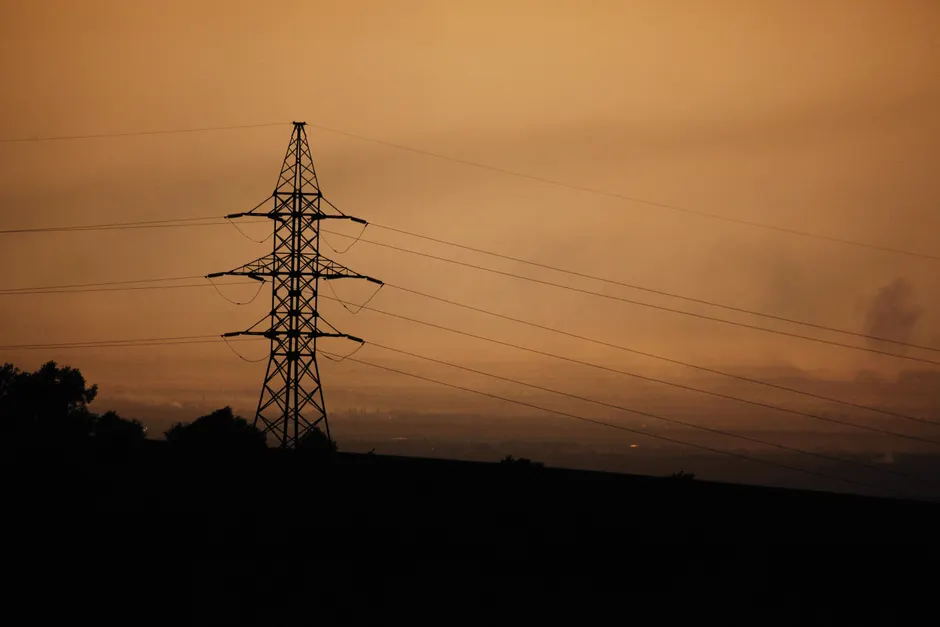
PJM Interconnection, the company that runs the largest electrical grid in the United States, has announced it will temporarily cut power to large data centers and other big electricity users during power shortages to prevent wider blackouts. The program starts in June 2027 and applies to data centers that use 50 megawatts or more — enough electricity to power tens of thousands of homes TechCrunch.
PJM's grid covers an area from Virginia to Illinois and serves 67 million customers. Wholesale electricity prices on the grid nearly doubled over the past year, and the company is holding another auction to try to secure enough power supply after a previous one came up short TechCrunch. Customers whose power is cut will receive financial compensation, with advance notice ranging from 30 minutes to a few days.
The announcement makes official an authority PJM has been building toward for months. In May 2026, PJM received emergency federal approval to cut power to data centers as a last resort before ordering rolling blackouts Utility Dive. That emergency authority specifically targets data centers that have backup generators. PJM wanted data centers to run on their own backup power during a late June 2026 heat wave that threatened to set record electricity demand across its territory, but needed federal approval to require them to do so Maryland Matters.
PJM's own forecasting documents show the pressure in detail. The company's 2026 Load Forecast Report documents data center electricity growth across multiple local utility areas, including AEP, ATSI, APS, BGE, COMED, Dayton, DQE, JCPL, METED, and PECO PJM Load Forecast Report. The projections from individual utilities are striking. PSE&G projected data center demand in its territory reaching 3,084 MW by summer 2031 and 3,461 MW by summer 2046 PSE&G documentation. NOVEC, the Northern Virginia Electric Cooperative, requested a forecast adjustment to reflect continued data center expansion in its area NOVEC documentation. AES Ohio submitted a large forecast adjustment indicating that data center loads in the Dayton zone are expected to grow large and continuously AES Ohio documentation.
A May 2026 PJM special report called "Powering Reliability Through Market Design" goes beyond emergency cutoffs. It describes systems that could reduce data center power consumption by 10%, 20%, or 30% within seconds by coordinating when those data centers run their computing work PJM Special Report. That language points toward a future where data centers are not just shut off during emergencies but actively managed as a resource the grid can call on. PJM's 2024 Regional Transmission Expansion Plan report had already identified data center growth as a primary driver of rising electricity demand PJM RTEP Report, and the company's blog reinforced the point in January 2026, citing data center growth as a key factor in its 20-year forecast PJM Inside Lines.
The 50-megawatt threshold is a deliberate choice. It targets the massive data centers that dominate Northern Virginia's "Data Center Alley" and similar clusters in Ohio and Illinois, while leaving smaller data centers outside the program. The compensation and advance-notice window set this apart from rolling blackouts, giving operators time to reduce their power use gradually rather than facing a sudden shutdown.
For operators of large data centers in PJM's territory, the situation is now concrete. Facilities above 50 MW will need to plan for the possibility of power cuts beginning next summer, with notice that could be as short as 30 minutes. The compensation softens the financial impact, but it does not solve the operational challenge of reducing a large share of electricity use on short notice. Data centers with backup generators also face the prospect of being asked to disconnect from the grid entirely and run on their own power during emergencies.
The broader context here is that electricity demand was flat or declining for about two decades, and grid planning was built around that assumption. In roughly three years, that assumption has been overturned. PJM's territory is absorbing new electricity demand faster than new power plants and transmission lines can be built. The operator is now reworking its market design to treat large flexible electricity users as a managed resource rather than just a drain on the system. The special report's vision of reducing data center power in seconds imagines data centers acting like a standby power source — cutting their demand fast enough to help the grid avoid a shortage.
Whether the data center industry's software tools, power systems, and customer commitments can actually deliver that level of coordination at grid scale is an open question. The June 2027 start date gives affected operators roughly a year to prepare. PJM is also working on the supply side, running additional auctions to close the gap from earlier rounds. Both approaches — managing demand and adding supply — will need to come together to keep the grid stable as data center electricity use continues its steep climb across PJM's territory.