Logitech's New Mice With Batteries You Can Swap Yourself? Europe Only.
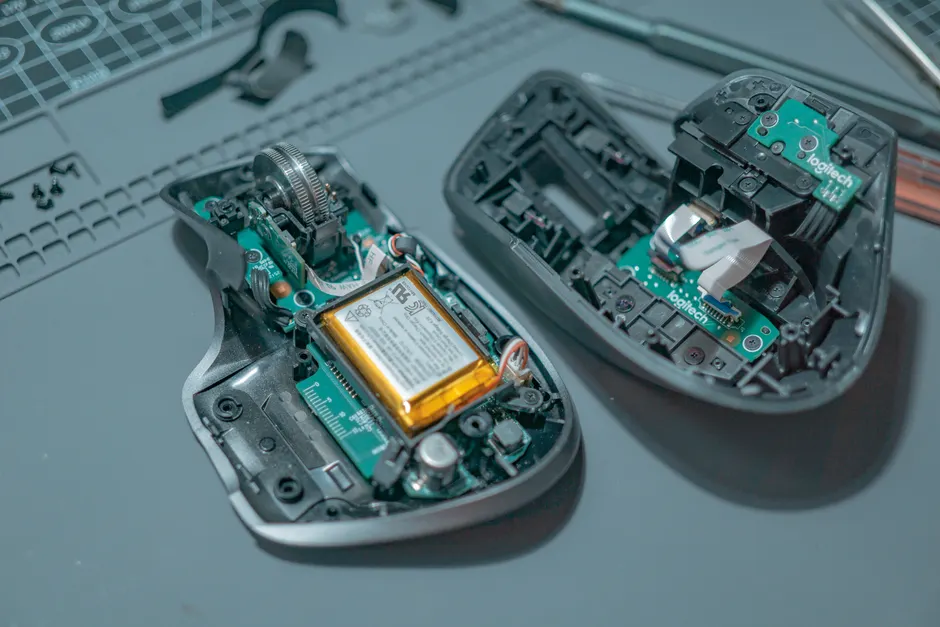
Logitech plans to sell wireless mice with batteries you can replace yourself only in Europe. The United States and the rest of the world will keep getting the company's current designs, where the battery is sealed inside and cannot be removed. Robin Piispanen, Logitech's gaming head, told The Verge that the company will not bring the replaceable-battery versions of its mice to the US market.
The decision is a direct response to a new EU law. Starting in February 2027, electronic devices sold in the European Union must have batteries that users can take out and replace themselves. An earlier EU rule already requires this for smartphones and tablets, and the newer rules extend it to a wider range of consumer electronics (iFixit). On July 14, 2026, the European Commission published a list of exceptions, exempting certain categories like wearable devices such as the Apple Watch (9to5Mac). Mice and other wireless peripherals were not on that list.
Piispanen told The Verge that Logitech's European wireless products will use hard-pack batteries rather than soft-pack cells, a choice the company says is about safety. Soft-pack batteries, which are common in small devices, are easier to puncture or swell up when handled by people who are not trained technicians. Hard-pack batteries come in a rigid shell that protects the battery inside, making it safer when a user pops it out and puts a new one in.
Logitech will also sell certified replacement batteries in Europe for its wireless products. The company already runs 6 iFixit Online Repair Hubs covering 34 countries, including Austria, Belgium, Bulgaria, Croatia, and Czech Republic, where customers can order replacement batteries for supported devices. Those hubs were set up before the 2027 rule took effect, as part of a broader repair commitment Logitech announced on January 23, 2025.
What the company does not plan to do is go beyond batteries. Piispanen told The Verge that Logitech does not sell individual wear-and-tear parts such as rubber grip pads or mouse switches to consumers. The repair effort, in other words, covers only the part the EU requires to be replaceable, and not much more.
Piispanen also shared Logitech's own prediction: very few customers will actually replace batteries in their mice. The company's projections suggest that the percentage of users who open the battery compartment and swap in a fresh one will be low, which raises a practical question about whether the cost and effort of redesigning products is worth it for a feature few people will use.
The result is a two-tier product lineup. European customers get mice designed so they can swap batteries, with certified spare cells available through existing iFixit infrastructure. Everyone else, including the large US gaming market, gets the current sealed designs. Logitech has not announced any timeline for bringing the replaceable-battery versions beyond Europe.
Logitech, founded in 1981 in Lausanne, Switzerland, and listed on the SIX Swiss Exchange (LOGN) and Nasdaq Global Select Market (LOGI), ships more than 3.5 million items each week. Its brands include Logitech G, Streamlabs, and Ultimate Ears. The company claims industry firsts including the infrared cordless mouse, the thumb-operated trackball, and the laser mouse.
The broader context here is that different rules in different parts of the world are leading to different products. We have seen the EU use its legislative power to reshape consumer electronics before, most visibly when it forced Apple to switch to USB-C charging. The battery rules, however, are producing a different outcome. Instead of one global redesign, Logitech is splitting its product line in two. The EU rule only applies to devices sold in its territory, and Logitech has decided that the cost of extending the redesign to markets with no similar regulation is not worth it given how few customers are expected to use the feature.
In this author's view, that decision is worth examining. Piispanen's admission that few customers will actually swap batteries suggests Logitech sees the redesign as a legal requirement to check off, not a feature it expects people to want. The certified batteries and repair hubs give the program real substance, but the lack of other replaceable parts like switches and grip pads means a user can extend the battery's life but cannot necessarily extend the mouse's overall life. A mouse whose battery you can replace but whose broken button you cannot fix has gained a longer power cycle, not a longer lifespan.
For anyone watching the right-to-repair movement, Logitech's approach shows how manufacturers are responding to EU regulation: complying where required, offering certified parts where the infrastructure already exists, and not going further than the law demands. Whether other mouse makers follow the same split approach or choose to offer replaceable designs everywhere is still an open question. Logitech has made its position clear.