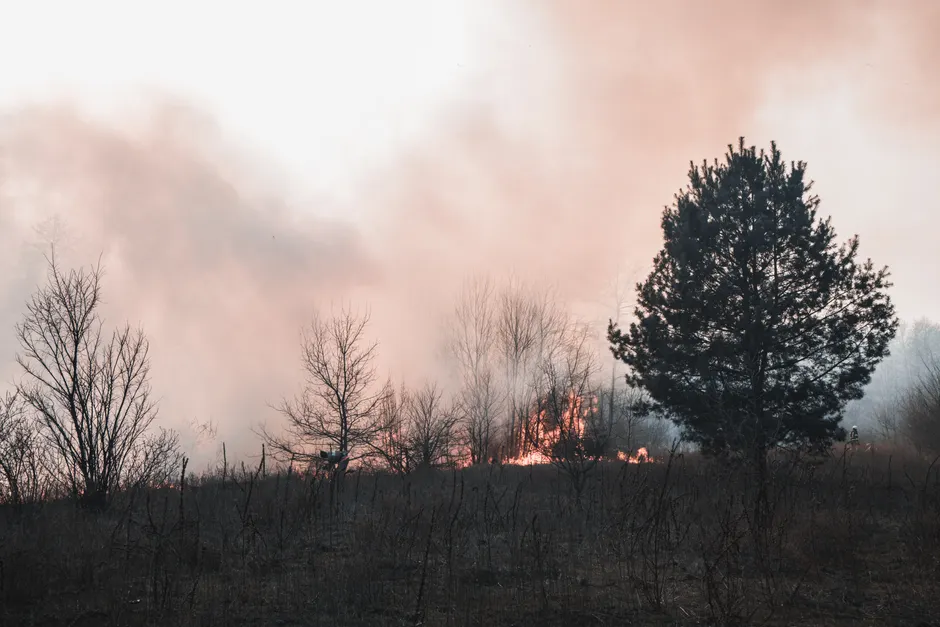
France and Spain Are Burning: What's Happening With the 2026 Wildfires

Hundreds of thousands of people have been forced from their homes across Spain and France as huge wildfires, driven by repeated heatwaves, burned through forests and countryside from the outskirts of Paris to Spain's eastern coast by late July 2026 (NPR).
In France, about 220,000 people had been evacuated as of July 26. Fires threatened the Bordeaux area and burned across the Gironde and Landes regions (Reuters). President Emmanuel Macron said on July 27 that the fires in Landes were "contained" and those in Gironde were "stabilized" — meaning firefighters had gotten the blazes under enough control that they were no longer spreading fast (CNN). But that progress came at a cost: two firefighters died on July 21 around 2:30 PM while fighting wildfires in Gironde (Gendarmerie nationale).
The fires even reached the Paris region. A large wildfire broke out in the Fontainebleau forest in Seine-et-Marne on July 12 and burned about 10% of that historic forest (Gendarmerie nationale; French Interior Ministry). French authorities warned that an intense heatwave would peak on July 29. That same day, Spain's emergency agency issued an alert for the fourth heatwave of the summer, also starting July 29 and expected to last until August 2 (CNN).
In Spain, the numbers tell the story. As of July 5, about 50,751 hectares of forest had burned. By July 27, Prime Minister Pedro Sánchez announced from a command post in Castellón that over 170,000 hectares had burned across Spain — six times more than during the same period the year before (Spanish Presidency; Protección Civil). More than 75,000 people had been evacuated in Spain, and another 30,000 were ordered to leave as of July 26 (Reuters).
The fires started early in the month and spread quickly. On July 1, a fire in Santa Elena (Jaén) forced 190 people to evacuate, and another fire in Yeste-Molinicos (Albacete) damaged a power line. Between July 6 and 9, nine wildfires started in Catalonia (Protección Civil). Sánchez visited a fire in La Mierla, Guadalajara, on July 22, then toured command posts in Navaluenga on July 26 and Castellón on July 27, showing how widely the fires spread across different regions of Spain (Spanish Presidency).
On July 28, the Spanish government approved wildfire aid and special labor protections for people in affected areas. It also declared 211 zones across 14 regions as emergency-affected, which gives those areas access to emergency funds and tax relief (La Moncloa; Protección Civil). That same day, authorities allowed residents to return to 13 towns as emergency measures were scaled back (Reuters.
France had started preparing earlier. The Interior Ministry launched a wildfire prevention campaign on June 9 aimed at both French citizens and tourists. On July 24, it published an emergency guide for dealing with extreme heat as part of a broader plan to improve prevention, firefighting, and recovery after fires (French Interior Ministry; French Interior Ministry).
The two countries took different approaches to the same problem. Spain relied on fast emergency declarations and labor protections to help people affected by the fires. France focused on planning ahead and warning the public before fires started. Both approaches are now being tested by a fourth heatwave that began July 29 and, in Spain, was expected to last through August 2. With fires in Landes contained but Gironde only stabilized, and with Spain starting to let people return home even as a new heatwave approaches, the coming days will show whether the progress holds or the fires get worse.
The broader context is that Spain's sixfold increase in burned area compared to last year fits a pattern European fire agencies have been watching for several fire seasons now. The question for governments is no longer whether the wildfire threat is getting worse, but whether their tools and systems can keep up with how fast it is changing.