The U.S. Just Banned New Foreign-Made Robots and Solar Power Equipment. Here Is Why.
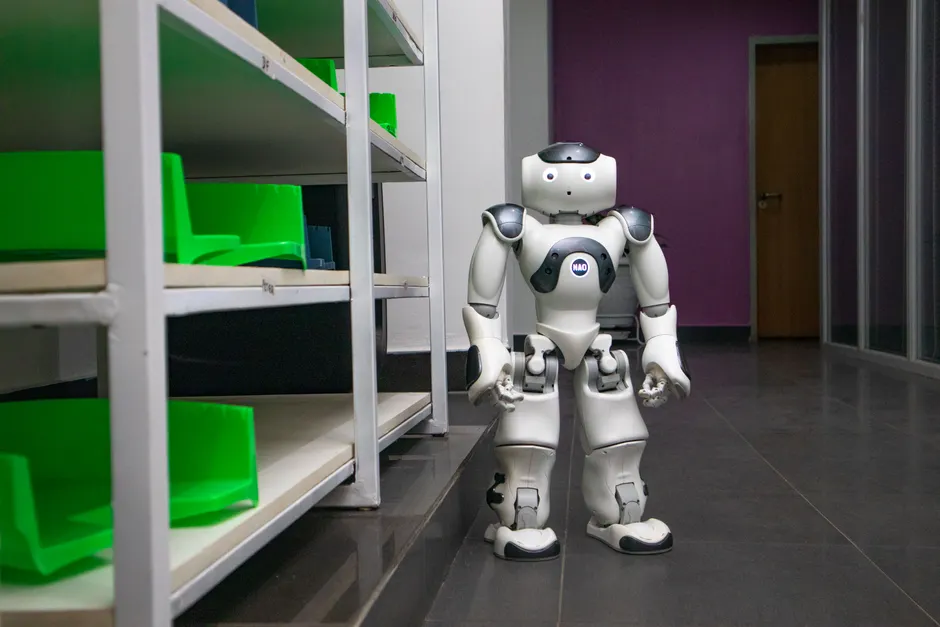
The U.S. Federal Communications Commission has banned the import of new foreign-made humanoid robots, robot dogs, and power inverters, citing risks that such devices could be remotely controlled, used for surveillance by foreign governments, or deployed in cyberattacks against U.S. infrastructure. Fox Business first reported the ban on July 28, 2026, with TechCrunch and the Associated Press providing fuller details on July 29 (TechCrunch).
The ban predominantly affects imports from China, which holds the vast majority of global market share across the affected product categories. China's two largest robot makers accounted for most of the approximately 15,000 humanoid robots shipped worldwide in 2025 (AP News).
Power inverters are devices that convert electricity from solar panels and batteries into the type of electricity that homes and the electrical grid use. They were included in the ban because they sit at the edge of the energy grid and increasingly come with internet-connected monitoring and remote management features, meaning they can be accessed or controlled from afar.
The FCC stated that exceptions to the ban will be granted on a case-by-case basis if the government determines that a specific device does not pose a risk to U.S. national security. Devices already installed in homes and other deployments are unaffected. The ban applies to new imports only.
China's Foreign Ministry rejected the action, with a spokesperson stating China will use "all measures necessary" to protect its businesses (AP News). The statement signals potential retaliatory measures, though no specific countermeasures have been detailed.
Reuters reported in January 2026 that the Trump administration's ban on new Chinese robots and inverters is aimed at protecting the U.S. AI buildout (Reuters). That framing ties the import restrictions to the broader strategic competition over AI infrastructure, where humanoid robots are increasingly understood as robots whose bodies house artificial intelligence that perceives its surroundings and takes action in the real world, rather than as conventional factory machines.
The FCC action adds to existing rules. The Bureau of Industry and Security's Commerce Control List already includes export controls on robots, robot controllers, robot end-effectors (the grippers and tools at the end of a robotic arm), and solar cells, with a license required for all destinations (BIS). The FCC ban adds a matching import-side restriction, meaning that certain robot categories are now subject to controls on both the export and import sides.
The combination of humanoid robots, robot dogs, and power inverters in a single ban is notable because these are not obviously related product categories. Humanoid robots and robot dogs are emerging platforms with built-in computers, sensors, and internet connectivity. Power inverters are hardware connected to the energy grid that increasingly includes remote management capabilities. The common thread the FCC identified is the risk that networked, foreign-manufactured hardware creates when deployed at scale inside U.S. homes, businesses, and energy infrastructure — think of it like allowing millions of devices from a single foreign supplier into your country, each one with a camera, a microphone, and an internet connection that you do not fully control.
The humanoid robot market is still in its early stages. Fifteen thousand units shipped globally in 2025 is a modest figure by consumer electronics standards, but the trajectory matters. Chinese manufacturers have established an early dominant position in both humanoid and quadruped form factors, and the FCC's ban effectively closes the U.S. market to those suppliers unless they can clear a national security review. For U.S.-based robotics companies and their investors, the import restriction removes low-cost foreign competition from the domestic pipeline. For integrators and enterprises that had planned deployments around Chinese hardware, it forces a re-evaluation of sourcing.
The inverter ban has a different practical footprint. Solar inverters and power conversion hardware are already deeply embedded in U.S. residential and commercial energy installations. While the ban does not touch existing deployments, it will affect the supply chain for new solar and storage projects. China's dominance in inverter manufacturing means that U.S. developers will need to identify alternative suppliers or pursue the exception process for specific products.
The broader context here is the precedent this sets for the regulation of robots powered by artificial intelligence. The FCC has previously addressed national security concerns around telecommunications equipment, most notably through restrictions on Huawei and ZTE networking gear. Extending that logic to humanoid robots and robot dogs treats these devices as potential surveillance and cyber infrastructure rather than consumer products. As humanoid robots gain cameras, microphones, and always-on internet connections, the rules that apply to them will likely track closer to the ones governing telecom equipment than the ones governing conventional household appliances. The inverter inclusion suggests that any internet-connected hardware with foreign-origin software or remote management features could fall under similar scrutiny.
For anyone whose work involves buying or deploying foreign-manufactured robotics or power conversion hardware, the practical implications are straightforward. Any procurement pipeline that includes such equipment should be reviewed against the FCC's covered list. Organizations deploying humanoid robots or robot dogs in sensitive environments should expect heightened supply chain scrutiny. And the exception process, while available, will likely involve documentation and review timelines that procurement teams have not previously encountered for robotics hardware.