Razer's New Magnetic Keyboards Are Cheaper Than the Competition — But One Feature Is Already Banned

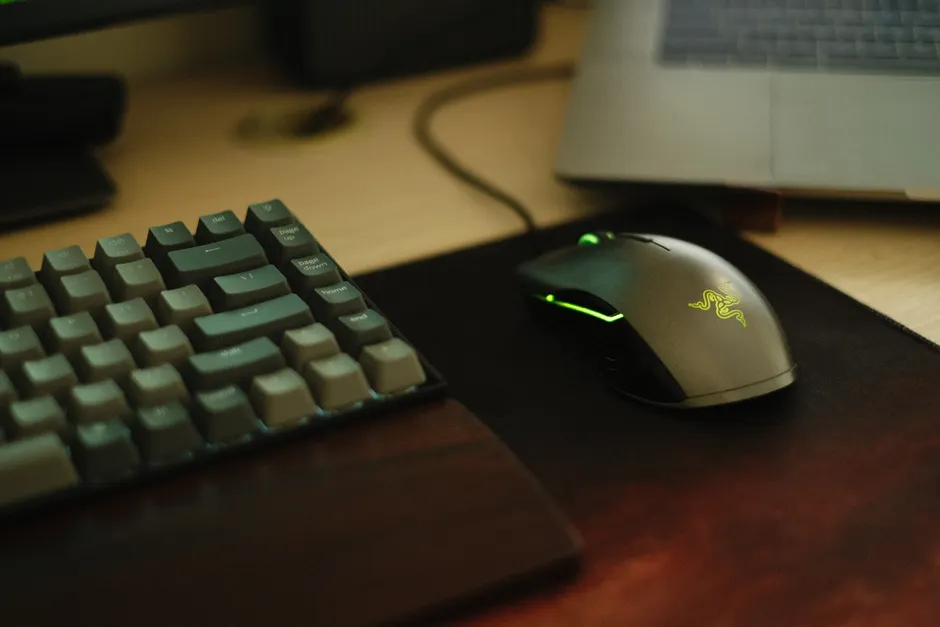
Razer has launched two new gaming keyboards that use magnets to detect key presses: the Huntsman V3 HE Magnetic Mini at $120 and the Huntsman V3 HE Magnetic Tenkeyless at $140. Both are wired-only and went on sale July 30, 2026, according to The Verge.
Most keyboards register a key press when two metal contacts physically touch. Magnetic keyboards work differently: each key has a small magnet underneath, and as you press the key, the magnet moves closer to a sensor that detects the press without anything physically touching. Because there is no physical contact point, the keyboard can measure exactly how far down you have pressed a key and let you customize when it registers.
This enables some advantages for competitive gaming. You can set a key to register with a very light press, or make it re-trigger instantly when you press it again after letting go even slightly. Both keyboards also report their state to the computer 8,000 times per second, which reduces input delay.
The new boards have an average input delay of 0.6 milliseconds. That is slightly slower than Razer's own optical keyboards, which use beams of light to detect presses and average 0.48ms. But the optical models start at $220, making these new magnetic boards $80 to $100 cheaper at entry.
Razer includes three software features aimed at competitive first-person shooters:
- Snap Tap makes it easier to change direction quickly in games by letting you press a new movement key before fully releasing the old one.
- Snap Flex lets a key do one thing when you press it and another when you release it, effectively doubling what a single key can do.
- Dual-Keypress Priority prevents an accidental third key from interrupting two keys you are already holding down.
Snap Tap is controversial. Valve banned the feature in Counter-Strike 2, and some competitive players consider it a form of cheating. Razer is including it anyway, so if you play a game that restricts Snap Tap, you will need to turn it off yourself or risk penalties.
The market for magnetic gaming keyboards has been narrowing to a few brands. Razer is now competing directly with Wooting, Asus, and SteelSeries. Wooting's comparable keyboards cost roughly $60 more, which makes Razer the value option among the established names.
That pricing gap matters. For the last two years, magnetic keyboards have been high-end products with high-end prices, and Wooting built its reputation on premium switch performance. By launching at $120 and $140, Razer is putting the same kind of price pressure on magnetic keyboards that the broader mechanical keyboard market felt when mainstream brands pushed traditional mechanical boards below $100.
The feature set is similar, the speed difference is tiny, and Razer has more brand recognition. That combination will probably push competitors to lower their prices whether they want to or not.
The speed difference between Razer's two switch types is real but likely not something most players would notice. A 0.12ms gap between 0.48ms and 0.6ms is measurable, but it is far below the point where human reaction time or monitor refresh rate would make it the limiting factor. For context, a single frame on a 240Hz monitor takes about 4.2ms to display, which is roughly seven times longer than the difference between the two switch types.
Razer is essentially covering both bases rather than picking one technology. The optical Huntsman line is the faster, more expensive option; the new magnetic line targets buyers who want similar features at a lower price. Whether someone prefers optical or magnetic switches is increasingly about how they feel to type on and which specific features they support, not about one being clearly better.
The Snap Tap situation is the biggest open question in this category. Razer, Wooting, and others are shipping movement-assist features that game developers are actively restricting, and enforcement varies from game to game. If you are spending $120 to $140 on a keyboard whose headline feature may not be allowed in the game you play most, that is worth thinking about before buying. The hardware itself is solid. The software features are where the disagreement lies.