Trump Hits Pause on Attacking Iran — But Is a Real Deal in the Works?
US President Donald Trump announced on August 2, 2026 that he was holding off on a major military attack against Iran. He said the decision came after Iran and other countries in the region asked for a pause, once the basic shape of a deal had been agreed (Al Jazeera). Trump said the deal would include the "immediate, complete, and total opening of the Strait of Hormuz and an end to Iran's nuclear threat" (CNN). He also said the US and Israel have agreed to stop new attacks on Iran, as long as a deal to end the months-long conflict is reached "rapidly" (Al Jazeera).
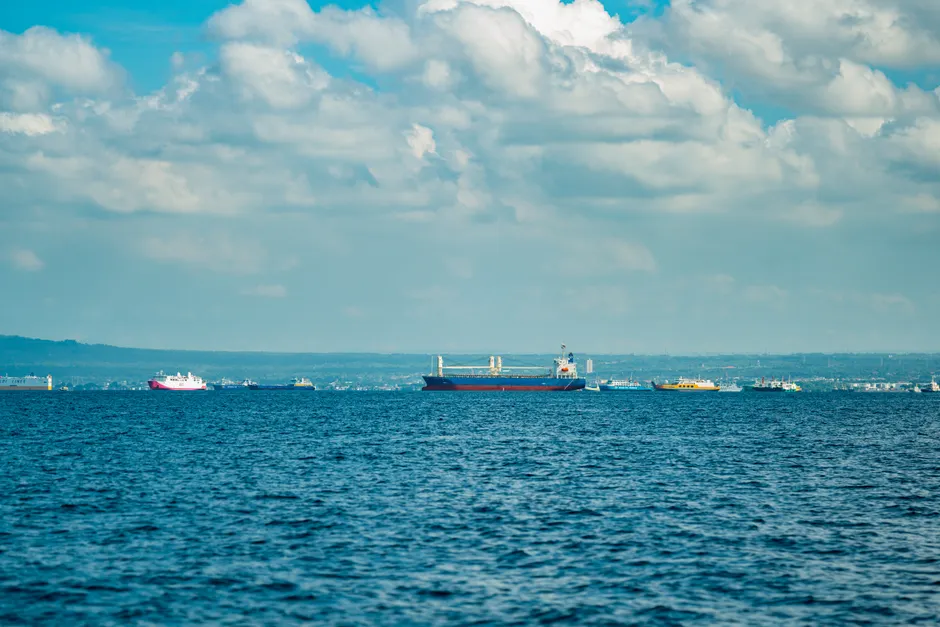
The Strait of Hormuz is a narrow strip of water between Iran and Oman. It is one of the most important shipping routes in the world because a huge amount of the world's oil passes through it. Think of it as a toll booth on a highway: whoever controls it can let traffic through or shut it down.
The pullback came after Saudi alarm and threats from Tehran. Saudi Arabia's Crown Prince Mohammed bin Salman spoke by phone with Trump before the announcement, stressing the need to prioritise dialogue to reduce escalation (The Guardian). Iran's Foreign Minister Abbas Araghchi had a separate phone call with Saudi Foreign Minister Faisal bin Farhan on Saturday night (Al Jazeera). Pakistan, Qatar, Oman, and Turkiye have also been exchanging messages and trying to nudge both sides toward an agreement (Al Jazeera).
Tehran's response to Trump's announcement was sharply skeptical. Iran's acting Defence Minister Majid Ebn-e-Reza said Trump's pullback comment was part of "psychological operations and a war of calculations," while adding that threats from the US are taken seriously even if delivered as part of psychological warfare (Al Jazeera). A ceasefire is a formal agreement to stop fighting. Iran's foreign ministry spokesperson said Trump's claim that Iran had requested a ceasefire is "false and baseless" (Crisis Group).
The gap between Trump's account and Iran's denial is one of the clearest warning signs. It raises the question of whether a real deal exists or whether Trump's words are being used to justify a pause.
Iran's wartime military command warned on August 1 that US and other interests across the region could be attacked in tit-for-tat strikes if Washington launched threatened attacks against civilian infrastructure, including power plants and petrochemical manufacturers (Al Jazeera). In other words, if the US bombed Iranian facilities, Iran would strike back at US-connected targets across the Gulf and beyond.
The Strait of Hormuz remains effectively closed. The IRGC-affiliated Fars news outlet reported that numerous ships were stuck in the northern corridor of the Strait in Iranian waters on Sunday at noon and could only pass if Iran's armed forces allowed (Al Jazeera). The IRGC, or Islamic Revolutionary Guard Corps, is a powerful part of Iran's military that operates separately from the regular army. Iranian authorities said the same restriction would remain in force for the southern sea corridor passing through Oman's territorial waters (Al Jazeera). The IRGC has continued to strike or turn back ships attempting to transit the Strait (Al Jazeera).
The US Department of Defense reported in May that Iran had blocked safe passage through the Strait for commercial cargo and tanker vessels, trapping thousands of ships inside the Persian Gulf, and launched "Project Freedom" to escort them through (US Department of Defense). Secretary of War Pete Hegseth said Iran had repeatedly threatened and attacked commercial shipping in order to cut off traffic and damage the economy (US Department of Defense). The US has maintained that its action against Iran is a blockade of Iran's ports and coastline, not a blockade of the Strait itself, with enforcement occurring inside Iran's waters (US Department of Defense). Sanctions are economic penalties meant to pressure a country by cutting off its trade. They have been a key US tool throughout the conflict.
A memorandum of understanding, or MoU, reached between Iran and the US in June 2026 partially reopened the Strait in exchange for lifting a US blockade on Iran's southern ports and offering a two-month relief from oil sanctions (Al Jazeera). That MoU immediately became a point of contention: the US said it entitled ships to pass through the southern corridor, while Iran maintained the agreement left its armed forces in charge of making arrangements for passage (Al Jazeera). All provisions of the June MoU have since been rolled back, with military strikes resumed and fears of a wider conflagration growing (Al Jazeera).
Iranian forces first declared the Strait closed on March 4, 2026, threatening and carrying out attacks on ships attempting transit (Congressional Research Service). The conflict has since cycled through escalation, a fragile MoU, rollback, and now another attempted pause. Each time, the core dispute over who controls passage through the Strait has gone unresolved.
The broader context here is that every prior agreement has run into the same wall. Washington treats transit through the Strait as a right. Tehran treats it as a privilege that Iran's military can grant or deny. The June MoU papered over that disagreement instead of fixing it, and its collapse was the result. Trump's August 2 announcement calls for the same two things as before: Hormuz reopened and the nuclear threat ended. There is no sign the underlying dispute over who controls the Strait has been addressed. Tehran's denial that it asked for a ceasefire, along with the defence minister calling Trump's statement psychological warfare, suggests the two sides may not even be talking about the same thing.
What the regional mediators may be able to offer is a face-saving formula. Trump gets to say Iran asked for a pause. Iran gets to say it never did. Both point to an agreement that exists mostly as an outline. Whether that formula holds up against the IRGC's day-to-day control of the Strait, which has not stopped for any previous diplomatic deal, is what will determine whether this pause becomes a lasting step toward peace or just another break between rounds of fighting.