Arizona Court Says Clergy Don't Have to Report Child Abuse They Hear in Confession
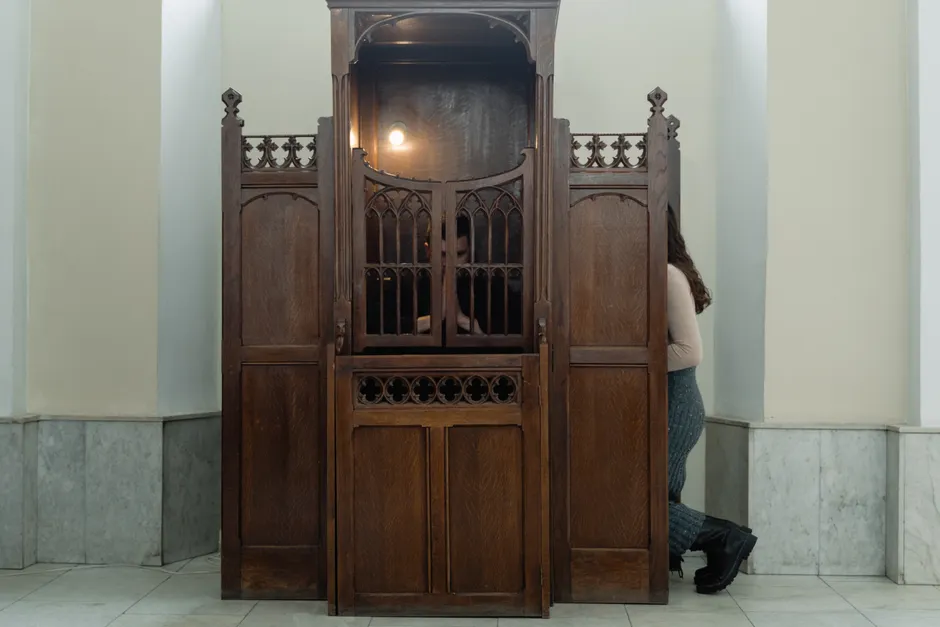
The Arizona Supreme Court ruled unanimously that clergy members who learn about child abuse during a religious confession do not have to report it to police or child-protection authorities. The court said the First Amendment — the part of the U.S. Constitution that protects religious freedom — prevents judges from deciding what counts as a confession within a religion. The 23-page opinion was written by Vice-Chief Justice John Lopez in case CV-25-0213, issued on a Thursday, and overturns a lower court decision that had revived claims by three children abused by their parents in Cochise County (The Guardian).
The case started with a 2020 lawsuit filed by the children of Paul and Leizza Adams, who were sexually abused by their parents over several years. In 2011, Paul Adams told a bishop in the Church of Jesus Christ of Latter-day Saints about his crimes during confession. The next year, the abuse came up at a formal church disciplinary hearing led by a different bishop. Neither bishop reported the abuse to authorities. The Adamses were arrested in 2017 after a video they had made of some of the abuse surfaced in New Zealand. Leizza Adams received a 30-month sentence in 2018 after pleading no contest to two felony child abuse charges. Paul Adams died by suicide in jail while awaiting trial (The Guardian).
The children sued the LDS Church and the two bishops who had known about the crimes. A lower court had said the confession and disciplinary hearing discussions might not have been truly private, which could mean the clergy exemption did not apply. The Supreme Court reversed that reasoning, ruling that churches, not judges, get to decide what counts as a confession when it comes to clergy reporting duties (Arizona Mirror).
In Arizona, clergy are not classified as mandated reporters. Mandated reporters are people in certain jobs — like teachers, doctors, and social workers — who are legally required to report suspected child abuse to authorities. Clergy in Arizona are exempt from this requirement, and that exemption applies even when the abuse is ongoing (Arizona Mirror). The court's news release, published on its website under the title "Arizona Supreme Court Clarifies Clergy Members' Duty to Report Abuse of a Minor," described the opinion as a clarification of existing law rather than a new expansion of clergy privileges (Arizona Courts).
Vice-Chief Justice Lopez wrote that the First Amendment stops courts and juries from examining religious doctrine when looking at why a clergy member did not report abuse. He cited a 2020 U.S. Supreme Court ruling (case 19-267) to emphasize that the decision does not give religious institutions general immunity from all laws. The opinion drew a line between respecting church doctrine on confession and excusing churches from legal obligations more broadly (The Guardian).
The case attracted a lot of outside interest. Several groups filed amicus briefs — these are legal documents submitted by outside parties who want to influence the court's decision. The Becket Fund for Religious Liberty filed one on December 16, 2025. The General Conference of Seventh-day Adventists filed its own the same day. Three Roman Catholic dioceses — Gallup, Phoenix, and Tucson — submitted a joint brief on February 24, 2026. Their brief referenced a past case in which a federal court ruled that secretly recording a confession was unconstitutional, arguing that the confessional must remain sacred and private (Arizona Courts).
The LDS Church welcomed the ruling in a public statement (The Guardian).
The Arizona decision parallels a short-lived 2025 Washington state law that would have required clergy to report sexual abuse. That law was permanently withdrawn in October 2025 after the Catholic Church took legal action against it (The Guardian; Deseret).
The broader context here is a long-standing constitutional tug-of-war between protecting children and protecting religious freedom. Many states have clergy-penitent privileges — rules that keep communications during confession confidential. But how far those protections go varies a lot from state to state. By ruling that churches, not courts, decide what qualifies as a confession, Arizona placed itself among the states giving the most weight to religious autonomy. The opinion's reliance on the First Amendment to block judges from asking doctrinal questions narrows what a court can even investigate when deciding whether a clergy member's silence was legally protected.
What remains unresolved is whether state legislatures can narrow the clergy exemption by passing new laws, as Washington tried to do, or whether those efforts will run into the same First Amendment reasoning the Arizona court used. The Arizona ruling does not address that question directly — it interprets existing law. But the opinion's reasoning, if adopted elsewhere, would create a serious barrier for lawmakers trying to close the confessional loophole in child-abuse reporting laws.