What's Happening in the Russia-Ukraine War Right Now
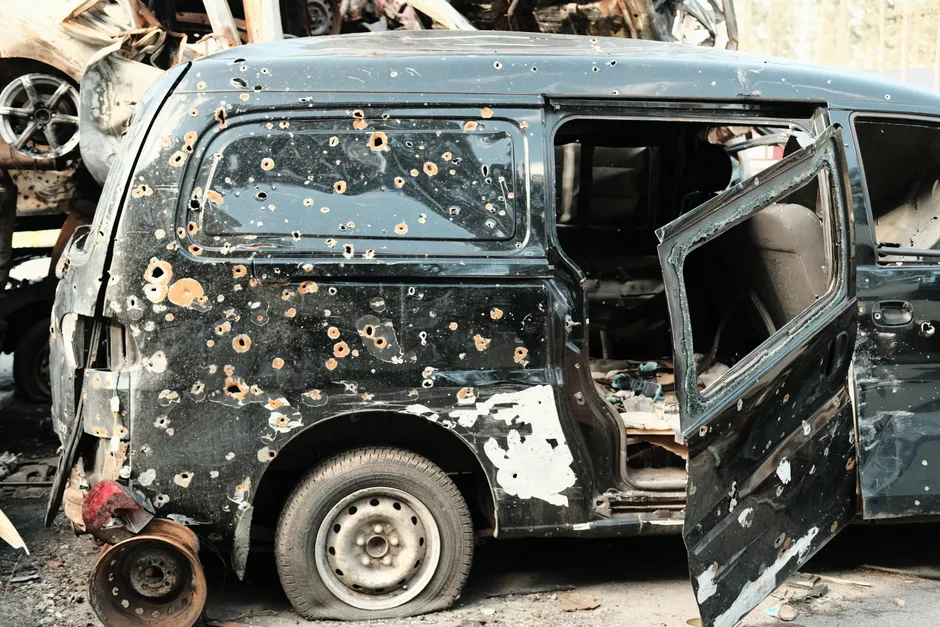
At least nine people were killed in Russia and three in Ukraine on 3 August 2026, as both sides launched heavy attacks against each other, according to local officials (Al Jazeera). The deaths cap a week of growing violence that has hit civilian areas, military sites, and frontline towns on both sides.
In Russia, the governor of the Krasnodar region, Veniamin Kondratyev, said at least six people were killed and 40 wounded by debris from a Ukrainian drone attack on Gelendzhik, a resort city on the Black Sea. The Moscow-installed governor of Russian-occupied Crimea, Sergei Aksyonov, said three people were killed and two wounded in a separate overnight Ukrainian attack. Reuters, citing Russian authorities, reported four killed in Gelendzhik including a child and 10 injured (Reuters). The different numbers between news outlets show how hard it is to get accurate information in the first hours after an attack.
In Ukraine, at least three people were killed in a Russian attack on a gas station in the Dnipropetrovsk region. The regional governor, Oleksandr Hanzha, said a fire broke out, damaging the gas station and nearby vehicles. Earlier in the week, governor Ivan Fedorov said one person died when a Russian guided bomb hit a residential building in Zaporizhzhia (Al Jazeera). Ukraine's State Emergency Service said a large Russian attack on the Darnytsia district of Kyiv, the capital, killed 24 people including three children.
Russia's Defence Ministry claimed its forces captured two small settlements, Bilyi Kolodiaz and Uspenivka, in the Kharkiv region on 3 August. If confirmed, this adds to Russia's slow but steady gains in eastern Ukraine, where the front line has shifted only slightly despite massive losses on both sides. A CSIS analysis estimated that Ukrainian forces have suffered between 500,000 and 600,000 casualties, including killed, wounded, and missing, as of January 2026 (CSIS). The Estonian Foreign Intelligence Service estimated in February 2026 that one million Russian soldiers have been killed or wounded since the full-scale invasion began (Russia Matters).
Ukraine has also been striking targets far from the front line. A drone hit a warehouse in the village of Khryastovo in Russia's Vladimir region. It was the latest in a series of strikes on Wildberries, Russia's largest online shopping platform. President Volodymyr Zelenskyy has accused Wildberries of helping Russia's war effort. Independent investigations found that the company sells items that can be used by both civilians and the military, including used military helmets, bulletproof vests, and fibre optic cables used in drones. These findings suggest Wildberries is part of the supply chain that keeps Russia's drone manufacturing going, and Ukraine's repeated strikes on its warehouses appear aimed at cutting that supply chain.
Russian strikes on Ukrainian civilian and military targets have continued at a fierce pace. Reuters reported that Russia launched dozens of missiles and hundreds of drones in overnight attacks on 29 July that killed nine people (Reuters). A Russian strike on the Kyiv region killed ten and injured nearly 100 at the site of a defence industry event, according to the Ukrainian government (CFR). On 1 August, a homemade bomb carried by a woman killed at least three and injured 21 near a restaurant in central Moscow (Reuters).
Meanwhile, diplomatic signals from Washington have been uncertain. Zelenskyy met US President Donald Trump at the White House on 28 July and called the meeting "good." He then called Vice President JD Vance on 1 August, asking for US help to strengthen Ukraine's air defences. Air defences are the systems countries use to shoot down incoming missiles and drones before they reach their targets. But Trump appears to have gone back on a promise to let Ukraine manufacture Patriot missiles — a key air defence weapon that intercepts incoming threats. If that reversal holds, Ukraine would remain dependent on other countries to supply Patriots, at a time when Russian missile and drone attacks are straining the air defence systems Ukraine already has.
The broader context here is that pressure is building on several fronts at once. Russia is advancing slowly in the Kharkiv region while keeping up heavy long-range strikes on Ukrainian cities and military factories. Ukraine is hitting back with drone attacks deep inside Russian territory, targeting supply hubs like Wildberries warehouses and Black Sea coastal areas. The gap in air defence capacity, made worse by the possible stalling of the Patriot deal, puts Ukraine in a tougher spot as it tries to protect both its people and its defence industry. With casualties on both sides already in the hundreds of thousands and no ceasefire in sight, the outlook for late summer 2026 points to more grinding fighting rather than an end to the war.


