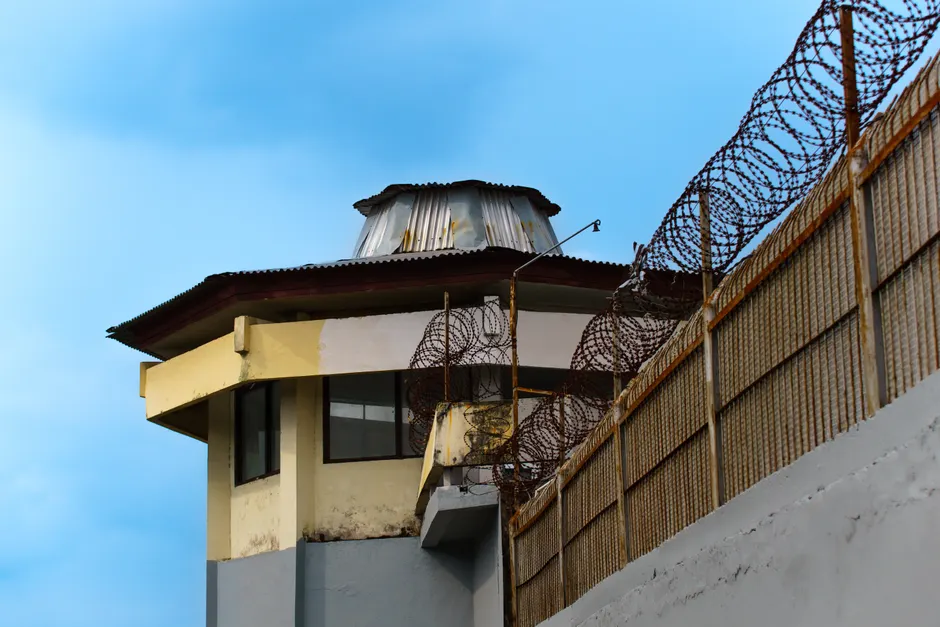
What Happened at the New Jersey Immigration Detention Center Where a Man Died

A 41-year-old man from El Salvador died on Saturday, August 1, 2026, after a medical emergency at a immigration detention center in Newark, New Jersey, called Delaney Hall. He was taken to a hospital in Newark, where he was pronounced dead. ICE — the US government agency that detains and deports people who are in the country without legal permission — confirmed the death on Monday, August 3 (Al Jazeera; ICE).
Delaney Hall is run by a private company called GEO Group, which operates the facility under a contract with the federal government. According to ICE, GEO Group staff and medical workers responded to the emergency and arranged for the man's transfer to the hospital. Officials have not yet determined an official cause of death.
The man, Edwin Lopez-Cornejo, had a long history with the US immigration system. He was first detained and sent back to El Salvador after crossing into the US without permission in 2006. He later returned to the US and was taken into custody again in Plainfield, New Jersey, in mid-June 2026. He was being held at Delaney Hall because of an order reopening his earlier deportation case. He is survived by a 12-year-old daughter.
After his death, Lopez-Cornejo's family and immigration advocates raised serious concerns about whether he got the medical care he needed. Lopez-Cornejo reportedly had diabetes, high blood pressure, and seizures. Advocacy groups said he was denied his medication while in detention. His mother, Maria Cornejo, said in a Facebook video posted by advocacy groups that she spoke with her son on Friday, the day before he died. During the call, he told her he was not feeling well and had lost feeling in his face and hand.
ICE has pushed back against claims that he did not receive adequate care. The agency says everyone in its custody is screened for medical issues within hours of arriving, gets a more complete health check within two weeks, and has access to emergency treatment at all times. In its statement, ICE said Lopez-Cornejo had been properly cared for throughout his detention.
The death has added to local political pressure. Newark Mayor Ras Baraka said Lopez-Cornejo's passing was another painful moment for families connected to Delaney Hall, noting that it was the second family in less than a year to lose a loved one in custody at the facility. On Monday, August 3, protesters gathered outside Delaney Hall to hold a vigil in Lopez-Cornejo's memory, carrying signs that called for action from New Jersey Governor Mikie Sherrill.
Lopez-Cornejo's death happened eight months after another detainee, Jean Wilson Brutus, 41, died at the same facility after a medical emergency in December 2025. Brutus, a Haitian national classified by ICE as a criminal illegal alien, died at University Hospital on December 12, 2025. He had a pending criminal trespassing charge at the time of his death (ICE).
Delaney Hall has long been a focal point for immigration enforcement and oversight in the region. An ICE Office of Detention Oversight inspection of the facility, conducted from January 29 to 31, 2013, found the site housed 284 detainees, comprising 243 male and 41 female individuals.
The broader context here involves a long-standing tension. ICE has official medical care rules it says it follows for every detainee. But detainees and their advocates frequently report a different reality on the ground. With two deaths at one privately run facility in less than a year, attention will likely focus on whether GEO Group has enough medical staff and proper intake procedures to handle detainees with serious, ongoing health conditions like diabetes and seizures. The different stories from federal officials and local advocates also show a pattern common when someone dies in custody: official investigations into the cause and who is responsible take time, while public accusations of neglect spread quickly.
The immediate political pressure is focused at the state level. By appealing to Governor Sherrill, protesters are testing whether New Jersey's state government can or will step in to oversee contracts for federal detention facilities. That situation puts governors in a difficult position, caught between the state's interest in protecting public health and the federal government's authority over immigration enforcement.