Why Thousands of Migrants Are Stuck on a Beach in Spain
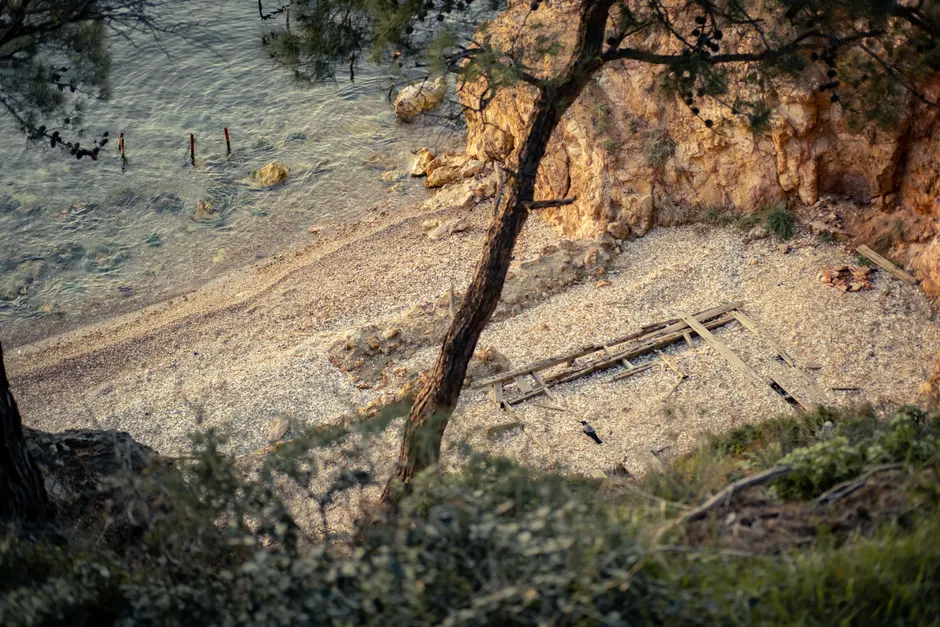
Hundreds of people from Sudan, Somalia, Senegal, Mali, and Egypt are living on a beach in Ceuta, Spain, with almost no food, clean water, or toilets. They are stuck there after one of the biggest border crossings in European history left somewhere between 3,000 and 5,000 people stranded in this small Spanish town (Al Jazeera).
Ceuta is a small piece of Spain located on the coast of North Africa. It is separated from Morocco by a tall border fence. Because Ceuta is Spanish territory, reaching it means you are technically in Europe, which makes it a place people try to cross into. The crisis began in late July 2026, when about 60,000 people crossed from Morocco into Ceuta over a Thursday and Friday. Spain and Morocco stopped the rush after roughly 49,000 people crossed in a single day (Reuters). At least 72 people died (Reuters). Spain's interior ministry said more than 37,500 people had left Ceuta for Morocco by Friday afternoon, July 31 (New York Times). Many of those who crossed were Moroccan, and they were sent back under a special agreement between Spain and Morocco (Al Jazeera).
The people still on the beach include some fleeing war and others fleeing poverty. Some are asking for asylum, which means they are requesting protection from Spain because it is not safe to go home. Others say they left mainly to find work. Under Spanish law, adults in Ceuta can apply for asylum, but if the answer is no, they can be sent back (AP News). More than 800 children are also stranded there without their parents (Al Jazeera; ABC News).
The European Union, a political partnership of 27 European countries, called an emergency meeting about the surge. The crisis has worsened disagreements among EU countries over how to handle migration (AP News). Spain's interior ministry said in a statement on July 30 that Spain has "exemplary collaboration with Morocco in all areas, including migration" (Spanish Ministry of Interior). The ministry tracks how many migrants arrive in Ceuta and Melilla, Spain's other North African enclave. Its most recent report, covering up to July 15, 2026, counted 1,693 arrivals by land, a number from before the late-July surge (Spanish Ministry of Interior).
The broader context here is that Spain is doing two things at once. Prime Minister Pedro Sánchez's government proposed giving legal status to up to one million undocumented migrants already living and working in Spain, because the country needs workers (Al Jazeera). At the same time, in Ceuta, Spain quickly sent back thousands of people who crossed the border without permission. These two approaches are not directly connected, but together they show a government trying to manage migration on two tracks: letting people who are already in the economy stay legally, while rapidly returning people who arrive in large, unauthorised groups.
For the EU, this crisis brings back an old argument. Countries on Europe's southern edge, like Spain, Italy, and Greece, say they carry too much of the responsibility for guarding the borders. Countries in northern and central Europe have resisted being forced to take in a share of arriving migrants. The emergency meeting suggests EU leaders in Brussels know that doing nothing carries political risks. But the disagreement is so deep that real policy changes are unlikely soon. Spain's focus on its cooperation with Morocco also shows that Madrid relies more on its own deal with Rabat than on any EU-wide system.
UNHCR, the United Nations refugee agency, reported that asylum applications and sea arrivals to Spain actually went down in 2025, even though many people around the world still needed protection (UNHCR). That decline makes the size of the Ceuta surge stand out even more: tens of thousands arrived in just days, against a trend of fewer arrivals. UNHCR has previously described reception centres where migrants are "crammed into hangars or other structures unfit for human habitation, characterized by overcrowding and poor hygiene." That language matches what is being reported from Playa del Trampolín (UNHCR).
What makes this crisis different from earlier crossings is how deadly it was and how many people came at once. The 72 confirmed deaths, the 49,000 crossings in a single day, and the hundreds of children left without parents or a clear legal path add up to a humanitarian emergency that neither Spain nor the EU was prepared to handle.
The beach where these people are staying is called Playa del Trampolín, which means "trampoline beach." The name is grimly fitting. For the people camped there, the legal choices are narrow. Adults can apply for asylum, but if they are rejected they face removal. Children have a different legal status, but with more than 800 of them, Ceuta's child protection system is overwhelmed. The beach camp, short on food, water, and hygiene, is what happens when a system manages the logistics of a crisis, sending people back and closing borders, but does not address the human cost left behind.