Lucid Motors Is Running Low on Cash. Here's Its Plan to Survive.

Lucid Motors announced an "operational reset" on August 4, 2026, centered on $1.4 billion in cash savings alongside three priorities the company called "must win": its robotaxi program, a new factory in Saudi Arabia, and the launch of a more affordable electric vehicle called Cosmos. The plan was laid out alongside the company's second-quarter 2026 earnings results. TechCrunch
The turnaround is led by CEO Silvio Napoli, who took the role in April 2026 alongside a fundraising effort that brought in more than $1 billion. Reuters Napoli then moved quickly to simplify Lucid's organizational structure, announcing leadership changes in early July aimed at sharpening the company's focus. Lucid IR
To reach the $1.4 billion target, Lucid said it would reduce spending on equipment and facilities by $500 million, achieve $600–800 million in savings from inventory (the parts and vehicles it has stockpiled but not yet sold), and cut day-to-day operating expenses by $200 million. Napoli said the plan, if successful, would give Lucid enough cash to keep running well into 2027. The company ended the second quarter with $3 billion in total cash on hand. TechCrunch
The cost reductions build on workforce actions Napoli has already taken. In June, he directed Lucid to lay off 18% of its workforce, roughly 1,500 employees, four months after a prior cut of 12%. Lucid also eliminated the second production shift at its Casa Grande, Arizona factory, a move projected to generate $158 million in annualized savings. TechCrunch
The financial picture underlying the reset is stark. Lucid reported second-quarter revenue of $405 million, up from $259.4 million in the same quarter a year earlier. But the net loss widened to $1.26 billion, or $3.30 per share, compared with a loss of $855.3 million, or $2.80 per share, in the prior-year period. TechCrunch
The gap between rising revenue and widening losses is the core tension the operational reset is designed to address. Revenue growing 56% year over year while the net loss expands by nearly 48% means each additional vehicle Lucid delivers still costs more to make than it earns. The $1.4 billion savings plan, if fully realized, would not close that gap on its own. It buys time and reduces the rate at which Lucid spends its cash, but long-term survival depends on one or more of the "must win" projects starting to bring in real money.
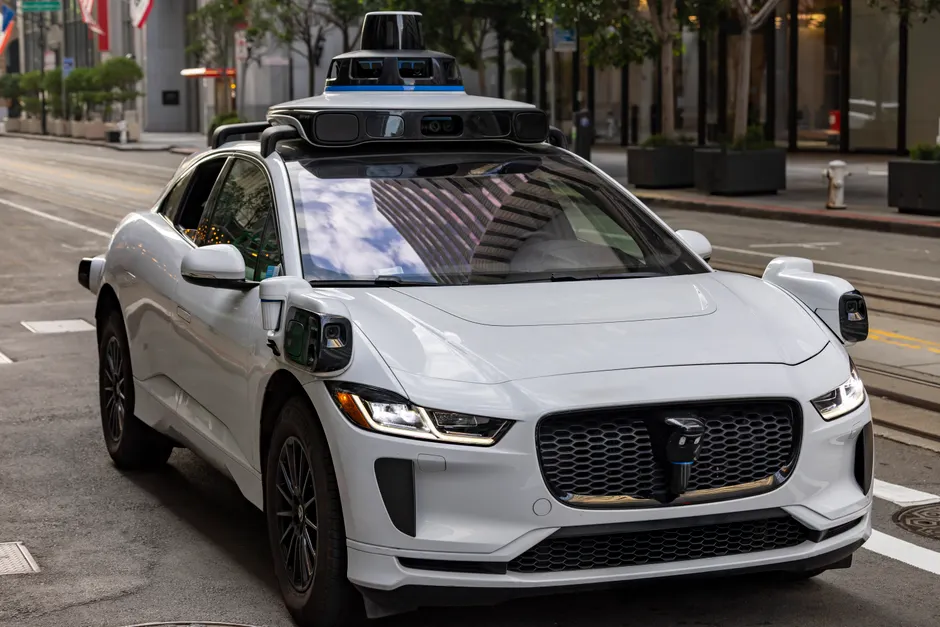
The three must-win priorities carry distinct risk profiles. The mid-size Cosmos will be the first model on Lucid's new mid-sized platform, moving the company beyond its luxury sedan and SUV lineup into a more competitive segment where profit margins are thinner. Completing the AMP-2 factory in Saudi Arabia adds production capacity in a new country but also financial obligations and operational complexity in an unfamiliar market. The robotaxi program, which involves partnerships with both Uber and Nuro, enters a self-driving mobility space where no participant has yet shown sustained profitability at scale.
Lucid also created a new business unit, Lucid Technologies, led by chief digital officer Kai Stepper, focused on AI and advanced driver assistance systems. The unit's creation suggests the company sees its software and AI as a potential revenue source beyond selling cars, though no commercial specifics were disclosed. TechCrunch
The operational reset arrives after a period of significant market pressure. On July 14, 2026, Lucid rejected a report about a potential take-private and bankruptcy scenario after its shares plunged as much as 57% to $2.37, stating it had sufficient cash to fund operations. Reuters The share-price collapse and the subsequent rejection point to the market skepticism that Napoli's plan must now contend with.
Lucid's situation follows a familiar pattern in the EV sector: a manufacturing business that spends cash faster than it can grow revenue, forced into aggressive cost cuts while simultaneously betting on new projects that require even more investment. The $3 billion cash buffer and the projected $1.4 billion in savings provide a window, but the question is whether Cosmos, the Saudi factory, and the robotaxi program can generate meaningful revenue before that window closes. Napoli has staked the company's future on all three delivering in parallel, and the operational reset is the financial scaffolding holding that bet together.