Japan's Stock Market Dipped — Here's What's Going On

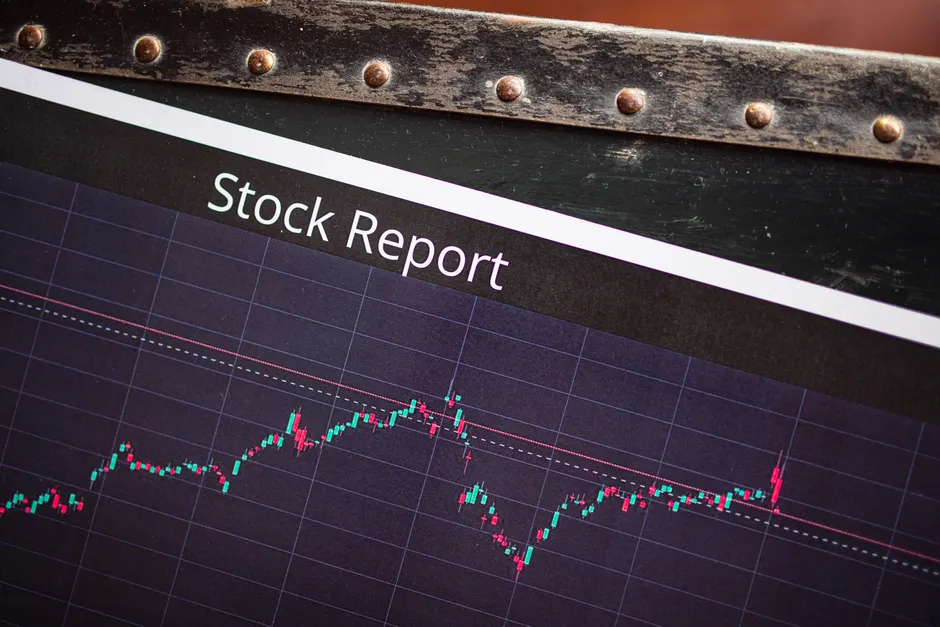
Tokyo's main stock market index, the Nikkei 225, fell 0.9% to 60,843.09 on May 18, 2026, with technology stocks leading the drop, according to Asahi Shimbun. The decline came after the index had hit its highest levels ever the week before, pausing a climb that added roughly 4,500 points since its last record close in February.
Here's how we got here. On February 9, 2026, the Nikkei jumped 3.9% to a record close of 56,363.94, per Reuters. That record built on an even earlier one: in October 2025, the WSJ reported the index hitting record levels after Japan's ruling party secured a coalition deal (WSJ, Oct. 20, 2025). The rise from 56,363.94 in February to new all-time highs by mid-May shows that buyers kept pushing in, even though the market wobbled at times.
And wobble it did. In early April 2026, the Nikkei surged 4.8% in a single day, and South Korea's Kospi gained 5.6%, after President Trump held off Iran threats for two weeks, according to an Associated Press report carried by KCTV5. U.S. S&P 500 futures rose 2.3% in the same window. Before that rally, there was a different kind of episode: the Nikkei fell 2.3% and Australia's S&P/ASX 200 dropped 0.97% as technology shares pulled U.S. stocks lower after a separate Trump announcement. Oracle shares fell more than 11% in after-hours trading during that stretch (Reuters).
The May 18 drop fits a pattern: news about geopolitics and U.S. tech companies tends to spill over into Japanese trading. The Nikkei has a lot of technology companies in it, so it reacts strongly to what happens with U.S. semiconductor and software firms. The Asahi report specifically named tech stocks as leading the decline.
What Futures Trading Tells Us
Futures are contracts where traders agree today to buy or sell something at a set price on a future date. They can hint at where investors think the market is headed. According to the JPX futures quotes portal, two types of Nikkei 225 futures contracts for August 2026 settled at 63,795 and 63,745. Those numbers are above the May 18 index level, but the gap may simply reflect the time between the May data and the August settlement date rather than a prediction. Japan Exchange Group lists these products, with details on jpx.co.jp.
For options (contracts that give the right, but not the obligation, to buy or sell at a set price), JPX sets day-session hours of 8:45 to 15:45 and night-session hours of 17:00 to 6:00. There's a five-minute window before closing where orders are batched and matched at a single price — a process called Itayose. JPX markets are closed on Saturdays, Sundays, national holidays, and other dates listed in the exchange calendar. On holidays, some night sessions end earlier, and certain products trade only during the day, per JPX holiday trading rules.
Why Oil and Iran Matter to Japan
The Strait of Hormuz — a narrow shipping lane for oil — remains a risk factor for Japanese stocks because Japan relies heavily on imported energy. If Iranian oil shipments through the strait were disrupted, it could rattle markets, as the WSJ noted in its Oct. 1, 2024 report. The April 2026 episode shows this directly: Trump's two-week hold on Iran threats triggered a 4.8% Nikkei rally in a single day.
The broader picture is a Nikkei climb from an October 2025 record, through a February 2026 election-driven surge, to new highs by mid-May 2026. Along the way, sharp reversals have been tied to U.S. policy headlines. The May 18 decline of 0.9% is actually mild compared with the 2.3% drop and 4.8% rally seen earlier in 2026. What's consistent is the tech channel: whether the trigger is an Oracle earnings reaction or a geopolitical easing, the Nikkei's heavy tech makeup magnifies the effect.
For anyone watching the futures contracts in that 63,745 to 63,795 range, two things matter most: the gap between the futures prices and the actual index level, and how sensitive the Nikkei is to overnight moves in U.S. tech stocks. JPX's trading schedules, holiday calendars, and product rules provide the framework for navigating these swings. The index's habit of jumping on geopolitical and U.S. tech news means that timing and how much you commit to any position carry real weight.