Why the UN Is Urging Iran to Stop Executing People
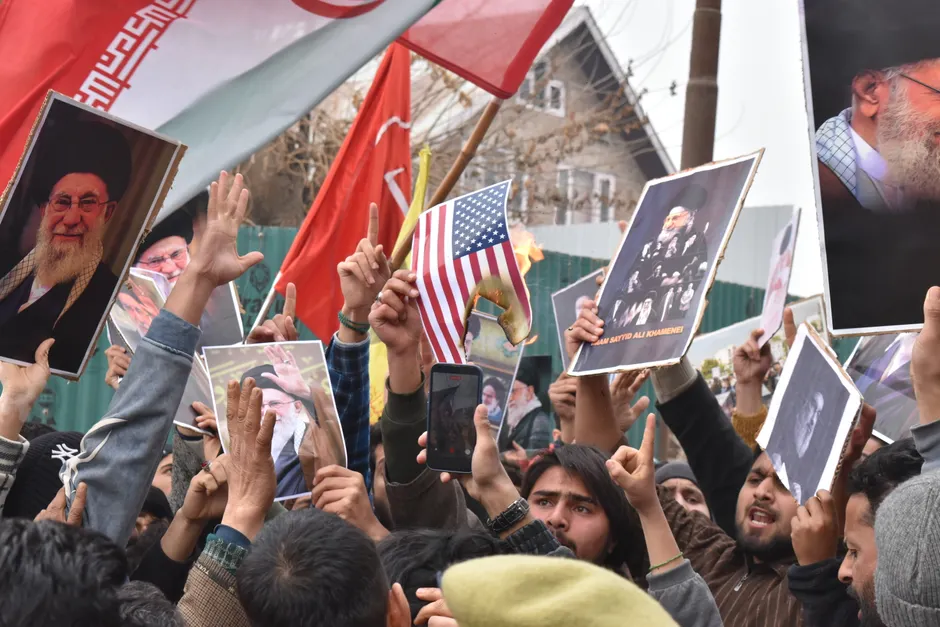
The United Nations' top human rights official, Volker Türk, called on Iran on August 5, 2026 to stop all executions and eventually abolish the death penalty entirely. He said Iran has been using executions to scare people into silence and crush opposition, especially since March.
Türk, whose official title is UN High Commissioner for Human Rights, said Iran has executed at least 56 people on national security charges since March 19. Of those, 27 were connected to protests, according to Reuters. Türk described this as part of a wider crackdown on basic freedoms across the Middle East, a trend he had already warned about after the US and Israel carried out military strikes on Iran earlier in the year (OHCHR, April 2026).
Türk said he was "deeply troubled" by the lack of fair trials. He said some confessions appeared to have been forced out of people through torture. Some executions were carried out in public, and some happened only weeks after the person was arrested. In one case, twelve people were sentenced to death after a single three-hour court session held behind closed doors (BBC News).
That case involved protesters from the city of Isfahan and has drawn repeated attention from the UN. In July 2026, UN human rights experts urged Iran to cancel the death sentences, saying it was wrong to execute people for taking part in January 2026 protests (OHCHR, July 2026). The experts said the twelve were sentenced in a closed courtroom, and it was unclear exactly what each person had done. The charges included "enmity against God" and "corruption on Earth" — serious crimes under Iranian law that can carry the death penalty — in connection with the killing of four police officers on January 8 (BBC News).
Two of the twelve, Abolfazl Sepahi Badjani and Amirhossein Safari Hosseinabadi, were executed publicly in a square in Isfahan, according to Iran's Human Rights Activists News Agency (HRANA). Two others from the same group, Erfan Esfandiari and Gol Mohammad Mohammadi, were executed on July 19 (BBC News).
Separately, a 19-year-old named Arvin Kheirkhahan was executed after being convicted of "enmity against God" for his alleged role in January's unrest, per HRANA. Iran's judiciary also said it executed two men, Omid Behzad and Pouria Safvat, for spying for Israel. They were accused of sending information about military and security sites to Israel's intelligence service, Mossad (BBC News).
The Iranian government has previously defended its use of the death penalty, saying it is used only for "the most severe crimes" (BBC News).
Türk's August 5 statement is part of an ongoing effort by the UN to address Iran's human rights record. In January, Türk told the Human Rights Council in Geneva that even if the street killings in Iran had slowed down, "the brutality continues." He called on Iranian authorities to stop their repression (OHCHR, January 2026). That same day, the Human Rights Council voted to extend the work of its Iran fact-finding team — a group set up to investigate human rights violations in the country — and urged Tehran to respect its human rights obligations (OHCHR, January 2026). In April, Türk said Iranians' rights were being eroded in "harsh and brutal ways" (UN News, April 2026).
The broader context here is one of overlapping pressures. The rise in executions since March follows the US and Israeli military action against Iran, which Türk warned has deepened repression both inside Iran and across the region. The executions cover several different types of cases: people accused of protesting, people accused of spying for Israel, and people executed in public. When all of these happen in the same short period, it raises a question about what the executions are really for. Türk's argument is that they are less about justice and more about sending a message — which is why he said the death penalty is being "used to instill fear and suppress dissent" (OHCHR, August 2026).
The concerns Türk raised go beyond individual cases. The claim that twelve people were sentenced to death in a three-hour closed-door hearing, without the court clearly establishing what each person did, touches on international law. Iran has signed a treaty called the International Covenant on Civil and Political Rights, which requires fair trials. If confessions were indeed obtained through torture, that would violate another treaty Iran has signed, the Convention Against Torture. Whether the UN's fact-finding team leads to any real consequences will depend on what happens at the Human Rights Council's next session and how much pressure other countries are willing to put on Iran.