Eight Startups Will Pitch Their Big Ideas in Sydney. Here's Who Made the Cut.
TechCrunch has chosen eight startups to pitch live at Startup Battlefield Australia on August 19, 2026. The event takes place at Stripe Tour Sydney and is co-run by TechCrunch and Stripe. Isabelle Johannessen, who directs Startup Battlefield, will host. TechCrunch
The finalists work across a range of areas: AI safety, scam prevention, physical security, hiring, marketing, nutrition, video search, and physical therapy. Each will pitch in front of investors, journalists, and Australia's tech community. TechCrunch
Aigentsphere helps large companies use AI safely. Apate.ai fights scammers by talking to them in live conversations and turning what it learns into intelligence for banks, phone companies, and governments. Callease Ai is software for security control rooms that uses voice AI to make automated welfare checks, escalation calls, and patrol calls.
Choosey App uses AI to help hire workers quickly, match them to jobs, and pay them the same day. Doomers AI helps tech companies get attention for product launches on X (formerly Twitter) by coordinating a network of approved content creators. equ has spent a decade building a nutrition engine powered by AI and data from over 100,000 users, and builds it into health and wellness products. LeadStory lets you search through sports, news, and finance videos by typing a question in plain language, then finds the exact moment you are looking for. Preve automates treatment plans and tracks whether patients are following them, aimed at helping physical therapy clinics keep patients and improve results. TechCrunch
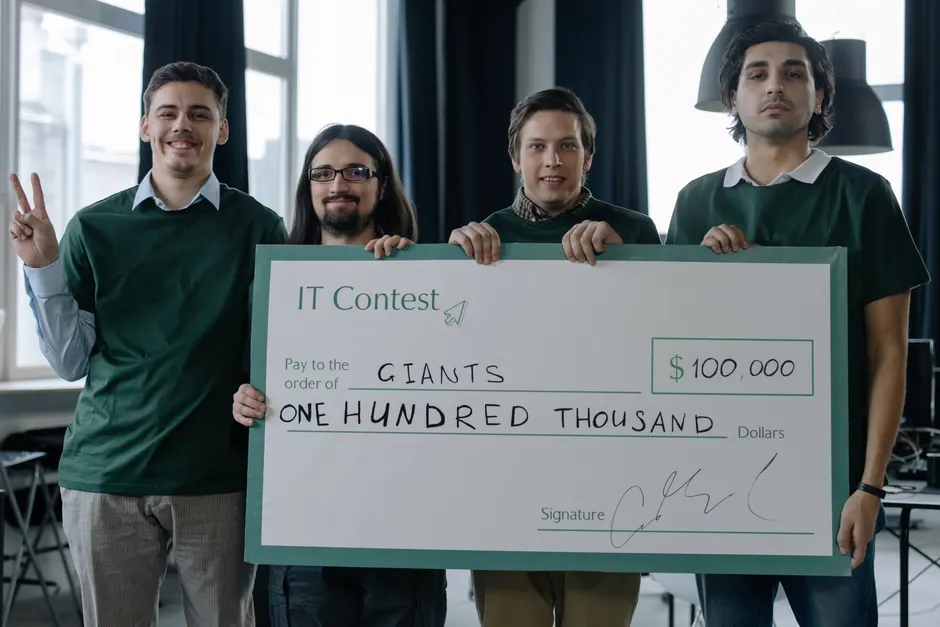
Three of the eight finalists will win prizes. The top three each get up to $15,000 in Stripe fee credits. The overall winner also gets a spot in the Startup Battlefield 200 at TechCrunch Disrupt in San Francisco, where 200 startups exhibit, 20 pitch on the main stage, five reach the final round, and one wins $100,000 with no strings attached. TechCrunch TechCrunch
The application window closed on July 20, 2026, after a final extension. TechCrunch
Startup Battlefield has been running for over 15 years and has featured more than 1,700 companies. Past participants have collectively raised over $32 billion and had more than 250 exits, meaning their companies were acquired, merged, or went public. Well-known alumni include Dropbox, Trello, Cloudflare, and Discord. TechCrunch
The Australian edition has produced real results. HealthMatch won the 2017 Australian competition and later raised over $25 million. FluroSat, the 2017 runner-up, merged with another company to form Regrow Agriculture, which now has Microsoft and Cargill as backers. The 2017 Australian class collectively raised over $147 million. TechCrunch
Six of the eight finalists this year are built around AI as their core technology, meaning AI is central to what they do rather than an add-on feature. That is a shift from 2017, when HealthMatch and FluroSat used AI for specific tasks but fit within more traditional software products. The current group reflects how thoroughly AI has spread through the startup world. Products like conversational scam prevention (Apate.ai), voice-automated security (Callease Ai), and plain-language video search (LeadStory) would not have been possible without AI advances from the past few years.
The two finalists not built primarily on AI, equ and Preve, still use machine learning for personalization and automation, but their main advantage comes from specialized data in their fields rather than general AI capability.
In my view, the prize money itself is fairly small. A $15,000 credit for Stripe fees is modest in the world of startup funding. The real value, as in past years, comes from visibility: investor attention at the live event, press coverage, and the chance to reach the main stage at TechCrunch Disrupt in San Francisco. For the 2017 Australian group, that exposure helped turn into over $147 million in funding. Whether this year's finalists can do the same depends on how well they execute, their timing, and the funding climate they face, which is tighter than the favorable conditions that helped the 2017 class.


