What's Happening in the Middle East: Drone Strikes, a Blockaded Waterway, and New Military Alliances
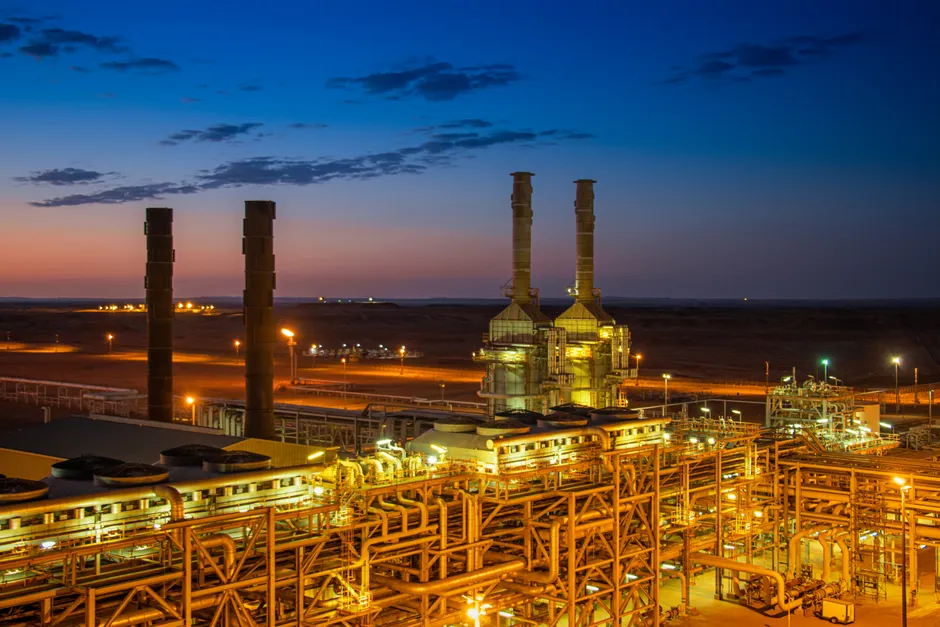
Yemen's Houthis, a group backed by Iran, said they used a drone to attack a Saudi oil refinery on Sunday 9 August 2026. A refinery is a facility that turns crude oil into usable products like petrol. Houthi military spokesperson Yahya Saree said the group targeted the Aramco refinery in Jizan, in south-west Saudi Arabia, and claimed a direct hit. The Saudi energy ministry confirmed that a fire broke out at the refinery early Sunday but was put out with no injuries, without saying what caused it (The Guardian). This refinery processes 400,000 barrels of crude oil per day.
The strike came two days after Saudi Arabia signed a defence agreement with Turkey and Pakistan. According to The Guardian, Saudi Arabia made the deal because of instability caused by the US-Israel war on Iran. The timing matters: the Houthis declared a naval blockade — meaning they are trying to stop ships from entering or leaving an area — against Saudi Arabia in the Red Sea last month. They said this was because Saudi Arabia was besieging their forces, which Saudi Arabia denies. Houthi spokesman Saree said Sunday's drone strike was payback for Saudi drone strikes on Houthi positions (Yeni Safak / Facebook).
The refinery attack is part of a pattern. On 5 August 2026, the Houthis said they attacked Saudi oil tankers in the Red Sea and Gulf of Aden, including a missile strike on a Saudi oil tanker off the kingdom's Red Sea coast (Reuters. Shipping traffic in the Gulf dropped afterward (Reuters). In late July 2026, the Houthis fired on Saudi oil facilities in two Red Sea port cities (Reuters). They had previously struck Aramco sites in both Jazan and Yanbu.
Iran's Demands Over the Strait of Hormuz
While the Houthis pressed their Red Sea campaign, Iran's national security council issued a list of demands on Sunday for reopening the Strait of Hormuz. The strait is a narrow waterway at the mouth of the Persian Gulf through which about a fifth of the world's oil supply travels by sea. The statement came from council secretary Mohammad Bagher Zolghadr, a former commander in Iran's Islamic Revolutionary Guard Corps (IRGC), an elite military force. He said the strait would not open until the US changed its "behaviour."
Iran demanded that Washington never threaten Iran again, permanently end the war with Tehran and its armed allies in the region, end its naval blockade of Iranian ports, and withdraw its military from the area. Tehran also demanded that the US "completely compensate" Iran for war damage, lift sanctions (restrictions that limit trade and financial dealings with a country), and release frozen assets without conditions (The Guardian).
These demands go well beyond what the US and Iran agreed to in a June 2026 deal. Under that earlier agreement, a plan to end sanctions and a way to handle compensation would be worked out as part of a final peace deal. Iranian foreign minister Abbas Araghchi, speaking on Saturday 8 August, blamed the Hormuz crisis on what he called the US violation of that June deal. Araghchi also said Iran and Oman were close to an agreement on a transit route through the strait. Oman, which is helping mediate the talks, said on Saturday that discussions were going well and condemned attacks on ships in the strait.
The gap between Araghchi's diplomatic tone and Zolghadr's hardline demands is wide, even though both men work for the same government. The foreign ministry has been negotiating a practical shipping arrangement with Oman's help, while the national security council, led by a former IRGC commander, has set conditions that would require the US to completely reverse its policies. It is not clear from public statements whether this is a coordinated strategy — one side playing the reasonable negotiator, the other taking a tough line — or a genuine split within Iran's leadership.
The situation grew more tense when the United Arab Emirates reported that one of its ships had been targeted by an Iranian missile (The Guardian). That means the Hormuz crisis is now affecting the Arab states on the Gulf, not just Iran.
Iran's Leader Has Not Been Seen in Public
Iran's supreme leader, Mojtaba Khamenei, has not appeared in public since an airstrike killed his father and predecessor on the first day of the US-Israel war on Iran. Iranian state media reported on Sunday that President Masoud Pezeshkian met Khamenei in late July 2026, which appeared to be an effort to show that leadership continues. But because this was only reported by state media rather than shown publicly, outside observers still do not know for certain how much authority Khamenei holds.
Why All of This Matters Together
The broader context here is that several crises are happening at the same time and feeding into each other. Saudi Arabia has responded to the US-Israel war on Iran by signing a defence deal with Turkey and Pakistan, two countries with large militaries. This shifts Saudi Arabia's security strategy, which has historically depended on the United States. The Houthis, who receive support from Iran, are tightening a blockade on Saudi Arabia and hitting its refineries. And Iran is keeping the Strait of Hormuz closed until the US meets a set of demands that go far beyond what Iran's own foreign minister agreed to in June.
For energy markets, the refinery fire was put out, but the build-up of Houthi strikes on Saudi infrastructure and the Hormuz standoff together push up the risk to Gulf oil supplies. For diplomacy, Oman's mediation might still produce an agreement on ships passing through the strait. But the gap between a shipping arrangement and the total US policy reversal that Iran's security council is asking for means the Hormuz crisis is not close to being resolved.
Whether Iran's tough stance is a bargaining tactic or a real change in what it wants may depend on things that are not visible in public statements: the influence of the IRGC, the authority of a supreme leader who has not been seen in public, and the decisions of a US administration that has not yet responded to Iran's demands.


