Sudanese Army Gains Ground in Darfur as RSF Loses Commanders and Supply Routes

A Sudanese army-led counteroffensive in Darfur has produced a string of battlefield gains against the Rapid Support Forces (RSF), culminating in the repulse of two successive RSF attacks near Bir Saliba in West Darfur in early August 2026. The fighting centers on a strategically critical zone roughly 30 kilometers north of el-Geneina, the capital of West Darfur state, which serves as the last RSF stronghold in the region (Al Jazeera).
The RSF assaults on Bir Saliba involved a pincer movement — one force advancing from north of Kulbus while a second column moved from the direction of Sileia in the Jebel Moon area before launching a large-scale attack. The Joint Force of the Armed Struggle Movements, a coalition of former Darfur rebel groups that signed the 2020 Juba Peace Agreement and now fights alongside the Sudanese army, thwarted the encirclement attempt. Joint Force spokesman Major Mutawakkil Ali Wakil Abu-Ja told Al Jazeera that the Sudanese military destroyed more than 38 combat vehicles and seized 27 others in the campaign. The RSF commander for the Bir Saliba sector was also killed in the fighting, according to Abu-Ja (Al Jazeera).
Darfur Regional Governor Minni Arko Minnawi announced a further blow to the RSF command structure: Major General Mahdi Adam, known as "Jebel Moon" and one of the paramilitary group's most prominent field commanders, was killed in fighting in western Sudan. The RSF has not officially confirmed his death (Al Jazeera).
Beyond the direct clashes at Bir Saliba, government-backed forces have pressured RSF supply lines by seizing control of crossings and desert routes along the Sudan-Chad border. Air strikes on a convoy traveling near the border isolated the RSF and struck a key supply route for the paramilitary group, according to Major General Othman Siraj. West Darfur state governor General Bahr al-Din Adam Karama noted that Bir Saliba sits on a network of roads linking el-Geneina with the areas of Jebel Moon and Kulbus, making it a linchpin for movement and logistics across the western theater (Al Jazeera).
The Sudanese army has also extended its operational reach northward, launching airstrikes against the RSF near the Sudanese-Libyan-Egyptian border area, according to military sources cited by The New Arab (The New Arab). On the Chadian border, the military-allied Joint Force repelled an RSF attempt to recapture a West Darfur position, as reported earlier in the week (Mada Masr).
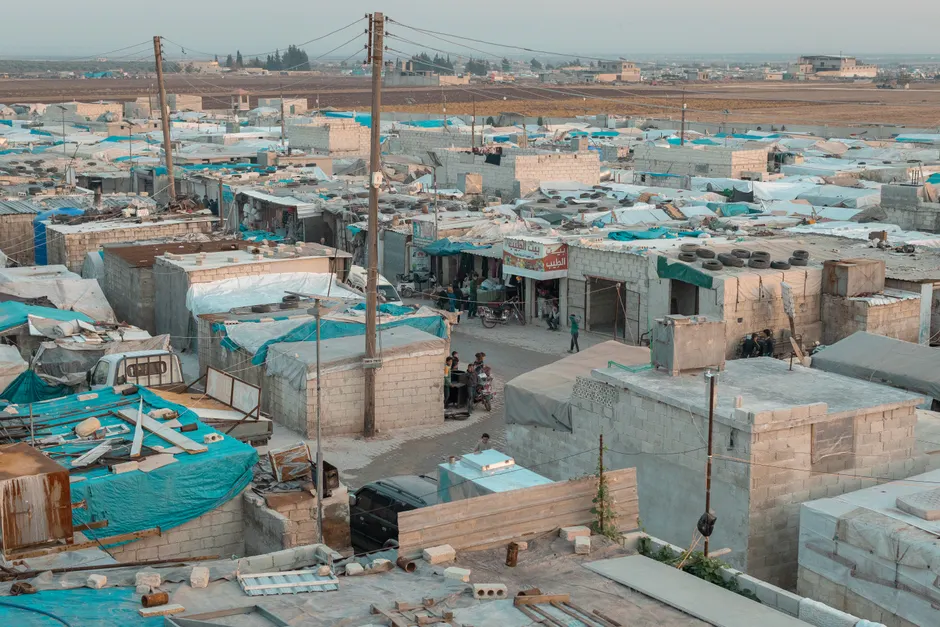
The human cost continues to mount. Thousands of people are fleeing renewed fighting near el-Geneina following the RSF assault on Bir Saliba (Sudan Tribune).
The broader context here is a shifting operational dynamic in western Sudan. Fadel Kaya, a leader and adviser with the Sudan Liberation Movement/Army — Transitional Council (SLM/TC), said the Joint Force's victories in West Darfur indicated the RSF had shifted from trying to gain territory to retreating from key positions. If that assessment holds up over subsequent events, it would point to a meaningful change in the war's trajectory in Darfur, where the RSF had previously held the initiative across broad swaths of the five-state region. The loss of senior commanders, the destruction of dozens of vehicles, and the severing of cross-border supply routes compound the pressure on a force that has relied on mobility and logistics corridors through Chad to sustain its operations.
Several factors will determine whether this momentum holds. The RSF has not confirmed the death of Major General Adam, and unverified battlefield claims are a recurring feature of this conflict on both sides. The Joint Force, composed of former rebel groups with their own constituencies and grievances, brings fighting capacity but also political complexity to the army's coalition. And while the seizure of border crossings constrains RSF resupply, it also risks further destabilizing a frontier region already hosting hundreds of thousands of displaced people, with potential implications for Chad's internal security.
What is verifiable at this stage is that the Sudanese army and its allies have achieved coordinated gains across multiple axes in West Darfur, from Bir Saliba to the Chadian border to the northern front near the Libyan-Egyptian triangle. Whether these gains consolidate into durable territorial control or prove reversible under RSF counterpressure is an open question that the coming weeks of fighting will answer.