Can a Hydrogen-Powered Car Set a New Land Speed Record at Bonneville?
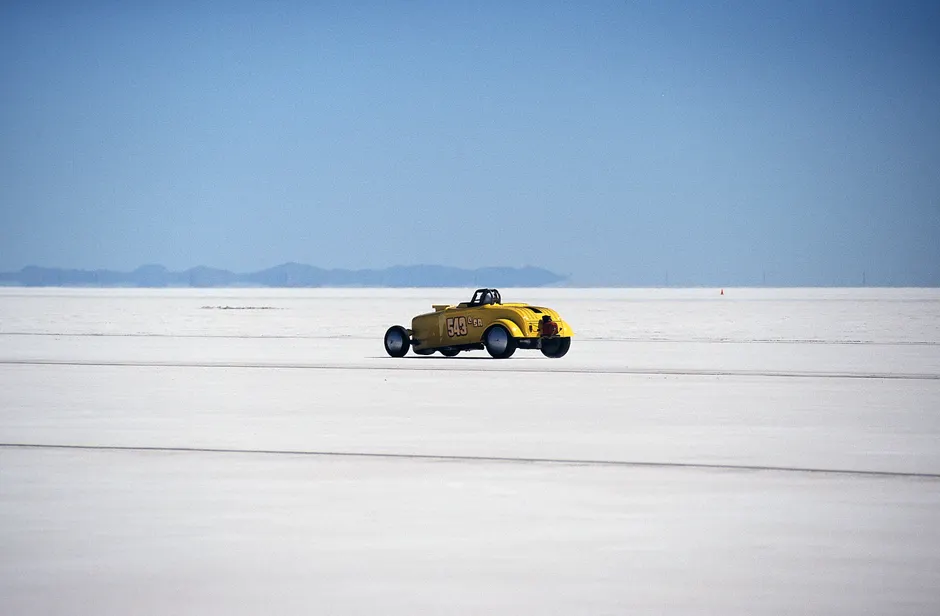
On August 11, 2026, Andy Green returned to Utah's Bonneville Salt Flats to attempt a new land speed record in a hydrogen-powered vehicle. Green, a retired Royal Air Force fighter pilot, was already the first person to break the sound barrier in a car. The vehicle in question is the 32-foot (9.75-meter) JCB Hydromax, built by British construction equipment manufacturer JCB and powered by two hydrogen internal combustion engines with a combined 1,600 horsepower. The Guardian
Green, 64, aimed to beat two existing records: the hydrogen internal combustion engine mark of 185.5 mph (298.5 km/h) and the electric vehicle record of 341.3 mph (549.2 km/h). In practice runs the week before the attempt, he reached 368.347 mph (592.797 km/h), already surpassing both targets in unofficial timing.
For the run to count as an official hydrogen record, it had to take place under the supervision of the Fédération Internationale de l'Automobile (FIA), motor sport's international governing body. Without FIA observers and certified timing equipment, the practice speeds remain unofficial.
Green's history at Bonneville runs deep. In 2006, he set the land speed record for a diesel-powered car at 350.092 mph (563.4 km/h) on the same salt flats. That record followed his most famous achievement: in 1997, driving a twin-jet-engine car at Nevada's Black Rock Desert, he set the outright land speed record of 763.035 mph (1,227.98 km/h), becoming the first driver to exceed Mach 1 — the speed of sound — on land.
The Hydromax project serves a dual purpose for JCB. The company has invested more than $134 million in hydrogen internal combustion engine technology, which it says produces no carbon dioxide from the tailpipe. JCB has also signed a deal to purchase green hydrogen — hydrogen produced using renewable energy — to fuel its operations. At the car's unveiling in May, JCB chair Anthony Bamford said "a land speed project is the perfect way to prove hydrogen's seriousness for emissions." The Guardian
Development of the Hydromax has been incremental. In testing at Bonneville in June 2026, the car reached 177 mph in third gear, close to the limit over the available distance on the salt at that time, according to Reuters. The jump from 177 mph in June to 368.347 mph in pre-attempt practice points to substantial setup and gearing changes in the intervening weeks.
The broader context here is the competition among zero-tailpipe-emission technologies for heavy-duty and high-performance applications. Hydrogen internal combustion engines differ from hydrogen fuel cells in an important way: combustion engines burn hydrogen in cylinders much like conventional engines, producing water vapor and nitrogen oxides but no CO₂; fuel cells generate electricity through a chemical reaction and drive electric motors. JCB's investment signals a bet that hydrogen combustion can deliver the power density and refueling speed that heavy equipment and record-breaking vehicles demand, without the weight penalties of battery-electric systems — much as a conventional gasoline engine refuels faster than a battery charges, hydrogen combustion engines can refuel in minutes rather than hours.
For Green, the attempt marks a return to the venue where he set his diesel record two decades ago. The progression from jet engines in 1997, to diesel in 2006, to hydrogen combustion in 2026, traces a line through the automotive industry's shifting priorities, from outright speed to speed paired with emissions awareness. The FIA's involvement ensures that any record set on August 11 will be measured against the same rigorous standards applied to Green's earlier achievements.
Whether the Hydromax can convert its practice speeds into a ratified record depends on conditions at Bonneville, where the salt surface quality and weather windows are notoriously variable. The FIA requires two runs in opposite directions within a set time window, averaged to account for wind assistance. Green and the JCB team will need the salt to cooperate as much as the machinery.