Nvidia's $500 Billion Wall Street Financing Deal: What It Means and Why the Structure Matters
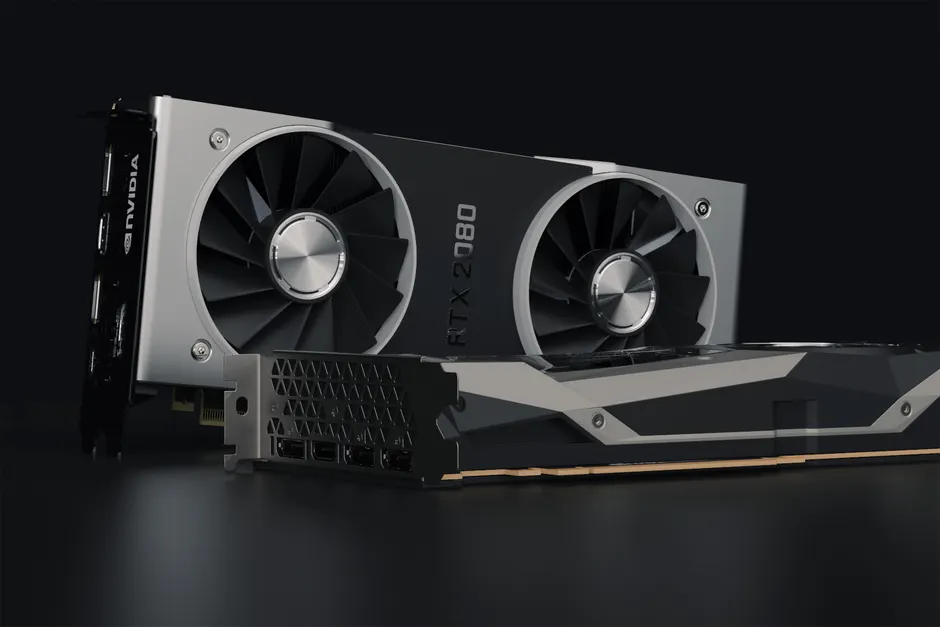
Nvidia has struck an agreement with six major Wall Street firms to help raise more than $500 billion in financing for the chipmaker's customers, targeting funds for datacentres and chip factories (The Guardian, WSJ).
The deal, reported on August 11, 2026, formalises a financing channel Nvidia has been building piece by piece over the past three years. The structure is simple even if the scale is not: Nvidia connects its customers, the cloud providers and datacentre operators buying GPUs by the thousands, with lenders willing to extend credit against those purchases. The lenders get a stake in the cash flows generated by AI infrastructure. The customers get capital they might not be able to raise on their own. Nvidia locks in demand for its chips.
That logic is visible in earlier deals. CoreWeave raised $2.3 billion in a debt facility collateralised by Nvidia chips in August 2023, led by Magnetar Capital and Blackstone (Reuters). "Collateralised" means the borrower pledges an asset, in this case Nvidia chips, which the lender can claim if the loan goes unpaid. In April 2024, cloud-computing provider Lambda secured a $500 million loan from lenders including Macquarie Group, again using Nvidia chips as collateral (Reuters). By late 2024, the FT reported an $11 billion debt market for AI groups, with GPUs functioning as loan collateral in a frenzied "GPU economy" of dealmaking (FT).
The $500 billion figure attached to the six-firm arrangement is roughly ten times the size of those earlier transactions. It also follows a separate but related thread: in July 2026, Nvidia was in talks with OpenAI to guarantee up to $250 billion in financing for data centre leases and debt, though the guarantee would not extend to the Nvidia chips inside those facilities (Reuters).
Put alongside the OpenAI discussions, the six-firm deal suggests Nvidia is pursuing multiple parallel channels to unlock capital for AI infrastructure build-out. The OpenAI guarantee would back leases and debt. The Wall Street arrangement targets a broader customer base across datacentres and chip factories.
The backdrop carries some friction. In March 2026, US banks were raising borrowing costs for private credit funds as AI-related fears pummelled valuations in the sector (Reuters). "Private credit funds" are investment pools that make loans outside the traditional banking system. That tightening came amid broader concern that AI infrastructure spending had outrun the revenue streams needed to service the debt backing it. The $500 billion financing target lands in that environment: lenders are being asked to commit capital at a moment when some of them have already re-priced risk upward in adjacent corners of the same market.
The broader context here is that the collateral structure raises questions that traditional lending does not face. Using GPUs as loan collateral creates an arrangement whose recovery value depends on the residual worth of specific semiconductor hardware. GPUs are not commodities in the usual sense; their secondary-market value is tied to generational product cycles, software ecosystem lock-in, and ongoing demand for AI computing capacity. If AI revenue growth disappoints, the collateral backing these loans depreciates on a different schedule and with different dynamics than, say, commercial real estate or industrial equipment. Lenders underwriting against chips are taking a view not just on the borrower's creditworthiness but on the durability of Nvidia's product roadmap and the AI compute market itself.
Nvidia's role as facilitator rather than direct lender is the other structural detail worth noting. By connecting customers to Wall Street capital rather than extending vendor credit from its own balance sheet, Nvidia limits its direct financial exposure while ensuring that demand for its products is not constrained by customers' borrowing capacity. The risk is distributed across the six firms and their downstream investors. Whether that risk dispersion is sufficient at $500 billion scale is a question the market will answer as the financing is raised and deployed.
For investors and market participants, the key variables to watch are execution pace and credit performance. The $500 billion is a target, not a committed facility. How quickly it converts to actual originations, which customers draw on it, and how those credits perform against AI revenue trajectories that remain uncertain will determine whether this financing channel scales further or encounters the same valuation pressure that hit private credit funds earlier in 2026.
What is known: Nvidia has an agreement with six Wall Street firms to target $500 billion-plus in customer financing for datacentres and chip factories. What is priced in and what is not, at that scale, remains genuinely uncertain.


