How Animals React to Total Solar Eclipses — and What It Tells Us About Their Internal Clocks
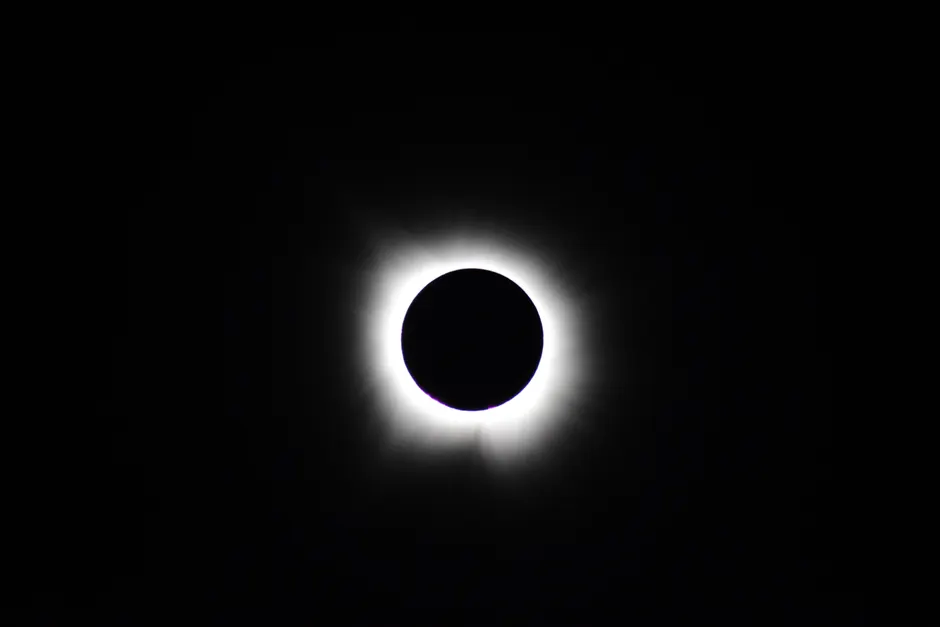
When a total solar eclipse plunges daytime into darkness, animals don't just stand still — about 75% of observed species shift their behavior, and most of them start acting as if it's evening, according to studies of the April 2024 eclipse (National Wildlife Federation). These findings, drawn from multiple eclipses across continents and years, reveal a consistent pattern: daylight-dependent species wind down and nocturnal ones perk up as totality — the brief period when the moon fully blocks the sun — approaches.
The most common animal response during the April 2024 total solar eclipse was the adoption of evening routines, such as returning to nighttime roosting spots (Houston Public Media). Bees stop buzzing and head back to their hives. Birds stop singing and settle in to roost. Crickets start chirping. Owls begin hooting (New York Times; U.S. Fish & Wildlife Service). The New York Times, reporting ahead of the August 12, 2026 total solar eclipse visible in Europe, confirms these same patterns have been documented across multiple eclipse events (New York Times).
A study of wild birds published in Science in October 2025 found that more than half of wild bird species changed their biological rhythms during a total solar eclipse, with many producing a dawn chorus — the burst of birdsong that typically greets daybreak — in the aftermath of totality (Science). A separate continental-scale study corroborates that birds stop singing and shift to nighttime behaviors during the period of darkness (Nature). The post-eclipse dawn chorus phenomenon suggests that at least some bird species interpret the return of light as a new morning, essentially resetting their internal vocalization patterns.
Zoo animals show more varied and sometimes more pronounced stress responses. A study published in July 2026 found that Japanese macaques displayed the most behavioral changes among zoo species, moving to higher locations in their enclosures and standing still and quiet during totality (Wiley). Other zoo species, including zebras, camels, and certain birds, also displayed signs of stress, with some climbing high in trees (ScienceX). Domestic pets may express anxiety during the eclipse as well (New York Times), though the evidence for companion animal reactions is less systematic than for wildlife and zoo populations.
Nocturnal animals, conversely, may begin to become active as the eclipse progresses and light diminishes (National Wildlife Federation). Researchers have also studied the impact of annular solar eclipses — where the moon covers the sun's center but leaves a bright ring of light — on animal behavior, including the December 26, 2019 annular eclipse. The behavioral effects in these cases are presumably less pronounced given the retained ambient light (Nature).
The broader context here is that these repeated, cross-species findings point to a deep evolutionary sensitivity to ambient light levels across a wide range of animal groups. The consistency of the response — evening behaviors triggered by a temporary drop in light rather than an actual sunset — suggests that the internal clocks governing animal behavior are tuned to light thresholds rather than to time-of-day mechanisms alone. Think of it as a dimmer switch: it's not the hour that matters but how much light reaches the eye. The post-eclipse dawn chorus observed in birds reinforces this interpretation, since the return of light triggers morning-typical behavior regardless of the actual time.
For researchers preparing to observe the August 12, 2026 eclipse across Europe, these prior findings offer a baseline of expected behaviors. The macaque stress response, the avian dawn chorus rebound, and the near-universal shift toward evening routines in daytime-active species provide a comparative framework for assessing whether the 2026 eclipse produces consistent or novel behavioral signatures. The varying duration of totality, geographic latitude, and local ecology at European observation sites could each influence the strength and type of responses observed.


