FlightAware Drops Trademark Lawsuit Against Kalshi After One Day

FlightAware LLC voluntarily dismissed its trademark infringement lawsuit against prediction market operator Kalshi Inc. on August 12, 2026, just one day after filing it in federal court (Reuters). The dismissal was filed "without prejudice against all defendants," meaning FlightAware retained the right to refile the claims later (Engadget).
The suit, formally docketed as FlightAware LLC v. Kalshi Inc. (case number 1:26-cv-06824), was filed on August 10, 2026, in what appears to be the U.S. District Court for the Southern District of New York, based on the case number prefix (CourtListener). The complaint invoked 15 U.S.C. § 1114, the trademark infringement provision of the Lanham Act, the primary federal statute governing trademarks in the United States. The nature of the suit was classified as 840 (Trademark) (CourtListener).
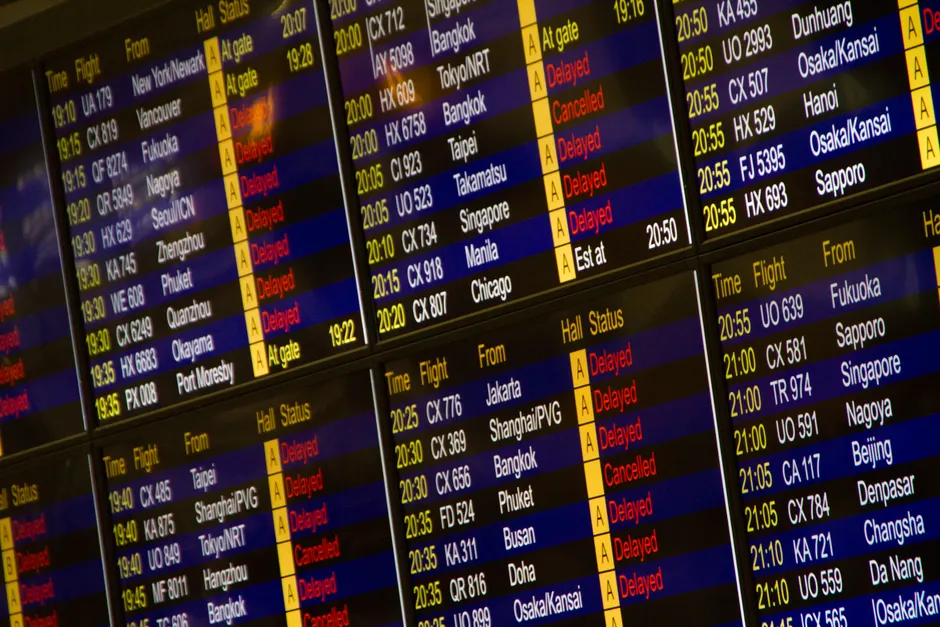
At the center of the dispute was Kalshi's flight cancellation market. Kalshi, which operates a prediction market platform, allows users to trade contracts on whether specific events will occur, in this case whether U.S. flights would be canceled. FlightAware, a widely used flight tracking service, alleged that Kalshi used its flight data without authorization to operate what FlightAware characterized as a gambling market (Engadget). The lawsuit sought unspecified damages, an injunction barring Kalshi from using FlightAware's data and name, and a jury trial (Reuters).
Between the filing and the dismissal, Kalshi made changes to how it presents data sources on its platform. Flight cancellation outcomes that had been labeled "verified from FlightAware" were relabeled as "verified from Primary Source Agency," though Kalshi's platform still links to FlightAware's website (Engadget). Kalshi also added a disclaimer stating that its flight cancellation market and related products have not been endorsed by the Primary Source Agency or its affiliates (Engadget).
The timing of the dismissal, coming so quickly after filing, could suggest a rapid informal resolution or a strategic retreat by FlightAware. The "without prejudice" designation means the legal claims themselves were not adjudicated on their merits, and FlightAware retains the right to refile. Whether Kalshi's platform changes factored into the decision is not confirmed in the available record.
The FlightAware dispute is the latest in a series of legal challenges confronting Kalshi over its prediction market model. New York Attorney General Letitia James sued Kalshi in July 2026, alleging the platform operates an "illegal gambling operation" in violation of state law (Reuters). A separate action claims Kalshi violates New Jersey's gambling statutes (Reuters). These state-level cases together raise questions about whether Kalshi's event contracts are regulated financial instruments or unlicensed gambling under state law.
Kalshi has prevailed in at least one significant regulatory confrontation. A federal court ruled in Kalshi's favor in a case against the Commodity Futures Trading Commission, holding that the CFTC had exceeded its statutory authority and failed to provide sufficient evidence to justify its action against the platform (Kalshi). That ruling gave Kalshi a degree of federal-level validation for its model, though it does not directly resolve the state-law gambling claims now pending against the company.
The FlightAware complaint touched on a distinct legal theory from the state gambling actions. Rather than challenging whether Kalshi's markets constitute gambling, FlightAware's Lanham Act claim targeted the use of a third party's trademark and data in connection with those markets. The trademark framing is notable because it would have tested whether a data provider can control how publicly accessible flight information is used when repackaged into a commercial prediction product. The voluntary dismissal means that question goes unanswered for now.
The broader context here is that the prediction market sector sits at an intersection of financial regulation, consumer protection law, and intellectual property. The CFTC ruling gave Kalshi room to operate under a federal regulatory framework for event contracts, but state attorneys general and private litigants continue to probe the boundaries of that authorization. The FlightAware suit, brief as it was, pointed to a separate vulnerability: prediction markets that reference real-world data sources can attract IP and trademark claims from the entities whose data underpins the market outcomes. Kalshi's swift relabeling of its data attribution and addition of a non-endorsement disclaimer suggest a practical approach to reducing that exposure without conceding legal ground.
For data providers like FlightAware, the calculus is more complicated. Flight data is widely shared through APIs (the programming interfaces that let services exchange data automatically), embeddable widgets, and public dashboards. Controlling how that data propagates once it enters the ecosystem is technically and legally difficult, particularly when the downstream use is a financial product operating under a separate regulatory regime. The Lanham Act provides one avenue, but the threshold for proving trademark infringement in a data-attribution context is not the same as proving unauthorized data licensing, and FlightAware may have concluded that the trademark theory was not the strongest vehicle for its concerns.
Neither party has publicly explained the reasoning behind the dismissal. The "without prejudice" filing preserves FlightAware's options, and Kalshi's platform modifications remain in place. Whether this resolution holds or signals a refiling under a different legal theory will depend on factors not visible in the current record.