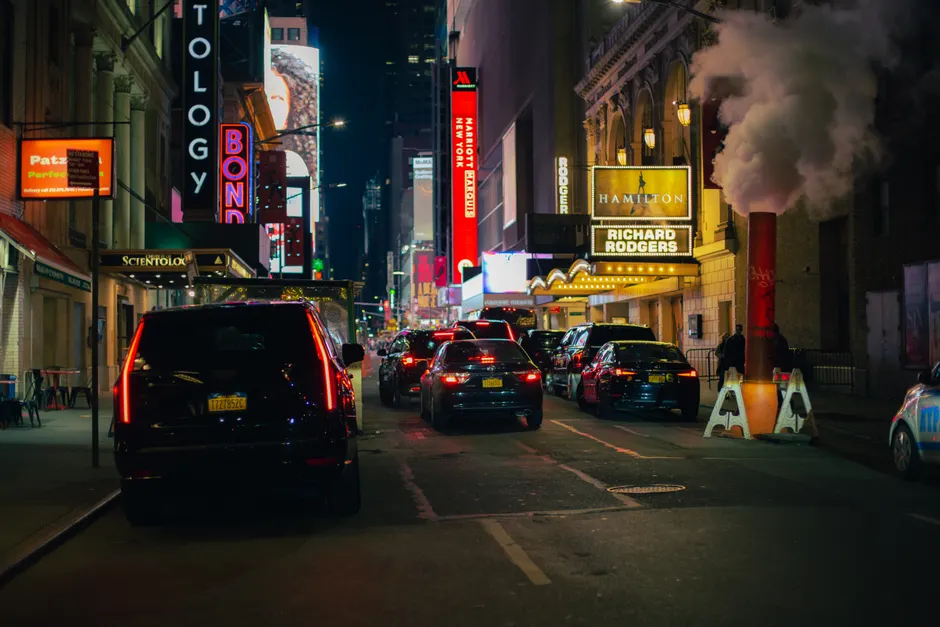
Broadway's Big Night: What the 2026 Tony Awards Tell Us

A Night That Brought Broadway into Focus
The 79th Annual Tony Awards took place on June 7, 2026, at Radio City Music Hall in New York City. CBS broadcast it live from 8:00–11:00 PM ET / 5:00–8:00 PM PT, and you could also stream it on Paramount+. Pop star P!NK hosted the event — a choice that showed Broadway is working hard to reach people beyond traditional theater audiences. Before the main show, there was a pre-show called "The Tony Awards: Act One" at 6:35 PM ET on Pluto TV's Live Music channel, hosted by Laura Benanti and Tituss Burgess. This expansion into streaming is part of a larger strategy to meet viewers wherever they are watching.
The nominees were announced on May 5, 2026, by actors Uzo Aduba and Darren Criss. What came out of those nominations was a season marked by tight competition at the top and an unusually strong group of revival productions — shows revived after their original runs had ended.
Plays: Death of a Salesman Takes Center Stage
Arthur Miller's Death of a Salesman entered the evening as the most-nominated play, tied at nine nominations each with Cats: The Jellicle Ball and Richard O'Brien's The Rocky Horror Show. This three-way tie at the top showed how competitive and varied the Broadway season really was.
Joe Mantello won the Tony for Best Direction of a Play for his work on Death of a Salesman, his third career directing Tony — a rare achievement that places him among Broadway's most decorated directors. Tony Awards Laurie Metcalf won Best Performance by an Actress in a Featured Role in a Play, also for Death of a Salesman, continuing a career full of major awards. Chloe Lamford won Best Scenic Design of a Play for the same production. Together, these three wins showed how much critics and the industry appreciated Mantello's take on Miller's classic play.
John Lithgow received a nomination for Best Performance by an Actor in a Leading Role in a Play for his work in Giant, keeping the veteran actor in the running for Broadway's highest individual honor.
The success of Death of a Salesman across multiple categories — direction, featured actress, scenic design — shows how much the production stood out this season. But nine nominations didn't mean the show won every award it was nominated for. The competition stayed tight across the board.
Musicals: Two Heavy Hitters Compete
The musical field was shaped by two productions that each collected twelve nominations: "The Lost Boys" and "Schmigadoon!" The Best Musical nominees also included "Titánico" and "Two Strangers (Carry a Cake Across New York)" — a mix that reflects both big commercial musicals and smaller, more experimental concept shows. Tony Awards
The Best Revival of a Musical category included Cats: The Jellicle Ball, Ragtime, and Richard O'Brien's The Rocky Horror Show — three very different productions from different decades of Broadway history. Cats: The Jellicle Ball won Best Revival of a Musical. Tony Awards This production had also earned nine nominations alongside Death of a Salesman and The Rocky Horror Show, making its win a significant moment in what was clearly a closely contested revival race.
The broadcast included live performances from all the Best Musical nominees and all the Best Revival of a Musical nominees. These performances served two purposes: they told the story of the competition to the television audience, and they acted as extended advertisements for shows still running on Broadway.
Recognition Beyond the Stage
The Special Tony Awards for Lifetime Achievement in the Theatre went to André Bishop, Jules Fisher, and James Lapine — three people whose work across producing, lighting design, and writing and directing has shaped modern theater in profound ways. Tony Awards
The League of Resident Theatres (LORT) received a Special Tony Award — recognition for the network of nonprofit regional theaters across the country that function as a training ground and testing ground for new work before it reaches Broadway. Tony Awards This recognition matters because regional theaters have faced serious money troubles in the years since the pandemic.
Mary-Mitchell Campbell received the Isabelle Stevenson Tony Award, which honors someone in theater for the volunteer work they do in their community. Jake Bell, Kenn Lubin, and Loren Plotkin received Tony Honors for Excellence in the Theatre.
The 2026 Excellence in Theatre Education Award went to Freddie Hendricks, a theater teacher at Utopian Academy for the Arts in Ellenwood, Georgia. Moments like this one shine a spotlight on K–12 theater education — a part of the system that doesn't get enough funding despite the fact that it produces the next generation of theater professionals. Tony Awards
What We're Seeing in the Pattern
This configuration of winners has happened before. A prestigious revival of a classic American play — this time Miller's Death of a Salesman under Mantello — arrives in a season where musicals are split between competing frontrunners. The plays end up winning the critical narrative even though musicals get more nominations and more broadcast time. The same thing happened in 2012 with another revival of Death of a Salesman, and in 2022 when The Lehman Trilogy drew critical attention while musicals pulled bigger audiences.
This pattern isn't accidental. It reflects a real tension in how Tony Awards voters make their choices. Theater insiders and critics weight things like direction and design more heavily. The broader Broadway audience — the people who buy tickets and fill seats — has different preferences that shape which shows can stay open long enough to sustain a run. Mantello's third directing Tony is part of that longer story. So is the LORT recognition, which suggests the industry wants to acknowledge that Broadway depends on infrastructure beyond just the big shows in midtown Manhattan.
The choice of P!NK as host, the expansion onto Pluto TV and Paramount+, and the focus on education all show that the Tony Awards administration views reaching new audiences as just as important as celebrating the prestige of theater. Whether these strategies actually bring in more viewers is a question the ratings data will eventually answer — but the effort to change who watches matters.
What June 7 confirmed is that Broadway in 2026 exists in multiple worlds at once: the world of canonical classics (Miller, LORT, Fisher, Lapine), the world of contemporary commercial theater (the big-budget musicals with twelve nominations each), and the world of aspiring to be more accessible and inclusive (P!NK, streaming, education spotlights). The central challenge for the Tony Awards as an institution has always been holding all three together in a single broadcast.