Israeli Forces Clash With Settlers in West Bank Siege — and Fail to Remove Them

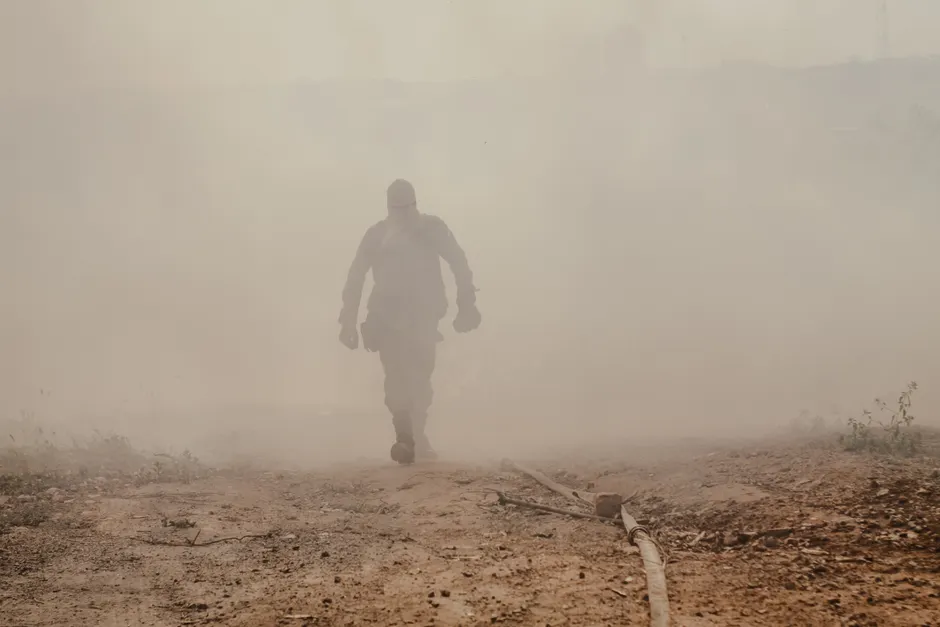
Israeli security forces fired tear gas and stun grenades at Jewish settlers in the West Bank village of Qusra on Wednesday, August 12, 2026, trying to break up a group that had been trapping two Palestinian families inside their homes since Sunday. The operation failed. A larger group of settlers confronted the troops, who withdrew without clearing the outpost the settlers had built directly in front of Palestinian homes after blocking roads and cutting off water and electricity to the families inside (BBC).
The confrontation in Qusra is unusual because the Israeli military directed crowd-control weapons — tear gas and stun grenades — at settlers rather than Palestinians, which rarely happens. The situation on the ground was complicated from the start. The first Israeli soldiers to arrive at the site prayed with the settlers, an act the military later said would lead to disciplinary action (BBC). Reuters separately confirmed that troops clashed with settlers while trying to dismantle the outpost (Reuters).
The settlers' stated goal, according to reporting from the site, is to remove Palestinian residents from the area. The Guardian described the blockade of the two families as a campaign of terror, noting that settlers and soldiers cut off water and electricity and prevented medical care from reaching those trapped inside (The Guardian). The New York Times reported that the families had been trapped for days, drawing attention to what it described as growing chaos across the West Bank.
Qusra sits near several large Israeli settlements in the occupied West Bank, a location that has placed it at the center of worsening settler-Palestinian friction in recent weeks (Reuters). Settlements — communities built by Israel on land it captured in 1967 — are considered illegal under international law, though the Israeli government has promoted their rapid expansion.
The village's mayor, Abdel Azim Wadi, told the BBC that local residents had observed a clear and sustained pattern of targeting Qusra. Last month, a newly completed mosque in the area was set on fire, with graffiti in Hebrew sprayed nearby. The Israeli military said troops sent to Qusra found graffiti and signs of arson there (Reuters). In July, settlers surrounded a Palestinian home in the nearby village of Jalud for more than two weeks; the owners ultimately fled, and settlers took over the property (BBC).
The Qusra siege follows a still more violent episode in the village of Tal. After settlers attacked Tal, the resulting escalation left six people dead: four Palestinians and two Israeli soldiers. The Israeli military made dozens of arrests and blocked roadways through the West Bank in the aftermath (Reuters).
The broader context here matters for understanding what is distinctive about the Qusra episode and what fits prior patterns. The Israeli military's decision to use force against settlers — rather than merely issuing condemnations or referring cases to civilian police — reflects the operational challenge the outpost posed: a physical blockade of Palestinian homes on Palestinian land, sustained over multiple days, with infrastructure cutoffs that created an immediate humanitarian crisis. Yet the failure of the dispersal operation, the initial fraternization between arriving soldiers and the settlers, and the rapid mobilization of a larger settler group to resist the military together point to constraints on the IDF's ability or willingness to enforce evacuation orders against settler populations in Area C — the roughly 60 percent of the West Bank under Israeli military and administrative control — even when directed from the command level.
The pattern across Qusra, Jalud, and Tal over the past several weeks suggests a coordinated territorial strategy rather than isolated incidents. Settler groups have moved from ad hoc harassment to sustained sieges, property takeovers, and infrastructure denial, with each operation building on the precedent set by the last. The mosque arson, the Jalud home seizure, and now the Qusra blockade form a sequence in which settlers test the limits of military response, find those limits real, and proceed to the next target. The disciplinary action promised for the soldiers who prayed with the settlers is, at this stage, a stated intent rather than a completed proceeding. Whether it materializes, and what scale of accountability it carries, will be a metric worth watching.
For Palestinian residents, the calculus is stark. Mayor Wadi's characterization of a sustained campaign aligns with the visible trajectory on the ground: villages near settlement clusters face sequential pressure, with military intervention arriving late, failing, or never materializing. The Qusra families remained trapped as of the latest reporting. The military's inability to dislodge the settlers on Wednesday, after four days of siege, leaves the immediate crisis unresolved and raises the question of whether a second, larger operation will follow, or whether the outpost will consolidate into a permanent presence like the one established in Jalud.