Three Near-Misses in Three Weeks: What's Going Wrong at Sydney Airport?
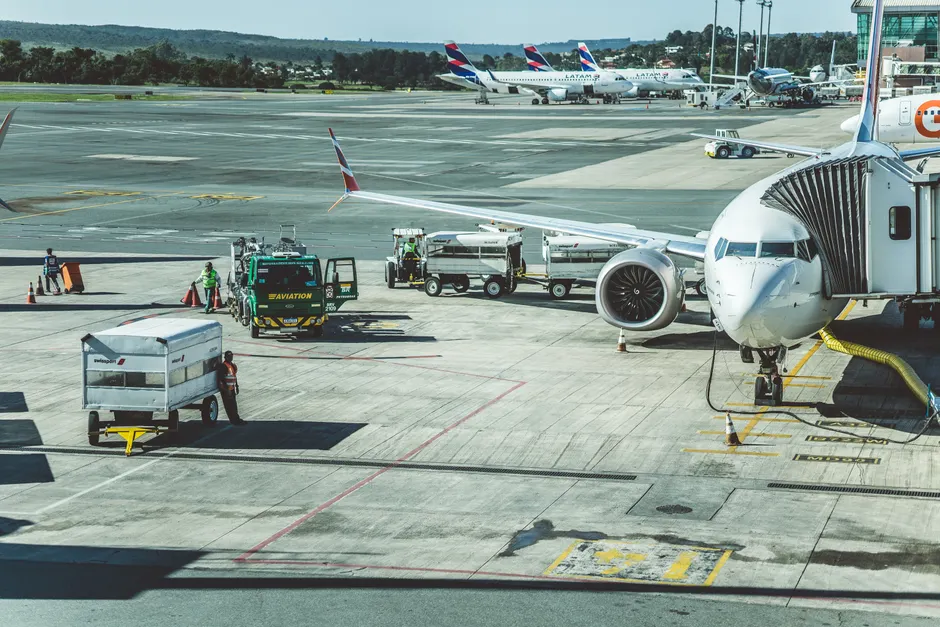
Australia's transport safety watchdog confirmed on 13 August 2026 that it is investigating a second runway incursion at Sydney Airport — the third safety incident at the facility in under three weeks, all under active investigation. The latest event, logged under reference AO-2026-090, occurred on Sunday 9 August 2026 and involved Virgin Australia flight VA555 (Sydney–Perth) aborting its take-off roll after a Qantas Boeing 737, flight QF728 (Sydney–Ayers Rock), began crossing the runway ahead of it. Both aircraft were Boeing 737s. The Guardian
A "runway incursion" is the term used when an aircraft, vehicle, or person enters a runway without proper clearance or at the wrong time — in this case, one plane crossing a runway while another was already accelerating for take-off. According to the ATSB, the Qantas crew on QF728 reported having received clearance from air traffic control (ATC) to cross the runway. The Virgin crew saw the aircraft moving in front of them, reduced engine power, and brought their plane to a stop. Two airport workers were stood down temporarily pending investigation into the near-collision. ABC News
The 9 August incursion took place only hours after a separate incident in which a Jetstar aircraft narrowly avoided colliding with a Qatar Airways plane on the Sydney tarmac. That event drew national attention to a shortage of air traffic controllers. The ATSB has also opened an investigation into that near miss, in which a Jetstar flight attendant sustained injuries. AFR
The third investigation traces to 27 July 2026, when a Qantas flight was cleared to cross a runway in front of another Qantas aircraft that had just landed at Sydney. The ATSB is examining that event under reference AO-2026-086 as a breakdown of coordination involving a Bombardier DHC-8 (VH-QOC) and a Boeing 737 (VH-XZG). ATSB
Airservices Australia, the government-owned provider of air traffic management, said on 13 August that it is working with the ATSB across all three investigations. The agency attributed flight delays at Sydney to a shortage of air traffic controllers, tracing the deficit partly to a pandemic-era program that incentivised a significant number of experienced staff to depart in 2021. Recruitment has not kept pace with demand: new controllers must pass a demanding aptitude test and complete 18 months of training in Melbourne. Airservices also cited additional pressure from the new Western Sydney Airport and its recent assumption of airspace management at Ballina airport in northern New South Wales. The Guardian
The union representing air traffic controllers at Airservices Australia has reported that its members are short-staffed and exhausted.
Federal transport minister Catherine King summoned Airservices Australia chief executive Rob Sharp to a meeting in Canberra on Monday 10 August 2026. King called the disruptions "unacceptable" while expressing confidence that Airservices was doing everything it could to address the issue, including changing rostering practices in the short term. She indicated that an additional 95 people are expected to be endorsed as air traffic controllers by the end of 2026. The Guardian
The ATSB's investigation page lists the 9 August event as a "Near collision involving Airbus A320, Sydney Airport, New South Wales, on 9 August," though the Guardian's reporting identifies the aircraft involved as two Boeing 737s operated by Virgin Australia and Qantas. ATSB
The clustering of three investigated incidents in under three weeks at Australia's busiest airport raises pointed questions about the resilience of the air traffic control system as a whole. The Qantas crew on QF728 reportedly received ATC clearance to cross the runway, which shifts scrutiny toward the coordination between controllers managing arriving, departing, and ground traffic on intersecting or adjacent runways rather than pilot error alone. Think of a runway as a multi-lane intersection: if one controller waves a vehicle through while another is clearing traffic to accelerate across the same junction, the failure is in the sequencing of instructions, not in the individual drivers' decisions.
Airservices Australia's own attribution of the controller shortage to a 2021 voluntary departure program is notable for its directness. Pandemic-era workforce reductions across global aviation were widespread, but the acknowledgment that an incentive scheme drove experienced staff out suggests a policy decision whose downstream costs are now surfacing under operational stress. The 18-month training pipeline in Melbourne means that even aggressive recruitment cannot close the gap quickly; the 95 additional endorsements projected by year-end will help, but the timeline leaves a vulnerable window.
The broader context is one of compounding demand. Western Sydney Airport's commissioning adds a second major commercial airport to the Sydney basin, requiring airspace redesign and additional controller sectors. Ballina's airspace management transfer further stretches the available controller pool. These are structural pressures that no short-term rostering adjustment can fully resolve.
King's simultaneous use of "unacceptable" and an expression of confidence in Airservices' remediation efforts reflects a political balancing act: signaling accountability without triggering a crisis of public confidence in Australian aviation safety. The ATSB investigations, when complete, will determine whether these three incidents share a common systemic root cause or represent coincidental failures in an otherwise sound system.


