Nigeria's Bandit Crisis: When Peace Talks Become a Trap

When an Invitation Becomes a Trap
On 9 June 2026, Nigerian police reported that 39 residents of Magamin Diddi village were abducted by armed bandits in Zamfara State. What made this kidnapping stand out was how it happened: the bandits invited the villagers to a meeting in a nearby forest, claiming they wanted to discuss peace with one of the bandit leaders' families. The villagers thought they were going to talk about reconciliation. Once they arrived, they were seized. The bandits then demanded 125 million naira — roughly $91,880 — for their release, according to Reuters.
What makes this tactic important is not just what happened, but how it happened. The bandits used the language of peacemaking — an invitation, a family meeting, a neutral location — to turn the villagers' own desire for peace into a vulnerability. This was not a random act. It was a calculated strategy.
Where This Is Happening and Why It Matters
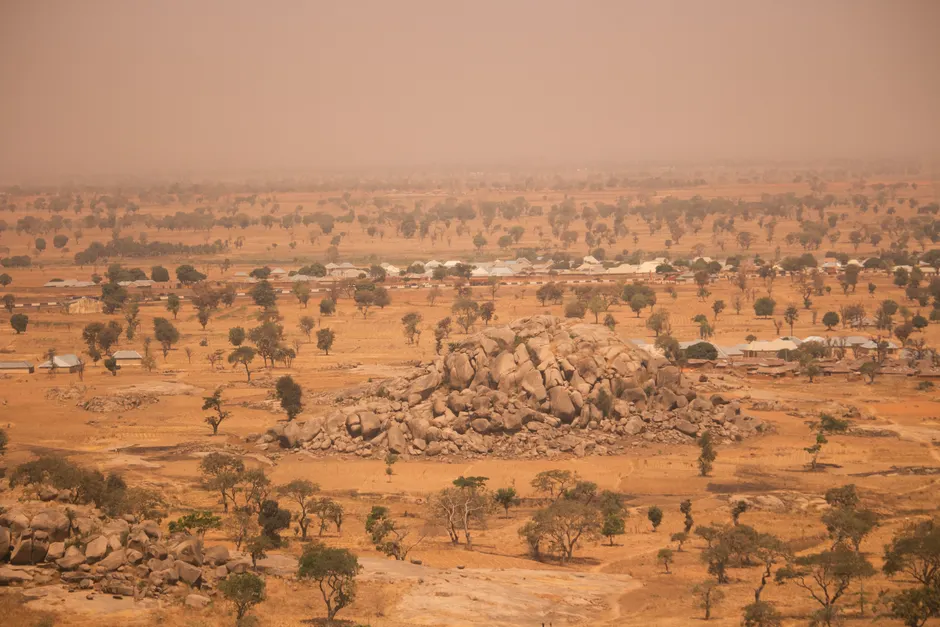
Zamfara State has been the center of Nigeria's banditry crisis since around 2011. What started as cattle rustlers — armed thieves stealing livestock — evolved into something much larger and more organized, creating what some call an "insurgent economy." The Maradun area, where Magamin Diddi is located, sits in the center-west of Zamfara and has experienced repeated cycles of mass abductions, burned villages, and government-negotiated releases over the past decade.
The villagers had traveled to the forest meeting at the invitation of people connected to a bandit leader's family, according to The Guardian. The framing as a "reconciliation mission" suggests these victims may have tried to talk with the bandits before, which means the betrayal was carefully planned rather than random.
The ransom demand needs context to make sense. 125 million naira is too much for a rural village to pay on its own, but it is low enough that local leaders, the government, or aid organizations might negotiate it down. Bandit groups in the northwest typically use this strategy: demand a high price, expect to settle for less through negotiators — usually community leaders or traditional rulers — and pocket the difference.
This Tactic Has Been Used Before
The strategy of disguising an ambush as a peace meeting is not new. In the Sahel region (a broad stretch of Africa below the Sahara), militant groups linked to jihadist networks have repeatedly exploited ceasefire talks and community dialogue to gather information about local leaders, or to abduct and target those who engage with them. In Nigeria's northwest specifically, this tactic has appeared before in Kebbi and Sokoto states, where community leaders who met with bandits in good faith later became targets themselves.
What stands out about the Magamin Diddi incident is how openly it was carried out. The residents traveled to a known location in broad daylight. This suggests either that the bandits believed the appearance of legitimacy would lower the community's guard, or that their confidence has grown so much that they no longer feel the need to hide their actions.
Why Zamfara Remains So Vulnerable
Nigeria's security forces have struggled to control the banditry problem in the northwest for several interconnected reasons. Zamfara has thick forests and remote border zones with Niger, giving armed groups plenty of space to operate where military aircraft and ground troops cannot easily reach them. Over time, the traditional systems that communities once used to resolve conflicts have broken down. This leaves villages with few legitimate ways to negotiate their own security — which actually makes them more likely to try talking directly with bandits. The Magamin Diddi attack is a textbook example of how this desperation becomes dangerous.
Nigeria's military has launched operations in Zamfara multiple times, and President Bola Tinubu's administration has said publicly that it will not pay ransoms or negotiate with bandits. But governors in the state, and elsewhere, have quietly made their own backroom deals with bandit leaders — sometimes with federal approval, sometimes without. This mixed message creates space for communities to reach out on their own, often without protection or official guidance.
What Happens Now: The Negotiation That Likely Follows
The 125 million naira demand sets in motion a familiar cycle. Community leaders, local officials, and sometimes religious scholars will probably start negotiating. While the Nigerian government officially refuses to pay ransoms, that policy rarely survives when 39 neighbors are missing. Historical patterns in Zamfara show that when hostages are released, it usually takes weeks or months, and sometimes only happens after partial payments are made.
The deeper damage from an attack like this is harder to measure but just as important. If residents of Magamin Diddi — and villages nearby — come to believe that any attempt to talk with armed groups leads to kidnapping, they will stop trying to resolve conflicts themselves. That leaves them dependent on state security forces that do not always reach remote areas, or on armed community vigilantes whose own human-rights record is questioned.
The broader context here matters for Nigeria's entire stabilization strategy in the northwest. If weaponizing peace talks becomes a common tactic used by bandits, it poisons the possibility of bottom-up peacemaking. International organizations — including the UN's West Africa office and ECOWAS, a regional alliance — have identified community dialogue as essential to solving this crisis without just military force alone. An incident that turns dialogue into a trap directly undermines that approach.
What We Still Don't Know
As of 9 June 2026, Nigerian police have not publicly identified which bandit group carried out the abduction. Zamfara hosts multiple competing bandit factions. Some have loose connections to jihadist networks like Ansaru; others are purely criminal enterprises focused on ransom and theft. This distinction matters because it shapes both how negotiations might proceed and how the military might respond. A purely criminal group is more likely to accept money and release hostages; a group with ideological goals might use the hostages for prisoner exchanges or public messaging instead of ransom.
Nigerian authorities have not announced any rescue operation or formal negotiating process. The 39 residents of Magamin Diddi remain unaccounted for.