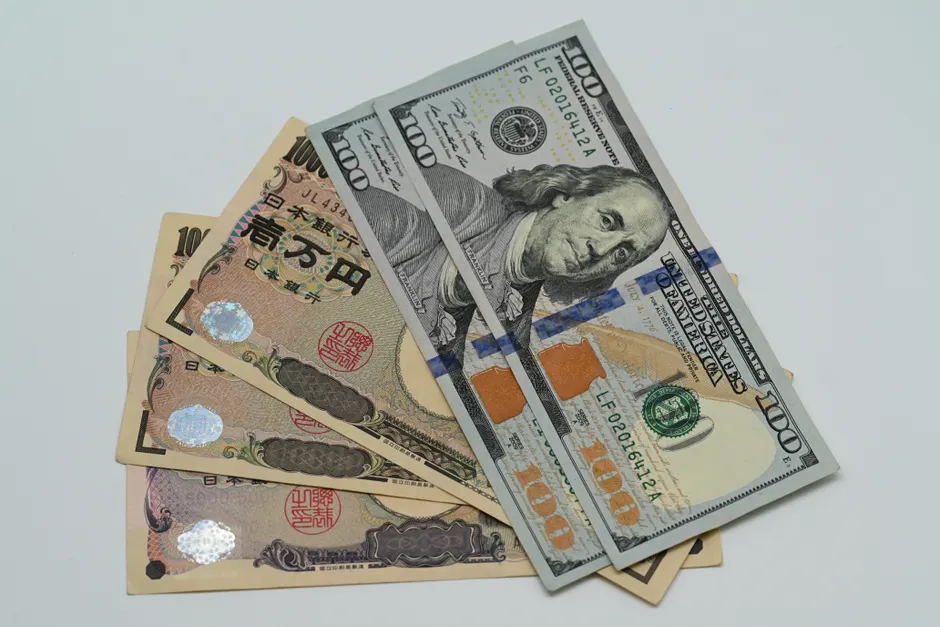
Why Japan's Yen Keeps Falling—And What It Means for Your Money

Why Japan's Yen Keeps Falling—And What It Means for Your Money
The Japanese yen hit 159.45 per dollar in January 2026 — its weakest level in 18 months — before bouncing slightly to 158.46, according to Reuters. That small rebound wasn't driven by genuine buying interest. It was the market pausing for breath after a steep, one-direction slide that had already worried policymakers in Tokyo.
This episode exposes a real tension in global currency markets over the past two years: Japan is keeping interest rates near zero, while the Federal Reserve, European Central Bank, and Bank of England have all raised rates much higher. That difference in rates is like gravity—it consistently pulls money out of the yen and into higher-yielding currencies.
The Simple Reason the Yen Keeps Weakening
Here's the mechanism in plain terms. When a country's interest rates are near zero and you can earn several percentage points more overseas, money naturally flows outward—unless something major happens to reverse it, like a sudden drop in risk appetite or unexpected policy change. The yen's weakness comes directly from that gap: Japan's rates are low, and returns available in other currencies are higher, as Bloomberg's timeline of the yen shows through mid-2026.
This is not new. The Bank of Japan has kept rates near zero for almost three decades. What changed in 2022–2024 was the other side of the story: the US Federal Reserve raised rates aggressively—its fastest tightening since the early 1980s. Even as the Fed later began easing slightly, the gap between US and Japanese rates stayed wide. That gap continues to pressure the yen downward.
History offers a lesson. In 1995 and 1998, sharp yen depreciation also stemmed from interest-rate differences and carry trades (borrowing cheap in one currency to invest in another). Those episodes ended not through gradual policy shifts, but through sudden coordinated intervention by central banks—coupled with a real change in the interest-rate story itself. In January 2026, neither ingredient was fully present, which is why the yen's recovery measured just a fraction of a cent, not a bigger move.
Japan Spent Billions on Intervention—With Limited Results
Japan's Ministry of Finance did not stand idle. The government spent substantial sums trying to buy yen and arrest the decline, yet those efforts proved ineffective, per Bloomberg. This matches what economists know from studying currency markets: when one country acts alone to prop up its currency without backing it up with a real policy change—like raising interest rates—the effect rarely lasts.
The Bank of Japan faces a real constraint. Japan has one of the highest government debt levels in the developed world relative to its economy. Even a modest increase in interest rates quickly raises the government's borrowing costs. This fiscal reality has historically made the BOJ cautious about raising rates, even when inflation data might suggest they should. Interventions can smooth short-term price swings and force traders holding large yen shorts to cover their bets, but they cannot fix the underlying problem: as long as Japanese rates stay below US rates, the carry trade remains attractive and pressure on the yen continues.
The late-January surge in the yen—when Reuters reported it jumped sharply as investors worried about BOJ action—shows both how this works and its limits. Traders had built up such large short positions (bets against the yen) that any signal of intervention, or even credible threat of it, could trigger a rapid unwinding. But unwinding is temporary. Once traders finished covering their bets, the underlying math reasserted itself: Japanese rates were still low, US rates were still higher, and the yen remained under pressure.
The Real Cost: Japanese Families Get Squeezed
A weak yen hits Japanese households in the wallet. Japan imports large amounts of energy, food, and raw materials. A cheaper yen means those imports cost more in yen-denominated terms. Those higher costs feed into producer prices and then consumer prices—inflation at the grocery store and the gas pump. Policymakers have grown increasingly worried about this, as Bloomberg reported in June 2026, with concern also evident in March 2026 coverage.
For Japanese exporters like Toyota and Sony, a weak yen is nominally good news: when they sell products abroad and convert foreign earnings back to yen, they get more yen per sale. But the household side of the economy—families paying higher bills for food and energy—bears the cost. That distributional tension between helping exporters compete globally and protecting consumers from imported inflation is a genuine policy dilemma, not a simple win for Japan.
There is a second consideration worth flagging: persistent weakness in a currency can undermine confidence in that country's assets. Japanese government bonds (JGBs) are held mostly by domestic institutions. Those investors watch not just the interest rate, but whether the currency underlying their investment is losing value.
What Markets Are Betting Will Happen
The January pattern—the yen hitting 159.45, then recovering partway to 158.46, then jumping late in the month on intervention fears—tells a coherent story about what traders are assuming: the Bank of Japan will raise rates slowly, the Federal Reserve will also ease carefully, and the carry trade will keep paying off until one of those assumptions breaks.
When you look at how much traders have bet against the yen at moments of peak stress, the positions have repeatedly grown large enough to cause sharp, disorderly reversals. That is not a forecast. It is a structural fact of how leverage builds in a low-volatility carry trade. When volatility spikes suddenly, everyone heads for the exits at once.
The Bank of Japan's messages around the January lows were, as usual, carefully worded to avoid committing to a rate schedule while keeping room for gradual adjustment. Whether that balance is enough to prevent another test of 160 per dollar—or worse—will depend on where US rates go, whether investors' appetite for risk holds up, and whether Tokyo's willingness and ability to intervene remain credible.
What Happens Next
This does not resolve neatly. The yen's weakness stems from policy choices that are themselves constrained by fiscal reality, a shrinking population, and Japan's long history of deflation, which has made the central bank deeply cautious about tightening. Intervention can buy time and smooth short-term swings. It cannot replace the kind of interest-rate normalization that would, in principle, narrow the differential driving money out of yen.
For investors and savers, the January episode is one chapter in a longer story, not a turning point. The yen can and does rally sharply—intervention signals, unwinding of positions, and sudden risk-aversion can all produce those moves. Whether any of them marks the start of a genuine trend reversal depends on things that remain genuinely uncertain as of mid-2026.
The real number to watch is not 159 or 158. It is how fast and how credibly the Bank of Japan raises rates relative to the US Federal Reserve's path. Everything else—interventions, statements, short bounces—is noise around that signal.