Europe's Record-Breaking Summer of Heat: What Happened and Why It Matters

Europe is in the grip of its third major heatwave of summer 2026, with temperatures expected to hit the mid-30s Celsius in parts of Britain and France this August. The heat caps a season that has shattered records since May and driven wildfires that displaced hundreds of thousands of people across the continent CNN, France 24.
The heat began unusually early. In May 2026, a heatwave broke temperature records across France, Portugal, Ireland, and the United Kingdom. "Feels-like" temperatures, which factor in humidity, wind, and solar radiation to measure what heat actually does to the human body, reached 35°C to 40°C across large parts of Europe Copernicus. June then delivered the hottest June on record for western Europe, during the second-warmest June globally. The average temperature over European land that month reached 19.14°C, which is 1.78°C above the 1991–2020 average — the reference period scientists use as a baseline for comparison — making it the second-highest June figure ever recorded Copernicus. July saw the highest global ocean surface temperatures on record for the month, paired with exceptionally hot, dry conditions across the continent Copernicus. The average European land temperature in July reached 20.49°C, 0.66°C above the 1991–2020 average, ranking eleventh-highest for the month. Taken together, western Europe experienced its warmest June–July period on record in 2026 World Economic Forum.
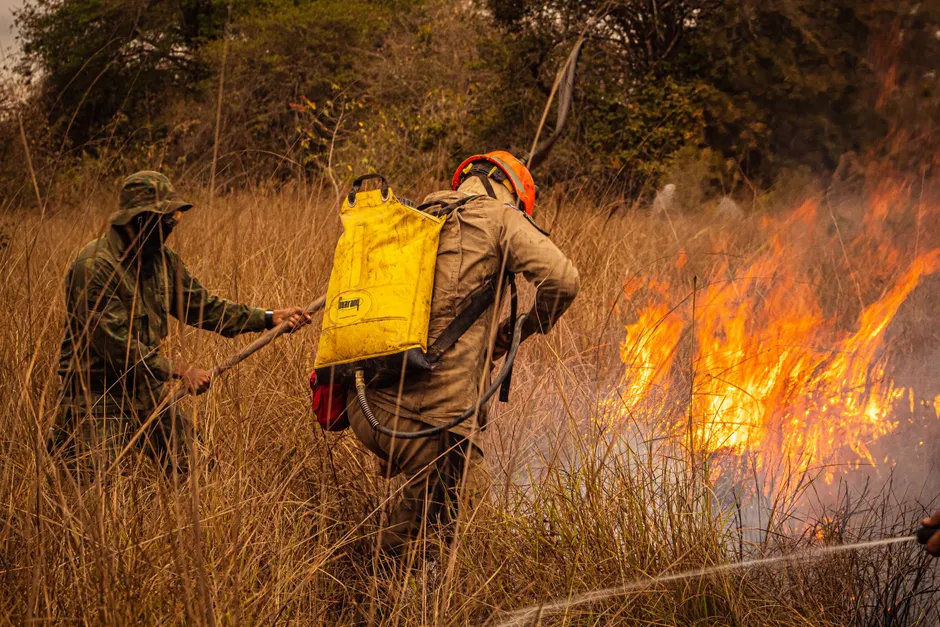
The heat has fueled a wildfire season that, by late July, had already overtaken 2025's record-breaking year in total burnt area across EU countries Reuters. In Greece, temperatures exceeded 36°C on July 4, and a forest fire struck Oinoi, Attica, on July 5 Meteo.gr. Wildfires again hit West Attica on August 3 Reuters. In Spain, firefighters battled a blaze that forced over 1,000 evacuations as of July 17, while France and Spain made progress against major fires later in the month even as another heatwave approached Reuters, Reuters.
The crisis reached well beyond the Mediterranean. Austria set a national record temperature in early August. Hungary curbed power use. Albanian firefighters battled blazes as southern and eastern Europe felt the heat Reuters. A 2026 academic study hosted in AEMET's repository documents a severe spring heatwave that struck southern Spain and North-West Africa, suggesting the unusual warmth began even before the May records AEMET Repository.
As of August 13, Spain's State Meteorological Agency (AEMET) issued an "important hazard" weather warning with 40%–70% probability of maximum temperatures reaching 40°C in Campiña cordobesa, Córdoba, valid from 13:00 to 20:59. The same day, AEMET forecast maximums of up to 39°C in Badajoz, 38°C in Albacete, and 36°C in Barcelona AEMET, AEMET.
Europe is the world's fastest-warming continent Reuters. The 2026 data reinforce that picture with unusual clarity: an anomalously early May heatwave, a record June across western Europe, record-warm global ocean surfaces in July, and a third heat blast in August, combined with a wildfire season that surpassed the previous year's record burnt area by late July. Together, these put the entire June–August period well outside the range that the 1991–2020 baseline would predict.
Several dynamics are worth watching closely. First, the Copernicus data show that June's temperature anomaly was far more extreme relative to the baseline than July's, at 1.78°C versus 0.66°C. This suggests the early-season warming was unusually strong, possibly tied to broader interactions between the oceans and the atmosphere, given that global ocean surfaces reached record July highs. Second, the wildfire trajectory is not a repeat of 2025 but an escalation: cumulative burnt area surpassed last year's record before August. Third, the geographic spread of impacts, from Britain to the Balkans and from the Iberian Peninsula to Attica, strains the assumption that this remains a Mediterranean problem. Austria's national record and Hungary's power curtailment point to deep-continental exposure.
The August AEMET warnings for Córdoba, Badajoz, and Albacete signal that Iberia remains in an active fire-weather regime. With mid-30s forecast for Britain and France, the thermal stress is not confined to the south. The question for policymakers and disaster-response agencies is whether infrastructure, grid capacity, and firefighting resources built around the 1991–2020 baseline can hold up in a climate that has now, for two consecutive years, exceeded prior records.