Iran's Missile Attack on Israel: What Happened and Why It Matters

Iran's Missile Attack on Israel: What Happened and Why It Matters
In October 2024, Iran launched 180 ballistic missiles at Israeli military targets in what it called "Operation True Promise II," according to Iran's statement to the United Nations. Tehran said it was retaliating for Israel's killing of two major figures: the head of Hamas and the leader of Hezbollah (a militant group armed and backed by Iran). Israel's Defense Ministry reported that 86% of those missiles were shot down by air defense systems, preventing significant damage to Israeli territory.
This attack was not random. It was the second in a chain of escalations that began months earlier — a chain that reveals how regional conflicts can spiral when each side feels it must respond to a blow.
The Breaking Point: April 2024
The story goes back to April 1, 2024. Israel launched missiles at Iran's embassy compound in Damascus, Syria. The strike killed several high-ranking officers from Iran's Islamic Revolutionary Guard Corps, including a general who oversaw Iranian operations in Syria and Lebanon, according to Iran's Foreign Ministry.
Here's why this mattered so much: under international law (the Vienna Convention), an embassy's consular section is considered sovereign territory — essentially part of Iran itself. Striking it was a line Iran had warned it would not tolerate. The Islamic Republic's leaders faced a difficult choice: let it go and appear weak, or strike back openly and risk escalating into direct warfare with Israel.
Iran chose to respond. On April 13–14, it fired about 300 missiles and drones at Israel — the first time it had directly attacked Israeli territory. Most were intercepted by Israeli and U.S. air defenses. What happened next was surprising: both sides toned down the rhetoric. Israel conducted what appeared to be a limited retaliatory airstrike near an Iranian air base on April 19, according to reporting, but neither government made a big public show of it. Neither demanded the other face consequences. This mutual quiet suggested both wanted to step back from the brink.
For months, tensions eased. That off-ramp held — until September.
Why October's Attack Came
In late September 2024, Israel killed Hassan Nasrallah, the leader of Hezbollah, and then Yahya Sinwar, the political chief of Hamas. Both men were key allies of Iran and commanded operations that gave Iran leverage across the Middle East without directly fighting Israel itself. Losing both in quick succession was serious.
From Iran's perspective, not responding would send a message that it could not protect its allies. That would weaken Iran's ability to deter Israeli action in the future — a position Tehran calls crucial to its regional standing and survival. So on October 1, Iran launched 180 ballistic missiles, targeting Israeli military sites.
In its letter to the UN Security Council, Iran framed the attack as legal self-defense under international law. This framing mattered less because it might convince the U.S. or other Western powers than because it signaled to Iran's own people and its regional partners that Tehran was acting responsibly, not recklessly.
Understanding the 86% Intercept Rate
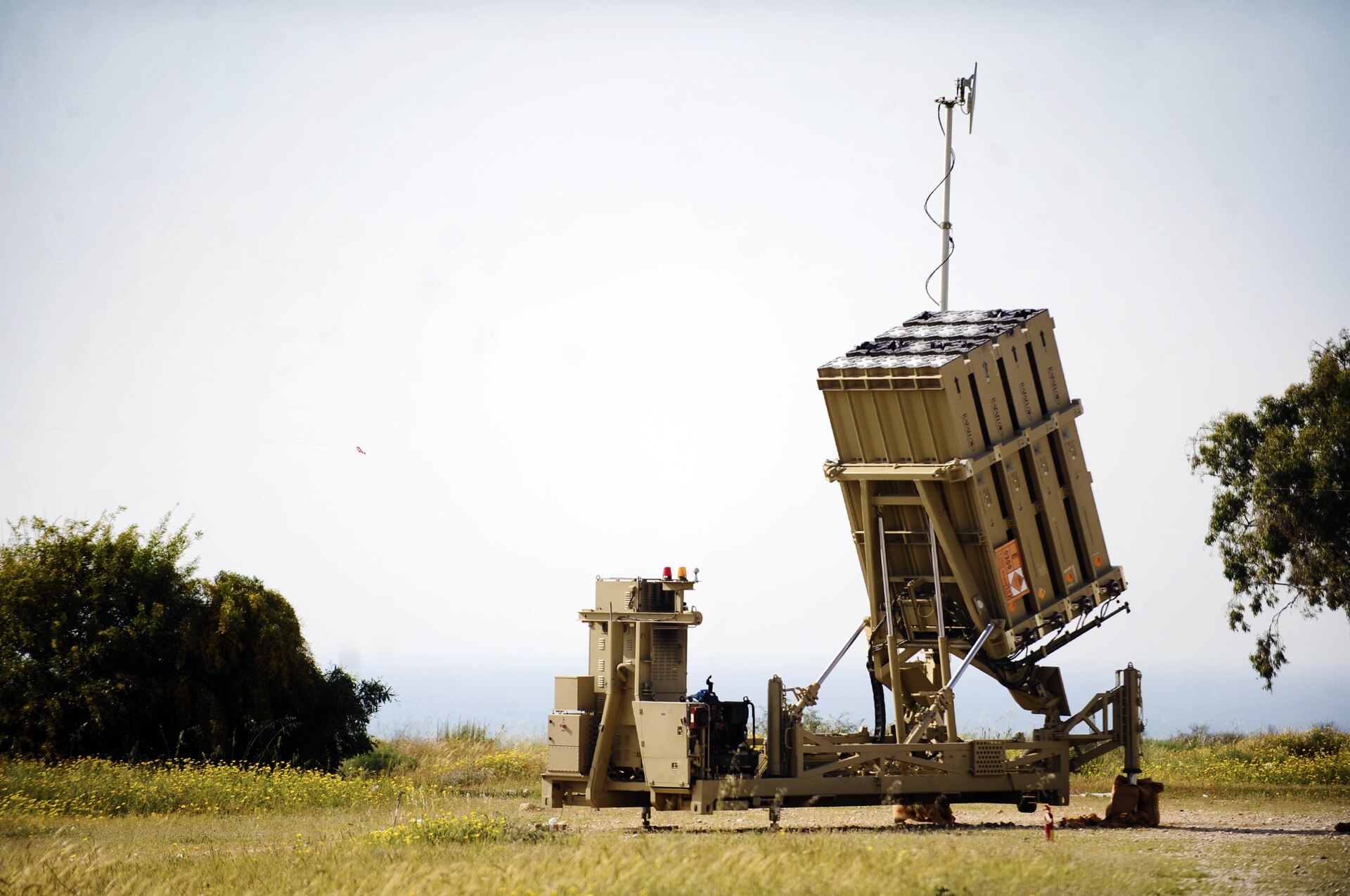
The Israeli Defense Ministry's claim that 86% of Iran's ballistic missiles were shot down requires some context. Ballistic missiles follow a predictable arc through space, making them easier to hit than cruise missiles or drones, which can maneuver. Israel and its allies (including the U.S.) have advanced air defense systems like the Arrow-3, Arrow-2, and THAAD designed specifically for this.
An 86% intercept rate means roughly 25 missiles got through the primary defense layer. What happened to those — whether backup systems stopped them, they landed in empty areas, or they failed — was not specified in the Israeli statement. The Defense Ministry said these systems "prevented damage" to Israeli territory, but that phrase is ambiguous: it could mean no damage at all, or damage that was relatively limited.
The broader picture: Israeli air defenses performed as expected. With U.S. and allied help, they contained the threat.
A Pattern Emerges
Looking back, there's a rhythm here. Both April and October followed the same cycle: one side strikes, the other side retaliates, defenders intercept most of the missiles, both sides back away.
This pattern resembles what scholars call "controlled escalation" — each side shows it can strike but stops short of the kind of massive retaliation that could spiral into all-out war. Both countries seem to understand, without saying so openly, that the conflict is dangerous enough to be costly but manageable enough to contain.
We've seen this before. During the Iran-Iraq War in the 1980s, both countries traded strikes on merchant ships in the Persian Gulf in what became known as the "tanker war." The strikes were calibrated: serious enough to send a message, limited enough that both sides could step back without losing face.
But here's what makes the current situation different and more worrying: Iran's nuclear program has advanced significantly. Iran is now enriching uranium to 60% purity — not weapons-grade, but high enough that some experts consider it a concern. And Israel has shown willingness to strike near Iranian nuclear sites, though carefully and quietly. That nuclear dimension introduces uncertainty and risk that the tanker war never had.
What Happens Now?
The conditions that led to both attacks remain in place. Iran still has its network of armed groups across the region, though Hamas and Hezbollah are weaker now. Israel still says it will prevent Iran from developing nuclear weapons. The U.S. remains the power that can most directly influence whether Israel escalates further.
The critical question is whether both sides have learned the same lesson from what happened: that missile exchanges can be absorbed and survived. If both Tehran and Tel Aviv believe that, the logic of escalation may shift away from missiles toward targets that are harder to defend — leadership positions, nuclear facilities, energy infrastructure. Those kinds of targets carry much higher risks of uncontrolled escalation.
Diplomatic channels remain thin. Iran sends letters to the UN Security Council framing its actions as lawful, but those produce no binding agreements or real restraint. Back-channel talks happen, but neither government talks about them publicly.
The intercept systems worked. The mutual instinct to step back worked once. But whether these stabilizers can hold the next time the cycle turns depends on calculations we can't fully see. And if both sides have decided that direct missiles are survivable, then the fragile architecture that has held so far may not be enough.