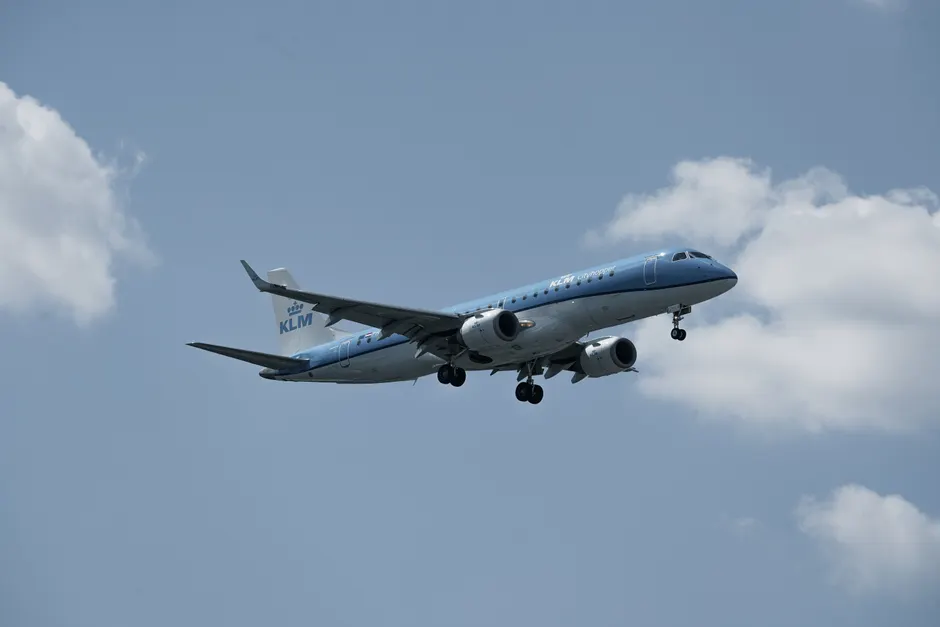
When Airlines Fail Disabled Passengers: What Happened on KLM Flight to Amsterdam

What Happened
KLM Royal Dutch Airlines apologized on June 9, 2026, after Paralympic athlete Hannah Babalola was denied access to an onboard aisle wheelchair during an 11-hour flight from Cape Town to Amsterdam. According to The Guardian, Babalola was told she could either use the toilet without mobility assistance or get off the plane before takeoff.
This choice—adapt without help or don't fly—is what disability rights advocates call "constructive exclusion." Technically, it sounds like a passenger choice. In practice, it becomes a barrier that makes travel impossible for people with certain disabilities.
Understanding the Aisle Chair
An aisle chair is a specially designed narrow wheelchair that fits through the tight corridors of a commercial aircraft. It's the standard way passengers with lower-limb disabilities or paralysis get from their seat to the lavatory during flights.
On a short flight, missing one is just inconvenient. On an 11-hour intercontinental flight, it's a serious problem. Without it, a passenger might deliberately not drink water to avoid needing the toilet (risking dehydration), attempt to move without support (risking injury), or simply cannot travel.
Both U.S. and European regulations recognize why this matters. The U.S. Department of Transportation requires aisle chairs on aircraft with more than 60 seats. The European Union's EC Regulation 1107/2006 places similar obligations on airlines. KLM operates under EU rules, so this equipment should have been available.
What isn't yet clear from public reporting: Did the aircraft lack the aisle chair altogether? Were the crew unaware of where it was or how to use it? Or was there a misunderstanding of the airline's own procedures? Each answer points to a different problem—equipment failure, training gap, or procedural confusion—and each requires different fixes.
KLM's Response and What It's Missing
KLM apologized but hasn't yet explained what went wrong. For an airline of KLM's size—operating intercontinental routes as part of the Air France-KLM Group—the incident is particularly notable. A Cape Town–Amsterdam flight uses large wide-body aircraft that should have accessibility equipment under EU rules. This makes the failure less likely to be about missing equipment and more likely tied to how people followed (or didn't follow) procedures.
The broader context here is important. When high-profile disabled athletes or public figures experience accessibility failures on flights, a quick apology often follows—and then little changes. In 2019, multiple wheelchair damage incidents across airlines prompted European disability groups to push for updates to the EU accessibility rules, which hadn't been revised in over a decade. That revision process has moved slowly. The rules exist on paper; what actually happens at ground level and in the cabin often lags behind.
Babalola's Account and a Recurring Problem
Hannah Babalola's visibility as a Paralympic athlete gave her a platform many disabled passengers don't have when their rights are violated mid-flight. According to reporting, she was given the choice: manage without the aisle chair or disembark. She stayed on the flight, though details of how she navigated the 11 hours aren't publicly available.
What makes her case distinct: The denial happened after boarding, during the flight itself. This suggests either no accessibility check occurred before departure, or the check didn't flag the aisle chair as a concern. It's not a case of a wheelchair damaged in baggage or a booking system error—it's about what should have been routine equipment and support during flight.
Legal Obligations and Enforcement
Under EU Regulation 1107/2006, the airline—not the airport—is responsible for in-flight accessibility. KLM would be liable if it can be shown that denying the aisle chair violated these regulations. Specifically, Article 10 of the regulation requires airlines to make reasonable efforts to provide seating and toilet access support during flight.
A passenger in Babalola's situation could file a formal complaint with the Dutch transport regulator (Inspectie Leefomgeving en Transport, or ILT). Whether Babalola pursues this is unknown. But given her public profile and media coverage, disability rights organizations will likely use this case to test how seriously that regulator enforces in-flight accessibility requirements—an area where regulatory action has historically been uncommon compared to complaints about boarding or baggage damage.
What Typically Happens Next—And What Should Happen
Here's what usually follows in these cases: The airline apologizes, maybe commits to training improvements, and the story fades—until the next incident. What should happen, and what disability advocates will be watching for, is whether KLM conducts a thorough review of how it handles onboard accessibility across its long-haul fleet and publicly shares what changes it's making.
Airlines have learned from years of similar incidents that an apology without disclosed corrective action tends to produce another news cycle when the same kind of problem recurs. That sends a message: either fix the systemic issue or expect public pressure to continue.
This case also highlights something often overlooked in aviation safety: accessibility compliance at 35,000 feet isn't just a ground operations problem. It requires cabin crew who don't just know about aisle chairs, but know where they're stored, how to use them safely, and—critically—understand that using them isn't a favor or a discretionary choice but a requirement. Babalola's experience raises the question of whether that level of training and clarity is standard across airlines operating long-haul routes.
The incident arrives as the European Commission is pushing forward with broader accessibility standards across member states through mid-2025 deadlines. Specific rules around aviation have been a sticking point in these discussions. Cases like this one give disability advocates concrete evidence to argue that leaving compliance up to airlines' good intentions isn't sufficient. Rules matter only when they're enforced—and when every crew member understands they apply to them.