How Indigenous Women's Embroidery Made It to the World Cup
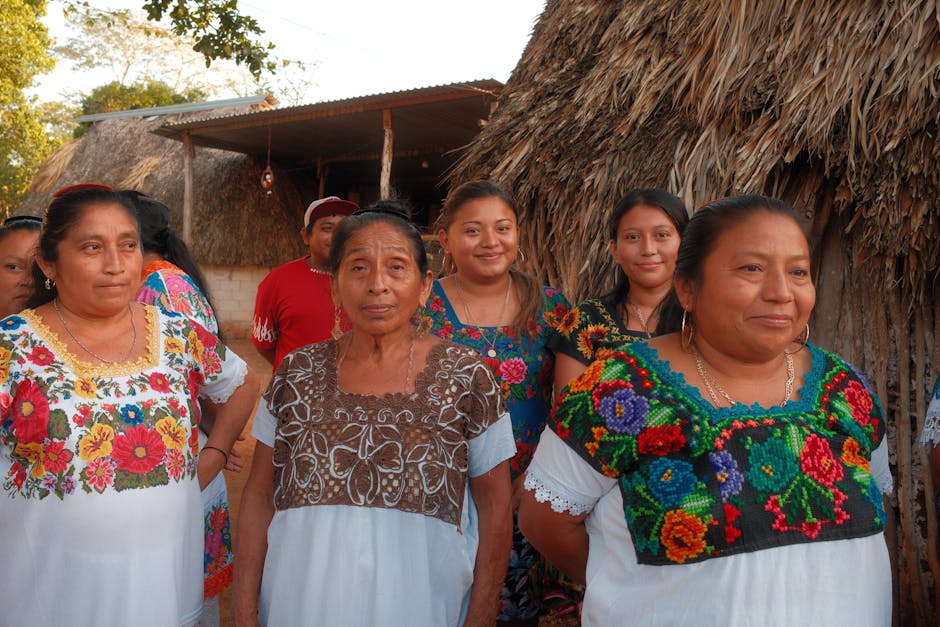
How Indigenous Women's Embroidery Made It to the World Cup
When Mexico's team takes the field at the 2026 FIFA World Cup — held partly in Mexico — the jerseys they wear will be different from anything Adidas usually manufactures. More than 150 Indigenous women artisans from Naupan, a small town in the Sierra Norte de Puebla, hand-embroidered these limited-edition kits. According to The New York Times, the collaboration brought together Adidas, a Mexico-based social enterprise called Someone Somewhere, and these skilled artisans to create something genuinely handmade.
These are not mass-produced items sitting on shelves worldwide. Each jersey carries embroidery stitched by hand in a region where textile traditions have been passed down through families for generations, mostly outside formal employment. Involving more than 150 artisans makes this a real production partnership, not just a symbolic gesture.
The Three Players Behind the Project
The partnership involves three groups working together. Adidas is the German sportswear giant you know. Someone Somewhere is a Mexico-based social enterprise — essentially a business designed to improve people's lives alongside making revenue — that has built relationships with Indigenous and rural artisan communities. The third is the Nahua-speaking women of Naupan, about 200 kilometers northeast of Mexico City.
Someone Somewhere operates differently from traditional charity. Rather than positioning handmade work as a charitable donation, the enterprise treats artisan labor as a serious business input with real economic value. The idea is to cut out the middlemen who normally sit between makers and buyers, so the artisans themselves capture the premium that "handmade" commands. The Adidas deal is the highest-profile test of this approach so far, according to The New York Times.
For Adidas, the calculation is both practical and strategic. Since the 2026 World Cup takes place partly in Mexico, Mexican jerseys will be watched closely in one of the world's biggest merchandise markets. A limited-edition kit with a real story — where the embroidery comes from, who made it, how — stands out in a crowded marketplace of licensed World Cup gear. That's the business case.
The Sierra Norte de Puebla: Where This Happens
The Sierra Norte de Puebla is one of Mexico's poorest and most ethnically diverse mountain regions. Nahua, Totonac, Otomí, and Tepehua communities live there, each maintaining their own textile and embroidery traditions. The dense, colorful floral patterns in Naupan textiles are centuries old. But formal jobs are scarce. Most people have historically depended on subsistence farming — growing food to eat — and selling crafts informally.
Artisan groups in this region have long faced a problem: intermediaries — traders and wholesalers — sit between makers and buyers, and capture most of the profit. A dress or blanket that takes weeks to embroider might sell for a small fraction of its retail price back to the artisan. Someone Somewhere aims to shorten that supply chain and set a transparent price closer to where the work actually happens.
This is not the first time someone has tried to fix this problem. In the 1990s and 2000s, "fair trade" certification programs attempted to improve conditions for small farmers — especially coffee growers — by guaranteeing them better prices. The results were mixed. The cost of getting certified and meeting standards sometimes ate into the gains for farmers, and price premiums didn't always reach the people doing the work. The artisan and apparel world faces different challenges, but the core tension is the same: how do you balance a global brand's need for profit with fair compensation for vulnerable producers? Whether Someone Somewhere's approach actually solves this better than fair-trade models tried to is something this Adidas partnership will test at a meaningful scale.
What Hand Embroidery Really Means
Hand embroidery of the kind done in Naupan is slow work, and that matters economically. The floral and geometric designs used in Sierra Norte textiles require not just technical skill but a deep knowledge of design systems — ways of combining patterns that aren't written down but learned by watching and practicing over time. A single embroidered jersey contains many hours of skilled labor, and you can't compress that work below a certain threshold without damaging the craft.
This is distinct from embroidered patches or appliqués — decorative elements some brands sew onto finished jerseys at the end of the process. Here, the embroidery is fundamental to the garment itself.
Why This Moment Matters
The World Cup starts in June 2026, and because Mexico is one of the host nations, anything connected to the Mexican team — El Tri — gets amplified attention. Kit releases for host countries generate a surge of media coverage and retail interest. A limited-edition variant with the provenance story of the Naupan collaboration is well-positioned to reach wide audiences in sports media and the broader conversation around the tournament.
The timing of the New York Times article — published June 8, 2026, just before the tournament opened — is no accident. This kind of story travels when the moment (a global sporting event) and the substance (Indigenous women's labor, cultural heritage, economic fairness) align with several audiences at once.
The Real Question: What Happens Next?
Here is where the analysis shifts, and where the partnership faces its biggest test. Limited-edition collaborations create a spike of attention and, presumably, sales. But the more important question for people working in development finance, supply-chain management, and Indigenous rights is simpler: Does this partnership last, or was it a one-time activation?
For that durability to happen, the relationship between Adidas, Someone Somewhere, and the Naupan artisans would need continuity mechanisms built in — ongoing orders, investment in the artisans' capacity to scale, and protections for the embroidery designs themselves so the community owns its own intellectual property. Without those things, when the World Cup ends and the media moves on, the relationship likely ends too.
One important gap: Someone Somewhere has not publicly disclosed the precise terms of what artisans are being paid or how many jerseys were produced. These numbers matter enormously. If 1,000 jerseys were split among 150 artisans, that is a meaningful but modest income boost. If the run was 50,000, that changes the calculation entirely. Without that figure, it is hard to assess whether this partnership actually moved the economic needle for households in Naupan.
What we can verify is the scope of the effort: more than 150 artisans from a specific, economically vulnerable community, working on a product that will be seen by millions during one of the world's most-watched sporting events. The ingredients look right — a global brand, an intermediary with a social mission, and community producers with centuries of craft expertise. Whether they have been combined in the right proportions, and whether that combination will outlast the tournament, is the question the coming months will answer.


