NSW Launches Australia's Biggest Gun Buyback in 30 Years
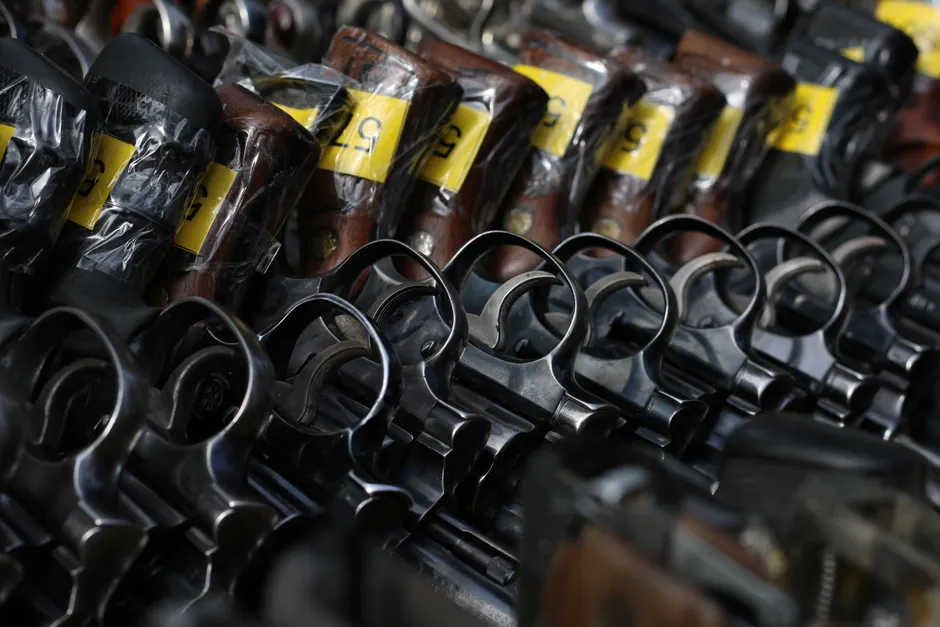
New South Wales will begin a gun buyback scheme on 2 November 2026, offering firearm owners cash compensation to surrender weapons that exceed new ownership limits or no longer fit revised licensing terms. The scheme is the first state-level buyback to launch since the Bondi Beach terror attack on 14 December 2025, in which 15 people were shot dead at a Hanukkah festival near Sydney's Bondi Beach — Australia's deadliest mass shooting in decades BBC News.
A gun buyback is a government programme that pays firearm owners to hand in weapons that are newly restricted or illegal, then safely destroys them. NSW Premier Chris Minns said on Saturday that guns should be "handed in, compensated for and safely destroyed" BBC News. The buyback opens roughly six weeks before the first anniversary of the attack.
The scheme is jointly funded by New South Wales and the federal government, with the Australian Federal Police (AFP) serving as an operational partner BBC News. It is being described as Australia's biggest gun buyback in 30 years, since the national buyback that followed the 1996 Port Arthur massacre secured the surrender of approximately 640,000 prohibited firearms The Guardian.
How the buyback works
The buyback will be implemented in phases. Phase one, commencing 2 November, covers handguns, shotguns and rifles, paying up to AUS$1,000 per weapon. Compensation rates vary by firearm type: a revolver fetches AUS$1,000, while an air rifle brings AUS$450. Phase two, beginning early next year, will address higher-value firearms valued above AUS$3,000, with payouts capped at AUS$10,000 BBC News.
The scheme targets two categories of owners: those whose collections exceed the new ownership caps and those no longer covered by a licence. Under reforms announced alongside the buyback, individuals are limited to owning four firearms, with farmers and sports shooters permitted up to ten. Licence terms have been reduced from five years to two BBC News.
Businesses affected by the reforms can receive up to AUS$25,000 in transitional support, with separate assistance available to licensed gun dealers BBC News.
National reform agenda
Prime Minister Anthony Albanese has framed the buyback within a broader national reform agenda, stating that nationwide gun reform was needed to ensure the antisemitic terrorist attack in Bondi does not happen again BBC News. The Albanese government first committed to establishing a National Gun Buyback Scheme to purchase surplus, newly banned and illegal firearms less than a week after the shooting CBS News.
Australian authorities had initially planned a nationwide buyback, but implementation was delayed over funding and implementation questions BBC News. New South Wales is now the first state to begin operations under the national framework ABC News.
In January 2026, Australia's lower house passed legislation providing for the national buyback, tighter background checks for gun licences, and a crackdown on hate crimes Reuters. The legislative package established the legal architecture under which the NSW scheme now operates.
The broader context here is one of sequencing and federal-state coordination. The Port Arthur precedent in 1996 was a centrally administered, nationally uniform response to a single catastrophic event. The post-Bondi response has unfolded over a longer arc: the attack on 14 December 2025, a federal commitment within days, legislative passage in January 2026, and now — eight months later — the first state-level buyback commencing. The phased structure of the NSW scheme itself, with higher-value firearms deferred to phase two next year, suggests implementation complexity that extends beyond a single fiscal cycle.
The ownership reforms embedded in the scheme also mark a structural shift in Australia's regulatory approach. Reducing licence terms from five years to two effectively shortens the compliance review window, while the four-firearm cap for general licence holders (ten for farmers and sport shooters) constrains accumulation in a way that previous frameworks did not. For a country that already maintains comparatively restrictive firearm regulation, these measures tighten existing controls rather than introducing prohibition where none existed.
Whether other Australian states follow NSW's timeline, and whether the federal funding arrangement holds through both phases, will determine whether the National Gun Buyback Scheme achieves the scale of its 1996 predecessor. The Port Arthur buyback's 640,000 surrenders set a benchmark that, depending on the volume of newly non-compliant firearms across Australia, this scheme may or may not approach.


