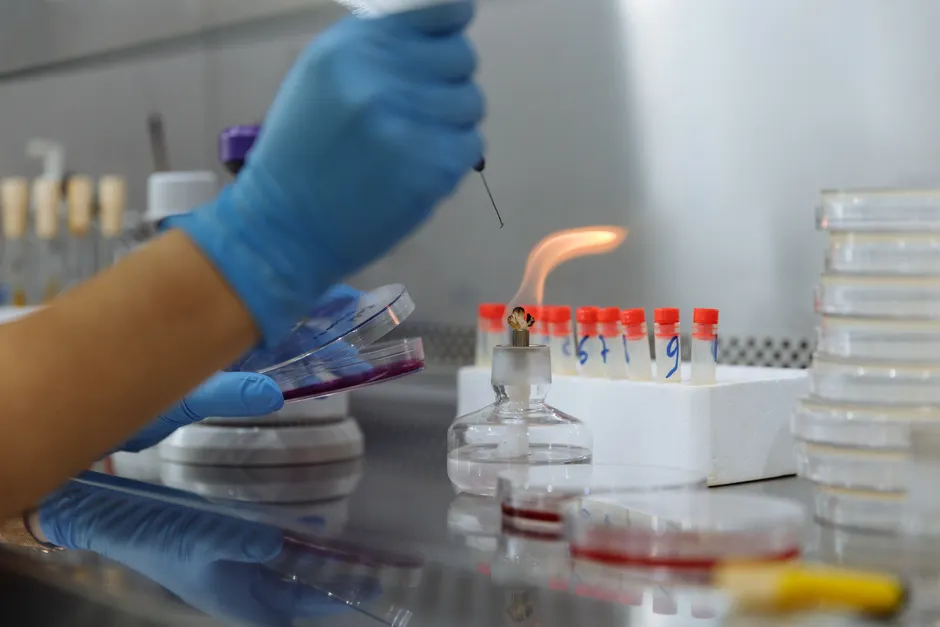
DR Congo's Ebola Outbreak Is Now the Deadliest in the Country's History

The Ebola outbreak in the Democratic Republic of Congo has killed 2,325 people, surpassing the death toll of the country's 2018–2020 outbreak and becoming the deadliest in DR Congo's history, according to public health officials (BBC News). DR Congo's Institute of Public Health recorded 4,945 confirmed cases, including 101 reported in the previous 24 hours, as of Sunday. The World Health Organization has described the pace of transmission as "exceptional."
The outbreak was declared on 14 May 2026 by the Minister of Public Health, after eight positive cases were confirmed in Ituri province. It is caused by the Bundibugyo Ebola virus species — a strain of the virus distinct from the one that drove previous Congolese epidemics and the 2014–2016 West Africa crisis. It is the 17th Ebola outbreak to emerge in DR Congo since the virus was discovered 50 years ago. The epidemic has now spread to six of the country's 26 provinces, with affected areas including Ituri, North Kivu, South Kivu, Tshopo, and Haut-Uélé, according to WHO's Regional Office for Africa and ReliefWeb mapping. The WHO, in its disease outbreak news dated 15 August 2026, reported 4,686 cumulative confirmed cases and 2,186 deaths as of 12 August, calling it the largest Ebola outbreak ever recorded in the country. The European Centre for Disease Prevention and Control, reporting on 13 August data, logged 4,665 confirmed cases and 2,184 deaths.
The trajectory has been startling. Reuters reported that the 2014–2016 West Africa outbreak, the deadliest in global history, took close to five months to reach 1,000 fatalities. The current DR Congo outbreak crossed 2,000 deaths in less than three months. PBS similarly noted that the outbreak reached at least 2,100 deaths almost three times faster than DR Congo's outbreak of a decade ago. UN humanitarian chief Tom Fletcher warned that the outbreak was already the fastest growing on record and was killing someone every 30 minutes.
Several compounding factors are driving the pace. Years of conflict in eastern DR Congo and a highly mobile population have hampered containment efforts — the kind of work that involves tracing contacts of infected people, isolating them, and treating patients in specialised centres. Reuters reported that the response is centered in Bunia, the capital of Ituri province, and that the outbreak was on track to surpass 4,000 cases, a figure it has since exceeded. At least 30 deaths were recorded at a single camp in DR Congo during the outbreak.
The virus has crossed borders. As of 12 August, 20 Ebola cases were confirmed in Uganda, two people were treated in Germany, and one case was declared in France. The UNHCR's July 2026 report had earlier confirmed 19 cases and two deaths in Uganda. The CDC first reported the Bundibugyo outbreak affecting both the DRC and Uganda in May 2026.
No approved vaccine exists for the Bundibugyo Ebola species causing the current epidemic, though several candidates are in development. One is based on technology used for the AstraZeneca Covid-19 vaccine. This stands in sharp contrast to the 2018–2020 DR Congo outbreak, where a vaccine called rVSV-ZEBOV was deployed under a ring vaccination strategy — a approach that vaccinates contacts of an infected person and contacts of those contacts, creating a protective ring around each case. Because the Bundibugyo virus is immunologically distinct from the Zaire ebolavirus species responsible for prior Congolese epidemics and the West Africa crisis, existing vaccine platforms cannot simply be repurposed.
The broader context here is one of accelerating outbreak velocity against an under-resourced response. The case fatality ratio — the proportion of confirmed cases that end in death — while not yet finalised in the most recent WHO bulletin, is high given the available figures: over 2,000 deaths against roughly 4,700 confirmed cases as of mid-August. Africa CDC reported more than 1,000 deaths in eastern DR Congo by late July, meaning the death toll more than doubled in approximately three weeks. The WHO's crude case fatality ratio for the outbreak was reported as of 30 July 2026 data, when 3,605 confirmed cases and 1,587 deaths had been documented, and the ratio has remained elevated as caseloads have climbed.
The epidemiological curve bears watching. Between 15 July and 12 August, confirmed cases rose from 2,124 to 4,686, with deaths rising from 828 to 2,186. That trajectory, if sustained, would push the outbreak past the scale of the 2014–2016 West Africa epidemic, which killed over 11,000 people across Guinea, Liberia, and Sierra Leone, within a compressed timeframe. The involvement of European cases raises the question of international surveillance capacity, though the WHO has not yet elevated the outbreak to a Public Health Emergency of International Concern — its highest-level alert designation — as of the most recent reporting.
The Bundibugyo virus was first identified in 2007 in Uganda's Bundibugyo district. Its symptoms are consistent with other Ebolavirus species: sudden onset of fever, fatigue, muscle pain, headache, and sore throat, followed by vomiting, diarrhoea, rash, impaired kidney and liver function, and in some cases internal and external bleeding. Laboratory findings typically include low white blood cell and platelet counts and elevated liver enzymes. The incubation period — the time between infection and the appearance of symptoms — runs from 2 to 21 days, and an infected person cannot transmit the disease until symptoms develop.
DR Congo's Ministry of Public Health is publishing official epidemiological surveillance dashboards and reports for the 2026 outbreak on its website. The WHO Regional Office for Africa has issued at least 12 external situation reports, with the most recent dated 9 August 2026 covering data through that period.